The Europe-India Briefing—July 2026


Listen to this article
Audio is generated automatically and may contain minor inaccuracies.
The Special Relationship
What makes the France-India partnership unique?
As Europe looks to strengthen its ties with India, one relationship often comes up as a template: the one between India and France. Paris is one of the most significant and trusted partners for New Delhi not just in Europe, but globally. Both are consequential partners in strategic sectors such as defense, civil-nuclear cooperation, and space—where New Delhi sees Paris as a credible player in its quest for strategic technologies, and India’s vast market is a strong draw for France. Most importantly, both see the world through a lens focused on strategic autonomy and multipolarity. During French President Emmanuel Macron’s visit to New Delhi earlier this year, France and India upgraded already strong ties to a “special global strategic partnership”.
In this edition of the Europe-India Briefing, we explore what makes the India-France relationship unique, outline the challenges it faces, and consider how it is likely to evolve with key elections in 2027 and President Macron’s departure from office after two consecutive terms.
Convergence on Strategic Autonomy
The foundation of India-France ties is built on a “shared understanding and commitment on sovereignty”, a French official told us. Both France and India define strategic autonomy as a “dependence-control strategy aimed at safeguarding their independence in both foreign policy decision-making and protecting strategic assets”. The two countries do not conceive of strategic autonomy as autarky; quite the contrary. Both are looking for options to supplement and complement the partnership they have today. Where they diverge is that France is a member of two alliances: a political and military one with NATO, and a political and economic one with the EU. India stands firm on its position of multi-alignment, and while it does share close security and defense partnerships with a select number of countries, it refuses to join any alliances.
Trusted and Consistent Partners
Their similar views of the world inclined India and France to a close partnership. In 1998, New Delhi signed its first ever strategic partnership agreement with Paris. A few months later, when India conducted nuclear tests, France was the only Western country that refused to comply with US requests to impose sanctions on New Delhi. Instead, Paris focused its efforts on dialogue and bringing India closer to the nuclear nonproliferation regime. In Indian minds, this cemented the idea that France could serve as a key strategic interlocutor globally. Other examples, such as its consistent support to India over the Kashmir issue in the UN Security Council, have meant that that France is seen as a “trusted, consistent, and strong strategic partner” in India.
This trust is mirrored in Paris. As a French official noted, “Compared to other relationships in Asia, we say much more to our Indian counterparts, and with much more candor, than we say to other partners and vice versa.”
Defense Focus
Partly because of the factors outlined above, and partly because of successive French governments’ diplomacy, defense has become the cornerstone of France-India ties.
France was a key defense supplier to India from independence until the 1960s, when it was overtaken by the Soviet Union. The balance began to shift again in the early 1980s, when Prime Minister Indira Gandhi decided to diversify India’s defense ties away from Moscow, and turned again to Paris. Since the early 2000s, India’s defense cooperation with France has steadily deepened in defense-industrial and operational sectors, including joint exercises, and within the regional institutions in the Indo-Pacific.
India today is the largest buyer of French defense equipment in the world. For India, France is its second largest defense supplier after Russia. Officials note that the similar understandings of strategic autonomy mean that France does not take a restrictive view of how India uses this materiel for its security and defense.
Over the years, India’s priority has been to transform the buyer-seller relationship with France into one of co-development and co-production. “France is willing to do a lot in this domain with us, often more than the US or even Russia”, a senior Indian official told us. On aeroengines, fighters, and submarines, France is increasingly manufacturing more in India. French defense and aerospace companies have set up Global Capability Centers as well as Maintenance, Repair, and Overhaul (MRO) centers in India.
Beyond defense-industrial ties, India and France have robust operational cooperation that includes information- and intelligence-sharing. Both are now looking to scale cooperation in new domains such as space security—the two space commands interact regularly—and in sensitive areas such as the underwater domain as their mutual “level of trust is phenomenal”.
Broadening the Base
As India focuses on building indigenous defense capabilities and expands the list of countries with which it has defense partnerships, French policy makers are already thinking about expanding the partnership beyond defense. Rocky US-India ties have made this an urgent issue for Indian policy makers as well.
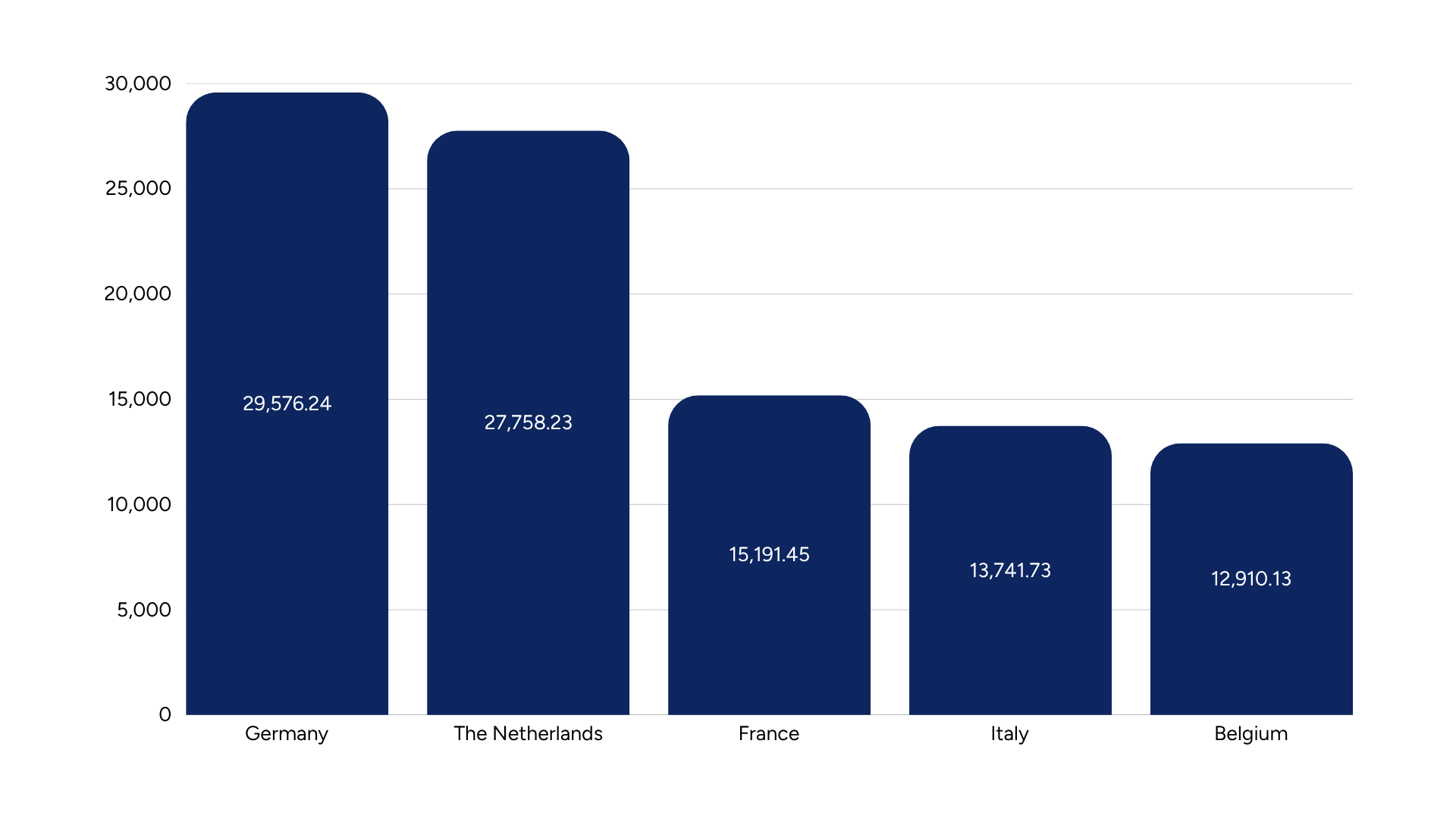
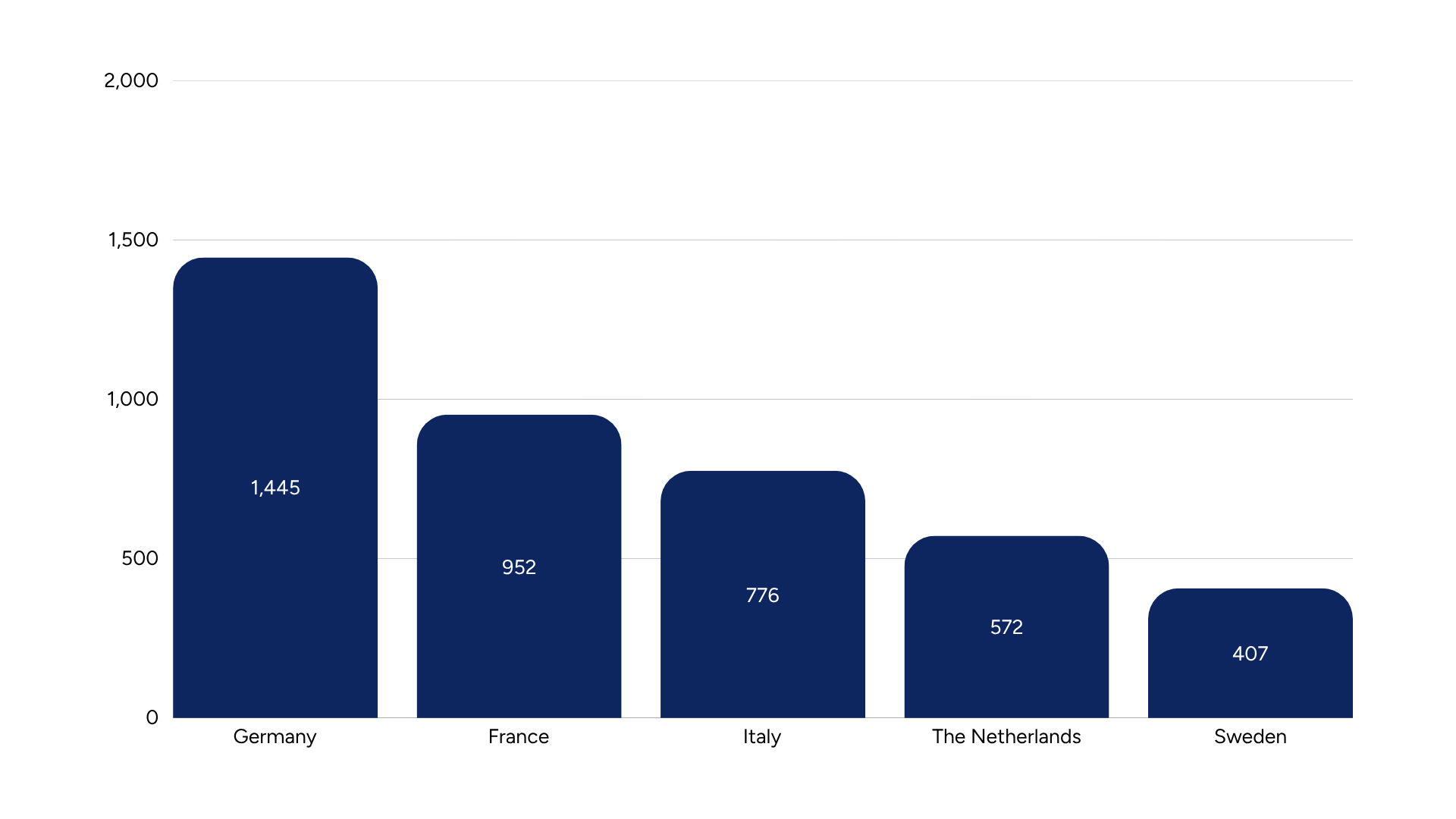
Economic and trade ties between France and India lag far behind those of other European partners such as Germany and the Netherlands (see Figure 1). “French companies don’t naturally think of going to India,” an official noted; they need to be nudged further in that direction (see Figure 2). Indian officials note that while CAC 40 companies are present and doing well in India, they have not been able to project the same image as German companies. “France is still associated with Rafales and Mirages or luxury goods”, we were told.
Figure 1: India’s Largest Trade Partners in Europe
Source: Ministry of Commerce and Industry, India (https://tradestat.commerce.gov.in/eidb/country_wise_ttrade)
Figure 2: Number of EU Firms in India
Source: Sangeeta Khorana and Amrita Saha, Economic Footprint of EU Businesses in India
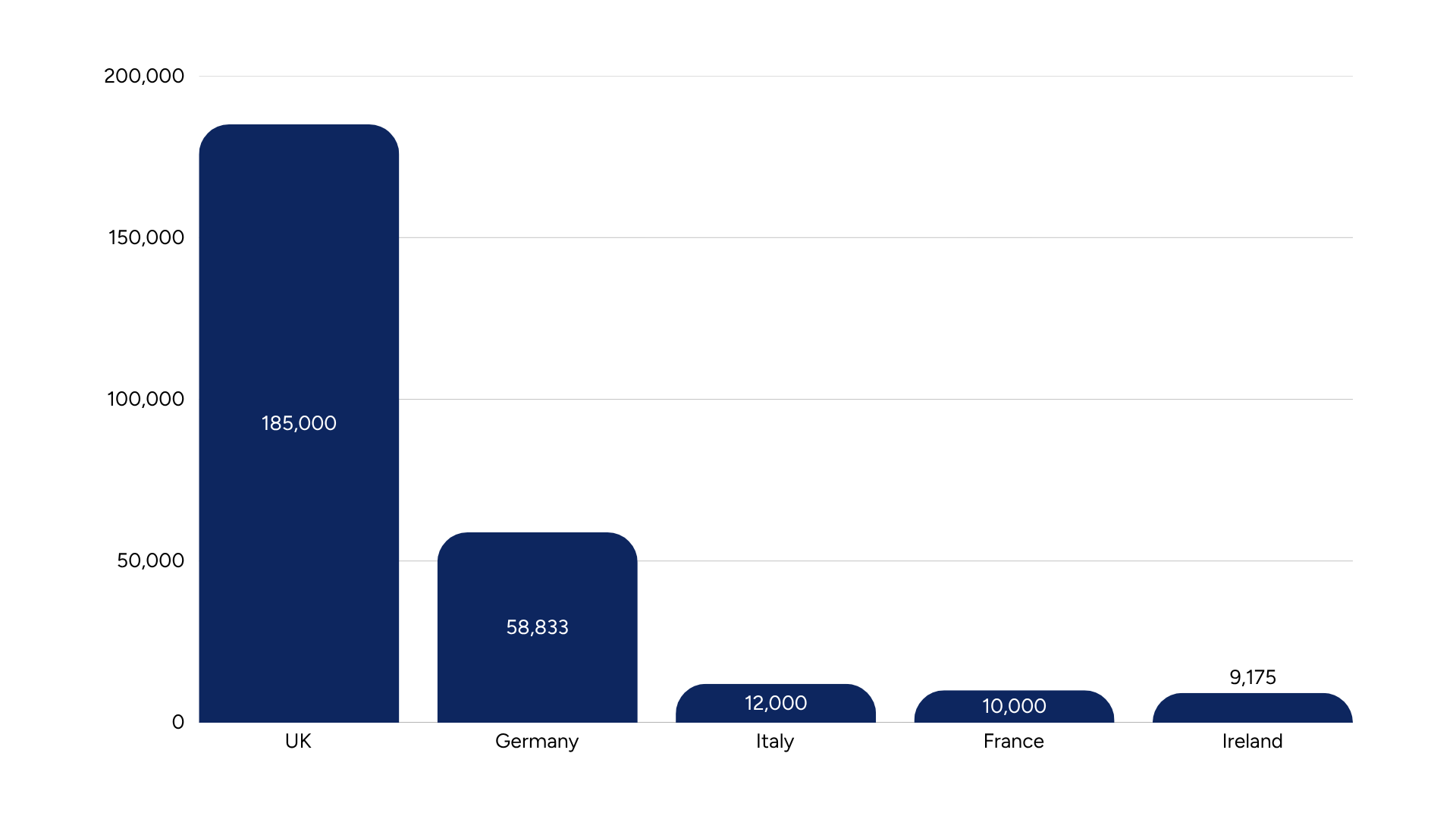
Another factor impeding ties is that people-to-people exchanges are quite limited. Indian students, scientists, and highly skilled workers tend to go to other European destinations (see Figure 3). To reverse this trend, France and India have declared 2026 the Year of Innovation, broadening cooperation on technology. Each wants to be the other’s key partner on AI and advanced technologies. Macron attended India’s AI Impact Summit along with a substantial business delegation. In June 2026, India brought along 120 start-ups to “Bharat Innovates” in Nice, France. Officials on both sides hope that events such as this will create connections and cross-pollination between their tech industries and start-up ecosystems and foster cooperation on digital and AI issues. A second growth area is energy. India’s Shanti Law will enable private actors to operate in its nuclear energy sector. French companies such as Total and Engie are likely to increase investments, including in manufacturing in India’s energy sector.
Figure 3: Top Five Destinations for Indian Students in Europe 2024–25
Sources: Wissenschaft Weltoffen (DAAD); Gov.UK; Apply Board, the Irish Higher Education Authority; and Ministry of External Affairs, India
Unmet Expectations
There are occasional hiccups when France and India have diverging responses to crisis despite having broadly similar worldviews. While there were several calls between Prime Minister Narendra Modi and Macron immediately after the outbreak of the war with Iran, France expected India to stand at its side during the attempt to reopen the Strait of Hormuz—especially since India is directly impacted by the blockade. India chose to not participate as it has different concerns and equities in the region.
Similarly, Paris was surprised that India did not turn to France more when bilateral US-India ties started to deteriorate. Given the “real strategic intimacy” between the two leaders, as one French official put it, Paris assumed New Delhi would rely on France even more. But, for New Delhi, European partners cannot “replace” the United States. Its strategy of diversification follows a “US and”, not a “US or” model.
A Change in Political Futures?
In the past decade, France-India ties expanded, due in part to the close personal relations between Macron and Modi. Could the relationship weather the potential rise to power of the far right in France in next year’s presidential and parliamentary elections? The general assumption on both sides is that the bilateral relationship can withstand political change and turmoil. Indeed, Member of Parliament Jean-Philippe Tanguy, from the far-right Rassemblement National (RN), was named president of the France-India friendship group at the National Assembly in 2023, and was replaced by Thierry Tesson, also part of RN, thus demonstrating that the Indian government has engaged in work with the French far-right. But, as with all nationalistic parties, should the RN win, it would most probably focus on domestic policy. The few foreign policy issues the RN engages with are relations with Russia, NATO, and the United States. Indian officials note that New Delhi has managed to work with every French government in the past and do not foresee issues if the far-right manages an electoral victory.
What to Watch
- The EU and India held their Trade and Technology Council (TTC) meeting on July 15, 2026 in Brussels. The new format promised during the summit in January, which was supposed to focus more on strategic technologies, was not unveiled in this edition. We were told it will take until the end of the year, after expectations are squared between the two sides, for any changes to be made. Still, the EU-India TTC remains an important venue because it brings three senior ministers to Brussels, and in general discussions are much more productive than those that took place in the EU-US TTC.
- Polish Prime Minister Donald Tusk is likely to travel to India later this year. The last prime ministerial visit from Poland to India was sixteen years ago.
This edition’s interesting fact: French Presidents have been the most frequent guests of honor at India’s Republic Day parades.
The next edition of the Europe-India Briefing will focus on the rapidly evolving Poland-India relationship. Follow and subscribe to get the next edition in your inbox.
The views expressed herein are those solely of the author(s). GMF as an institution does not take positions.