The US Midterm Elections Enter the Homestretch

September 01, 2026
3 min read

Listen to this article

Audio file

Audio is generated automatically and may contain minor inaccuracies.

Two months ahead of the November 3 US midterms, which involve races for all seats in the House of Representatives and one-third of the Senate, all signs point to the Democrats' winning at least a narrow majority in the House. There are three primary reasons for this: President Donald Trump's historic unpopularity; the Democrats' consistent advantage in the "generic" ballot, which measures the national popular vote for the House; and greater enthusiasm among Democrats than among Republicans about voting. Still, Democrats' gains may be limited, perhaps to 15-20 House seats, due to gerrymandering that has drawn most congressional districts to include voters who lean strongly toward one party or the other. In other words, far fewer districts than in the past are truly competitive. This is likely to benefit Republicans, who have been behind most gerrymandering efforts. Democrats may have to win the nationwide popular vote by 3 percentage points to gain a House majority.
 
As for the Senate, Democrats need a net gain of four seats to win a majority in that chamber. Despite the aforementioned trends in the Democrats' favor, that will be difficult. They will need to retain all seats they currently hold, including those for Georgia and Michigan, states that Trump captured in 2024, and "flip" four of five seats—in Alaska, Maine, North Carolina, Ohio, and Texas—where the Republican candidates are vulnerable.
 
The following slide deck provides greater detail about the domestic and international challenges that frame US voters' views, some of which may persist and influence the 2028 presidential election.

The Political Landscape and Recent History Favor Democrats

Based on previous midterm election results, Democrats should be on track for one of the largest electoral victories in the last 32 years.
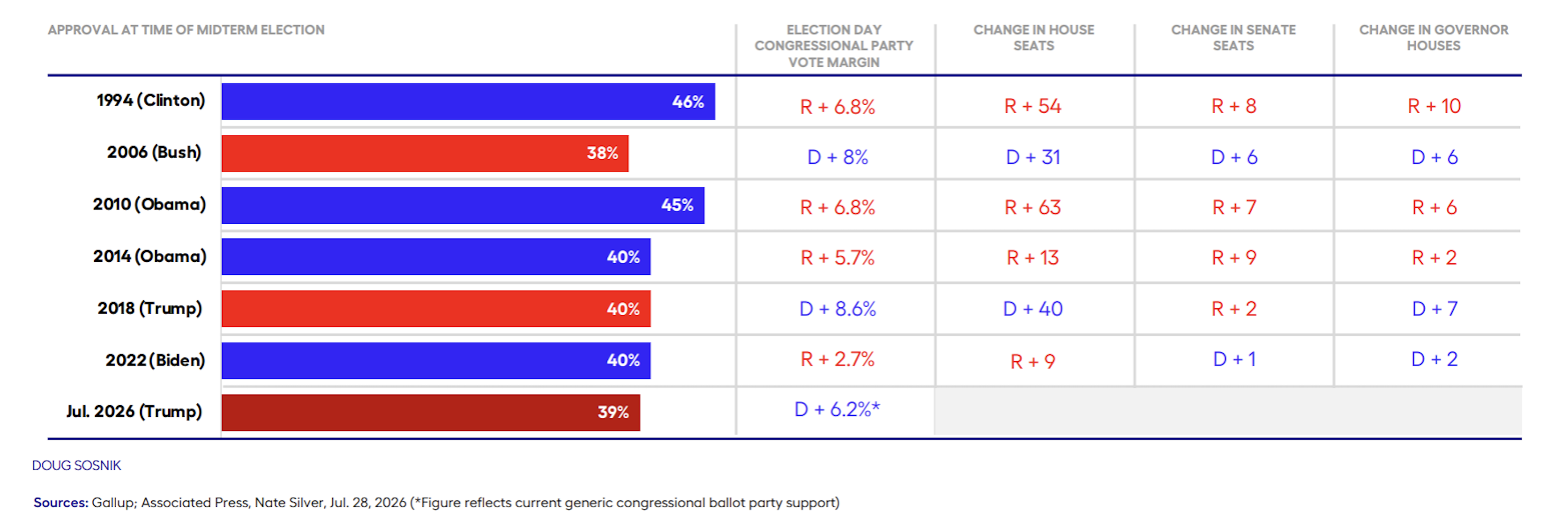
The Political Landscape and Recent History Favor Democrats

Source: Politico

Democrats Are Ahead in the Race for the House

The party has held a steady lead in the “generic” Congressional ballot for the last 17 months.
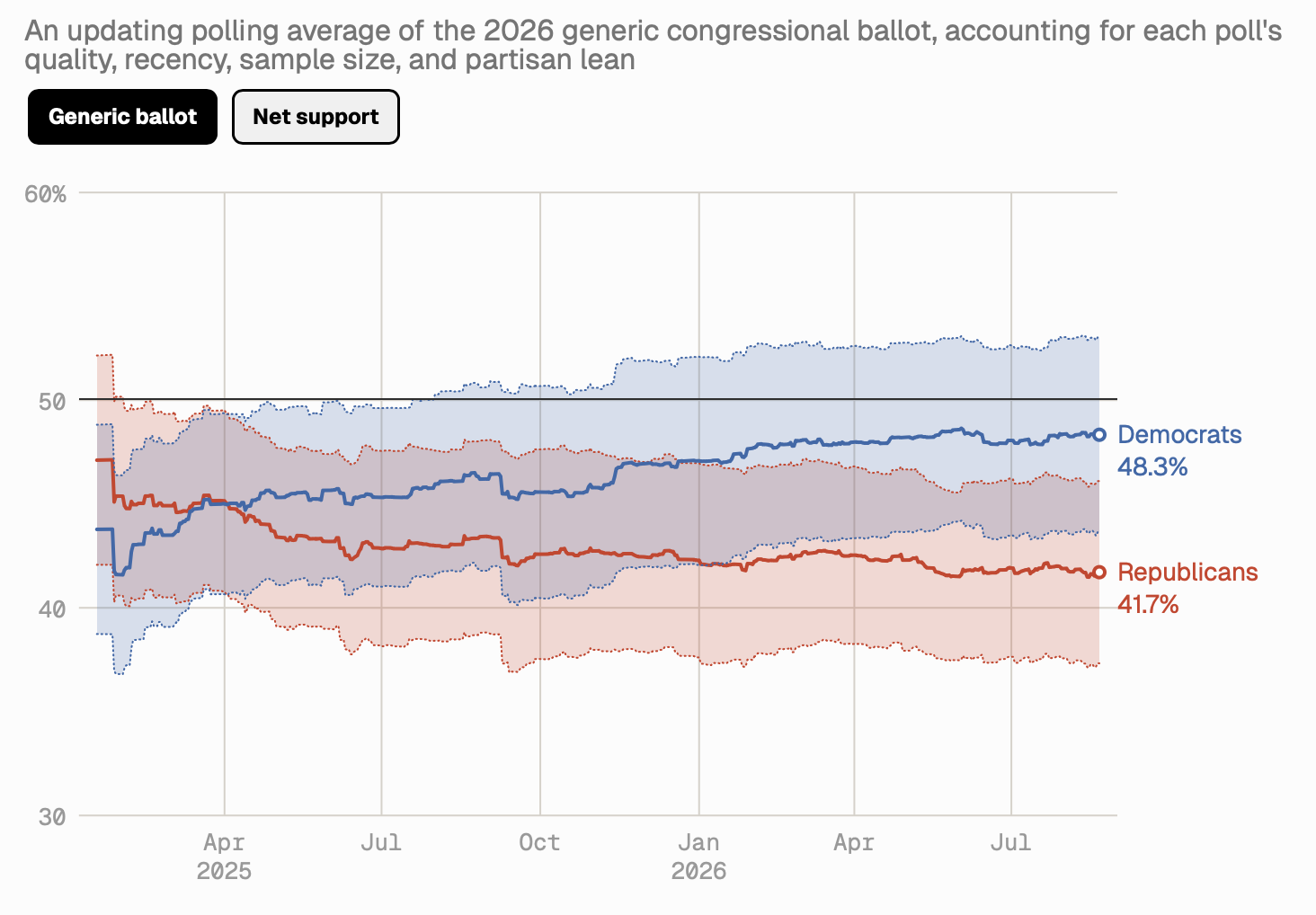
Democrats Are Ahead in the Race for the House

Source: Silver Bulletin

A Presidential Drag for Republicans? 

Trump is unpopular, and voters say that will be a factor when they cast their ballots.
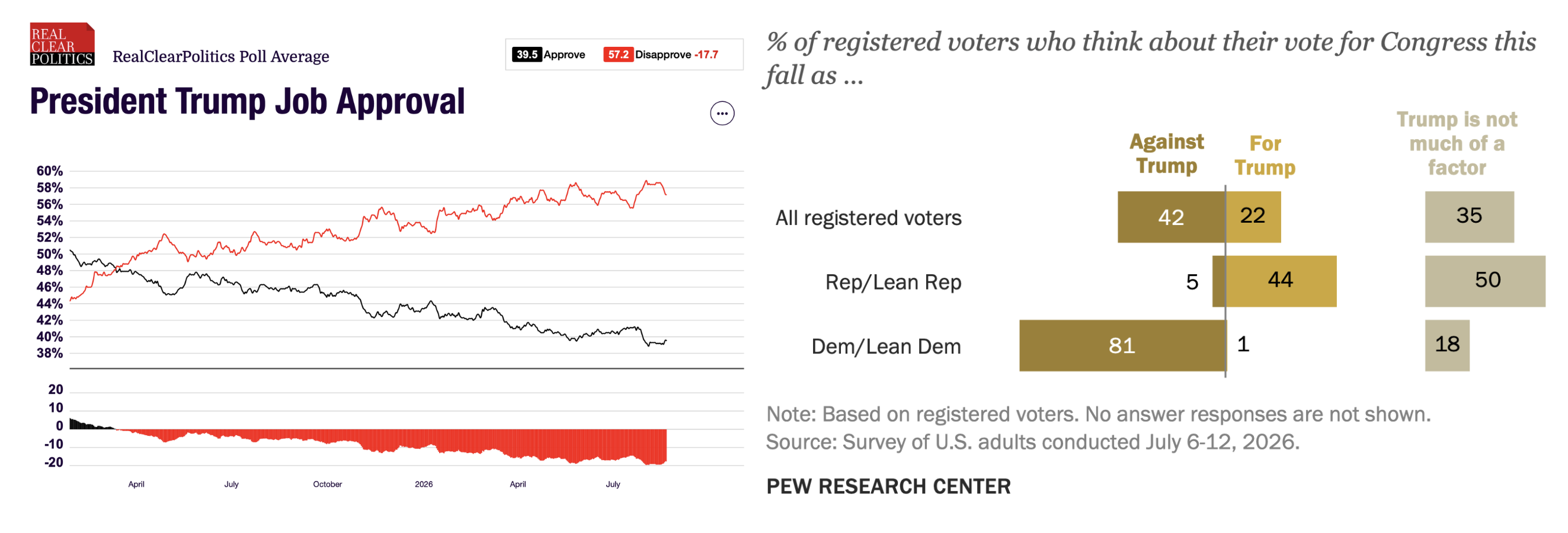
A Presidential Drag for Republicans?

Source: Real Clear Politics, Pew Research Center

Democrats Lead on Most Issues

US voters express more confidence in the Democrats’ ability to tackle national problems.
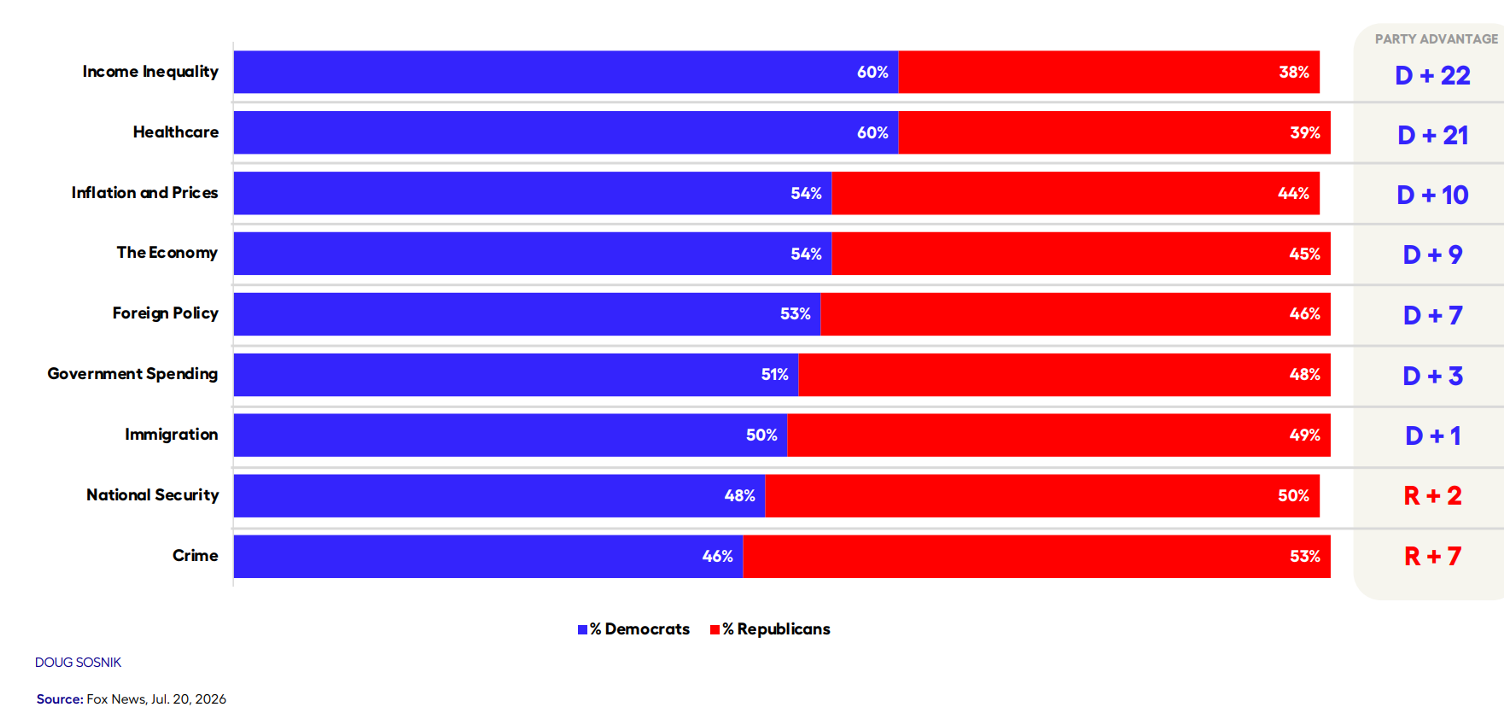
Democrats lead on most issues

Source: Politico, Fox News

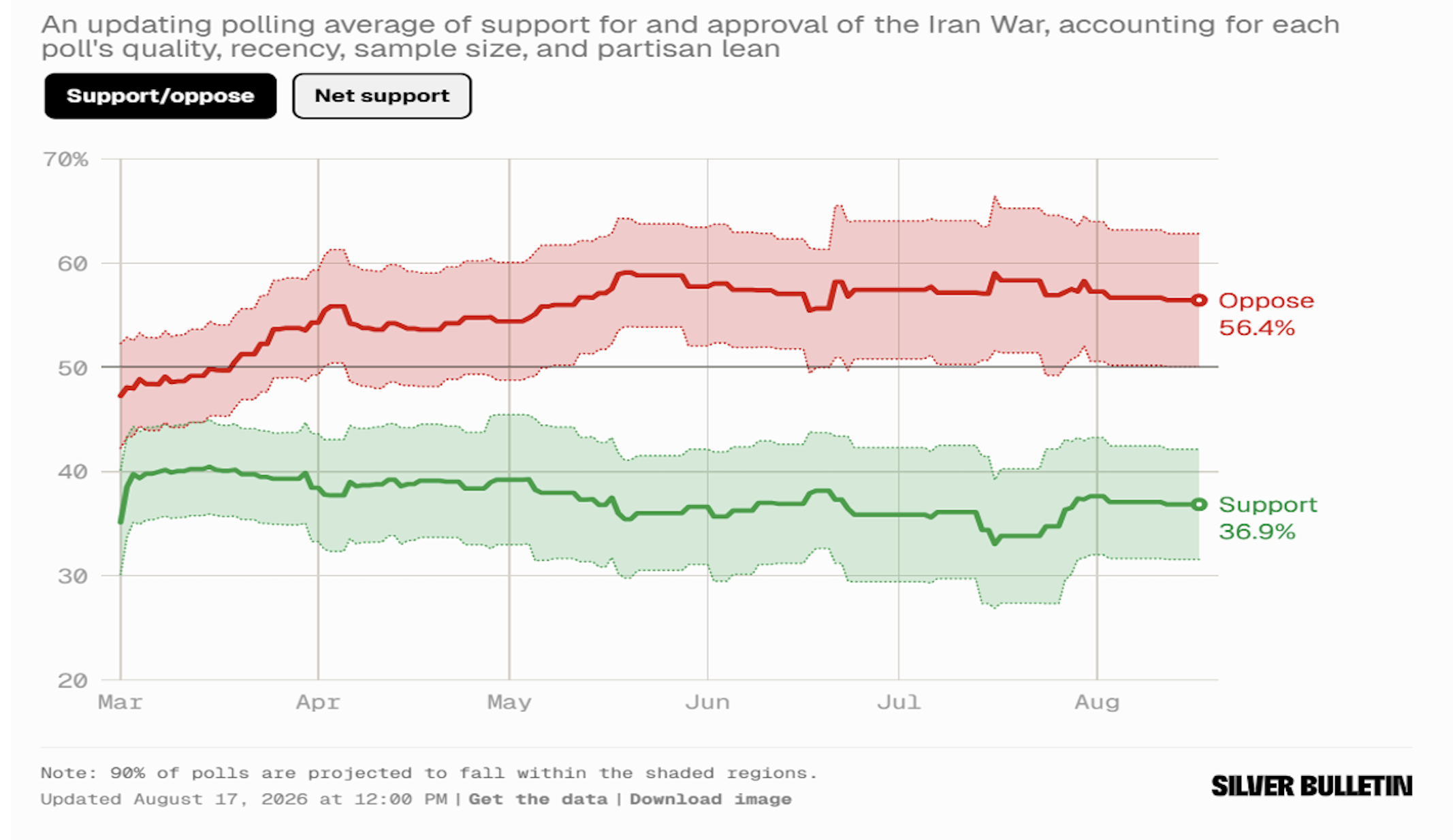
An Unpopular War …

Opposition among Americans to the war against Iran has always been higher than support for the conflict.
An Unpopular War …

Source: Silver Bulletin

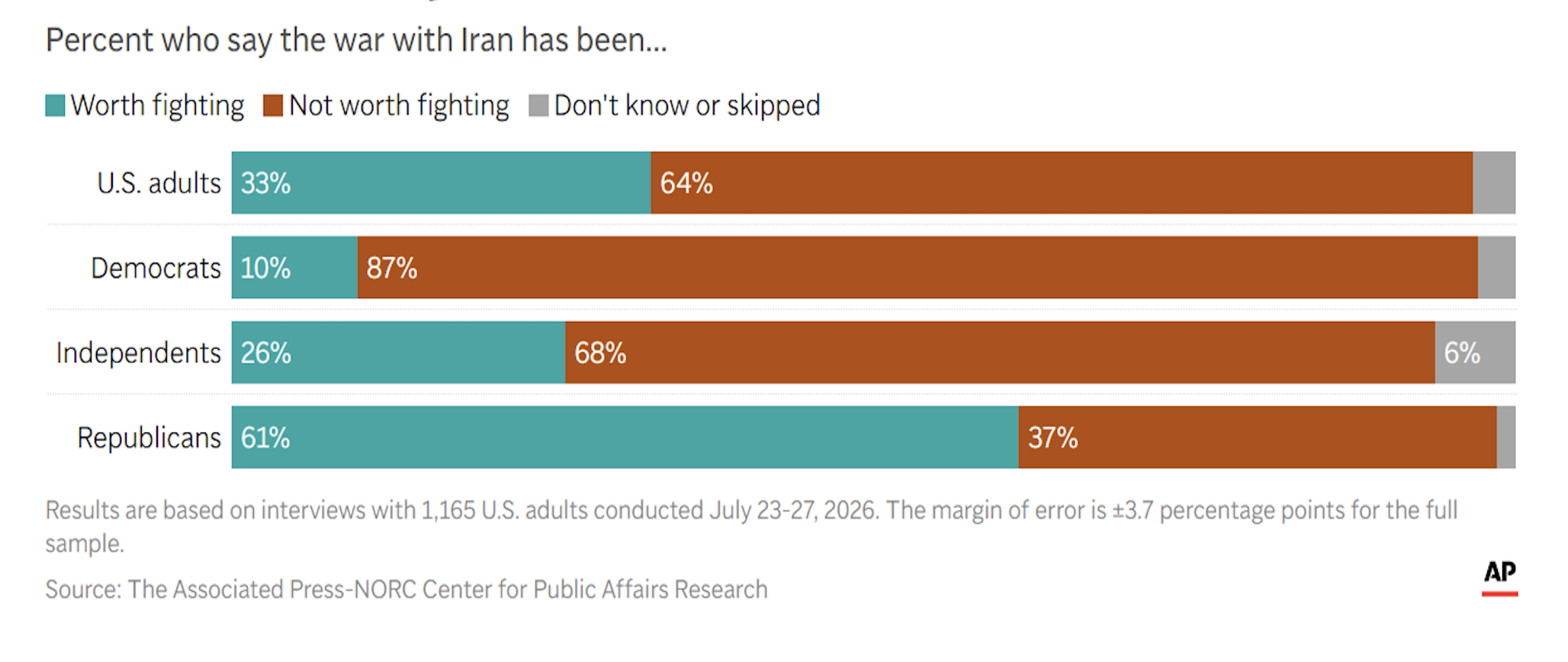
… Though Most Republicans Support It

Most US adults, however, say the Iran war has not been worthwhile.
… Though Most Republicans Support It

Source: The Associated Press/NORC

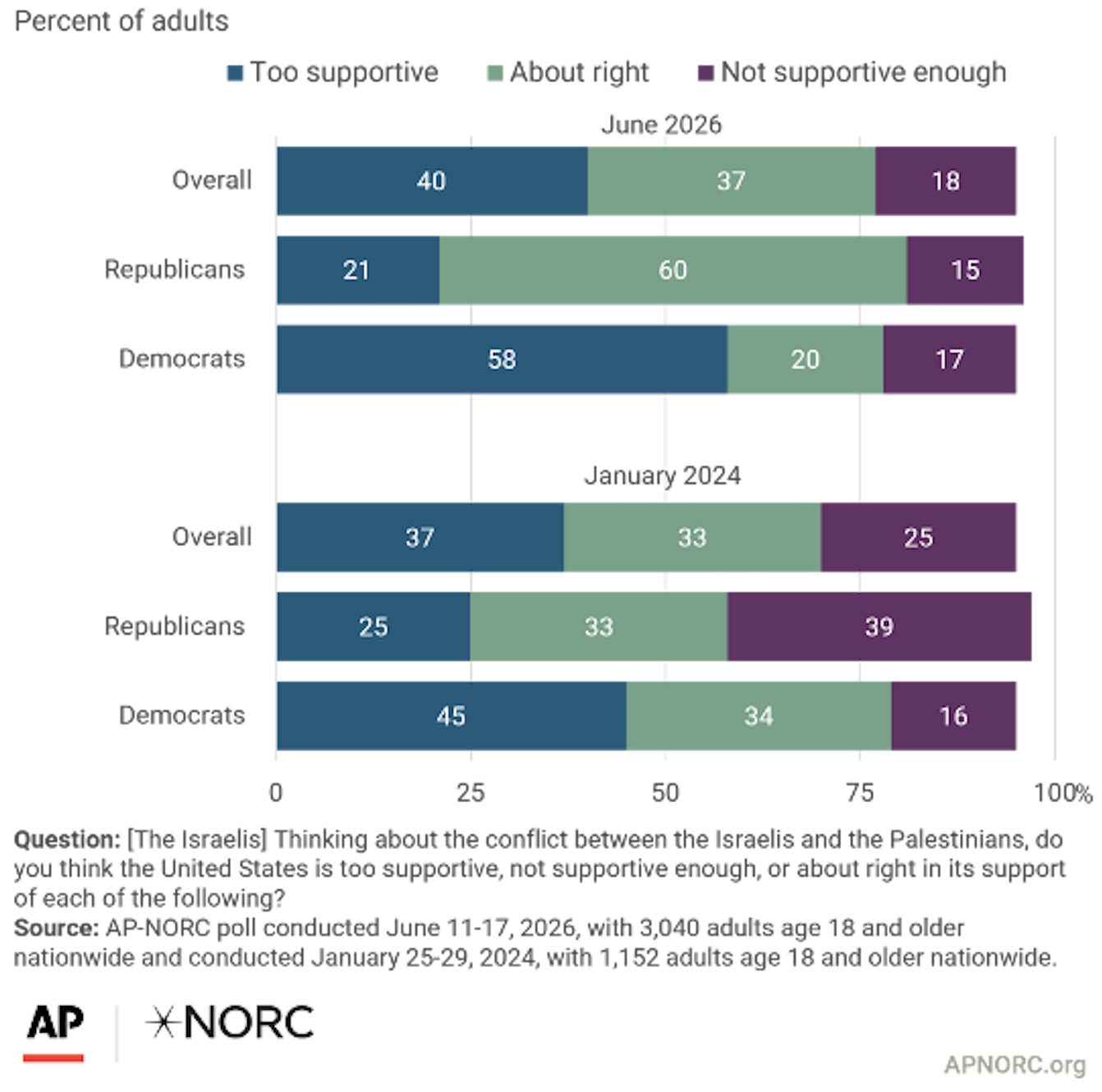
Unhappiness About US Policy Toward Israel …

Far more Americans say the United States is too supportive of Israel in the Palestinian conflict than not supportive enough.
Unhappiness About US Policy Toward Israel …

Source: AP/NORC

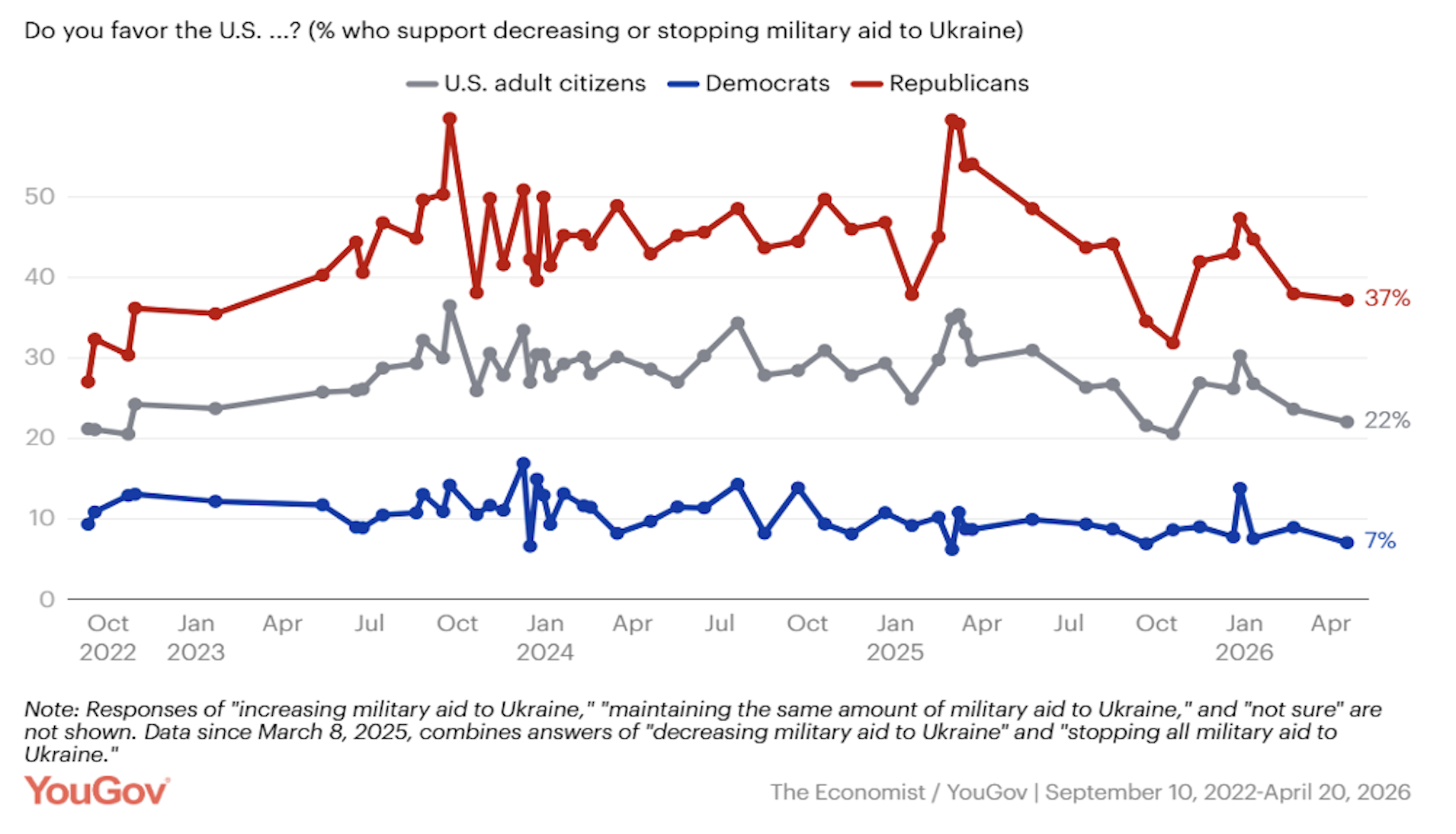
… and Unhappiness About Less US Assistance to Ukraine

There is little support among Americans—Democrats and Republicans—for decreasing or stopping military aid to Ukraine.
… and less US Assistance to Ukraine

Source: Economist/YouGov

Beyond the Midterms: Persistent Public Pessimism?

Most Americans think their country’s best days are in the past.
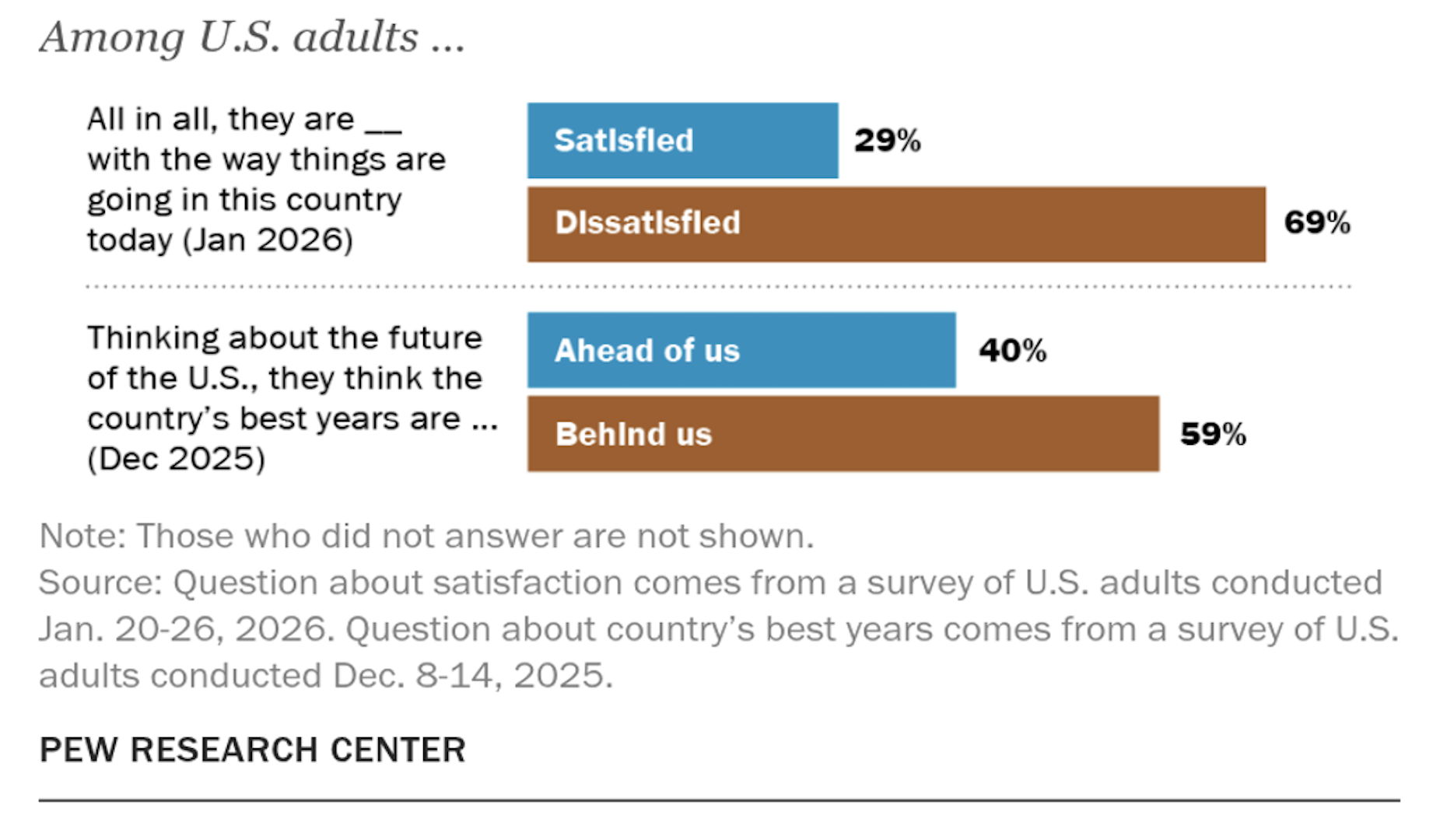
Beyond the Midterms: Persistent Public Pessimism?

Source: Pew Research Center 

Beyond the Midterms: A Pox on Both Their Houses

Americans rate both their major parties unfavorably.
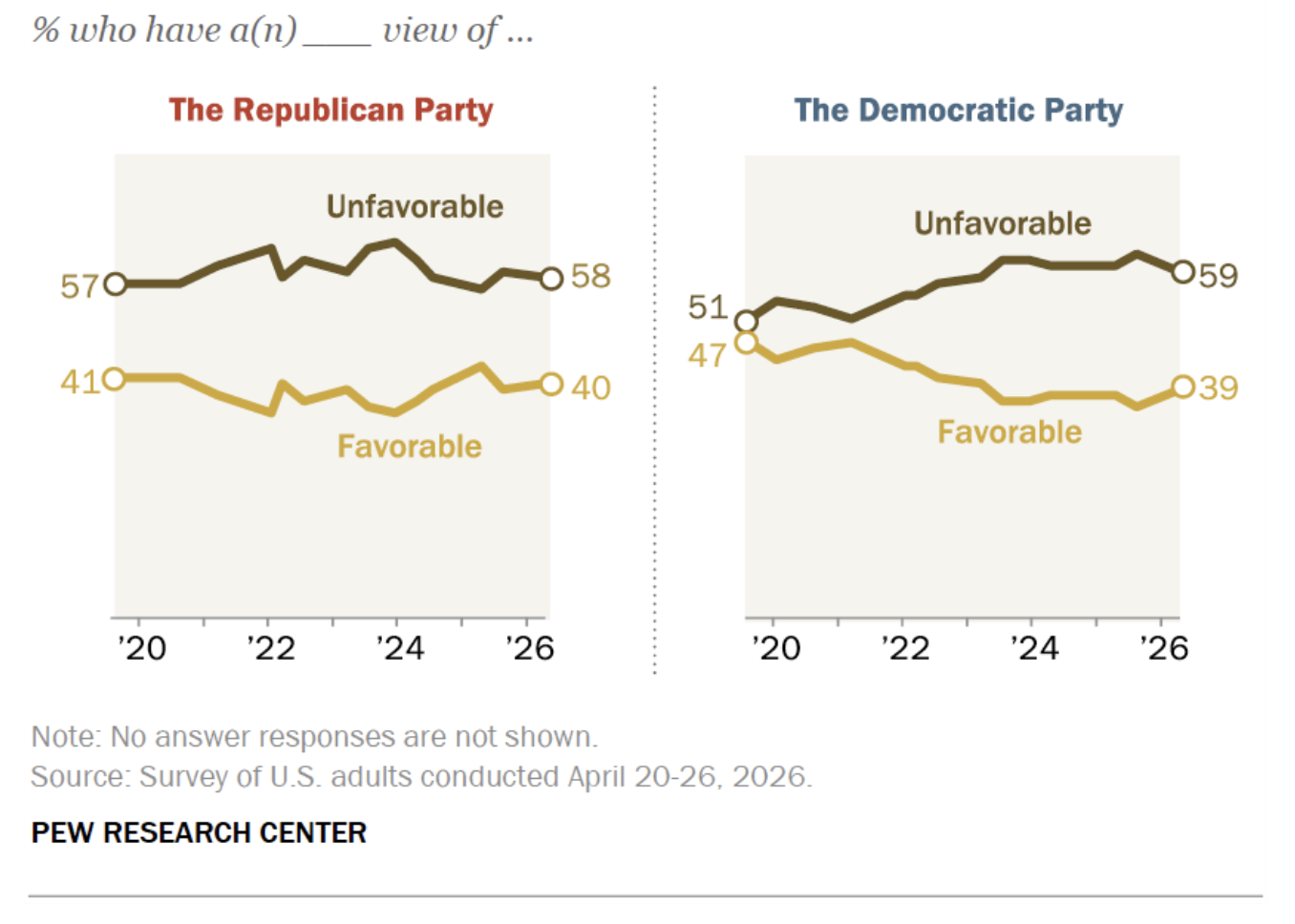
Beyond the Midterms: A Pox on Both Their Houses

Source: Pew Research Center

Beyond the Midterms: A Growing Number of Independents

US political party identification, 1988-2025
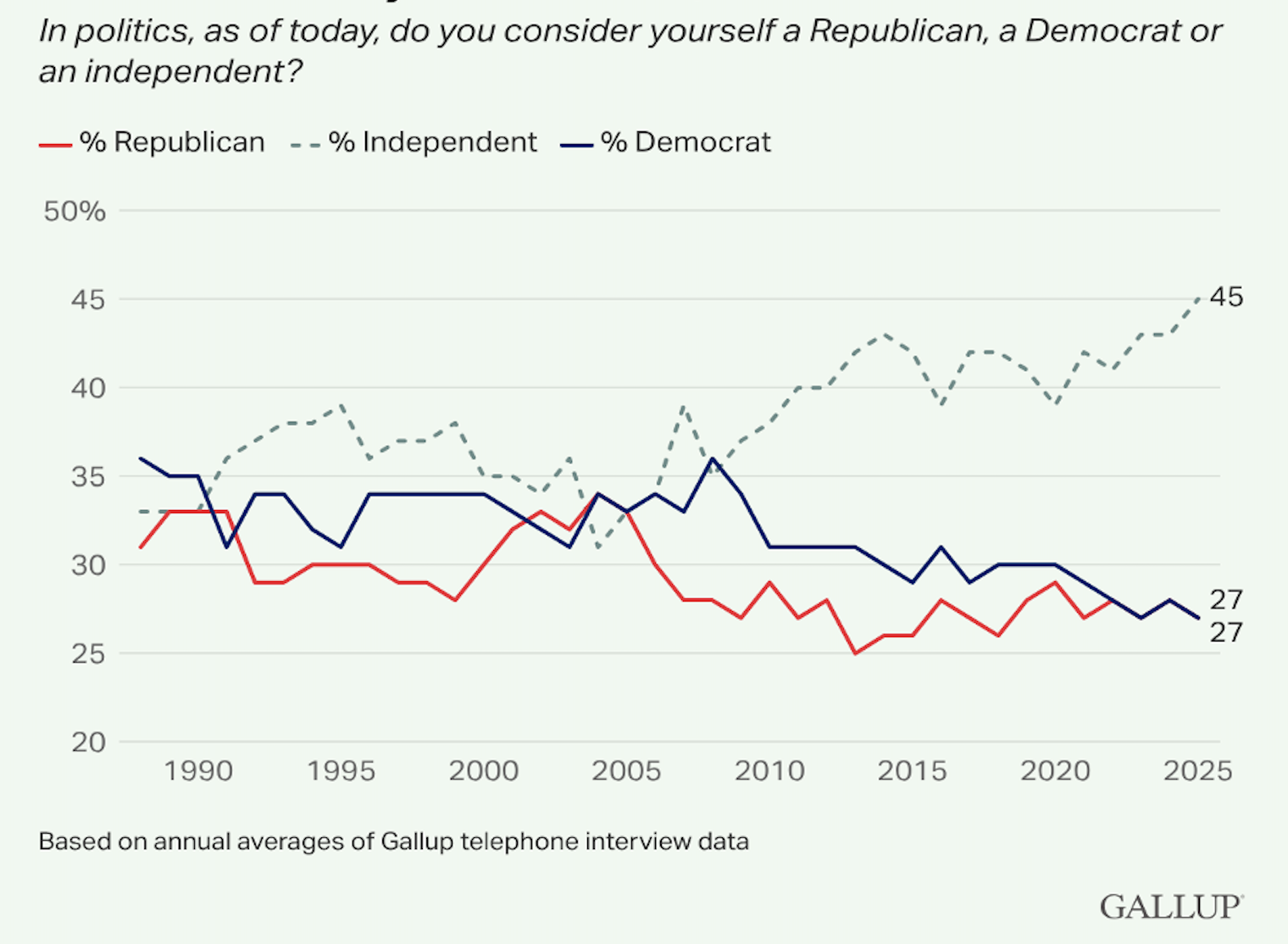
Source: Gallup analysis Jan. 12, 2026

Beyond the Midterms: A Democratic Socialist Presidential Candidate?

Most Americans say they would not consider voting for a democratic socialist for president.
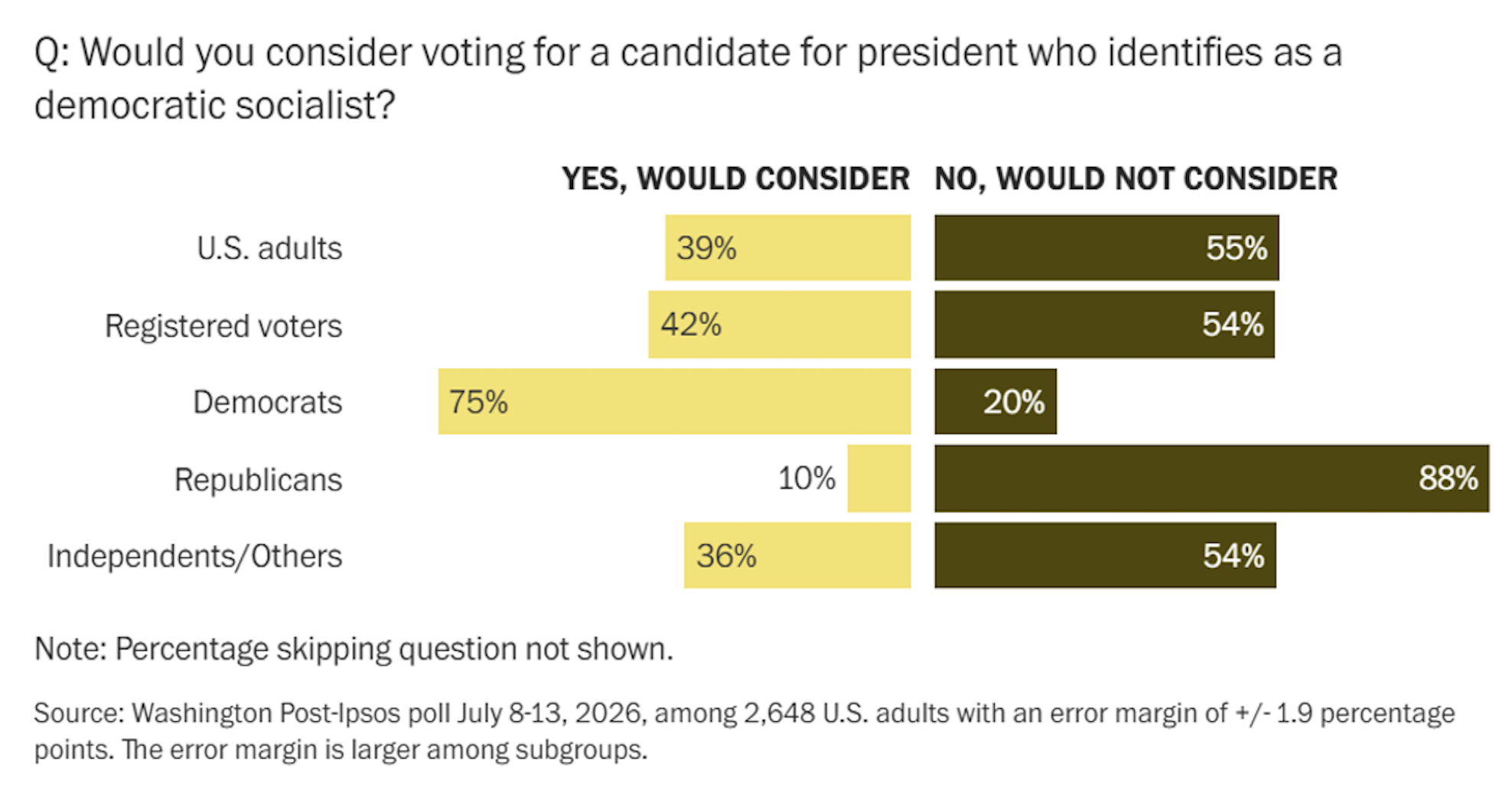
Beyond the Midterms: A Democratic Socialist Presidential Candidate?

Source: Washington Post/Ipsos