NEXUS 2026 Cohort Announcement
GMF Leadership Programs is excited to announce the 2026 NEXUS: Next Generation Security Exchange Inaugural Cohort.
The fellows come with an array of backgrounds and will work together to foster leadership skills, international security policies, and deterrence strategies throughout their fellowship. The Indo-Pacific team is proud of all the outstanding applicants and is thrilled to have assembled such a diverse and impressive group.
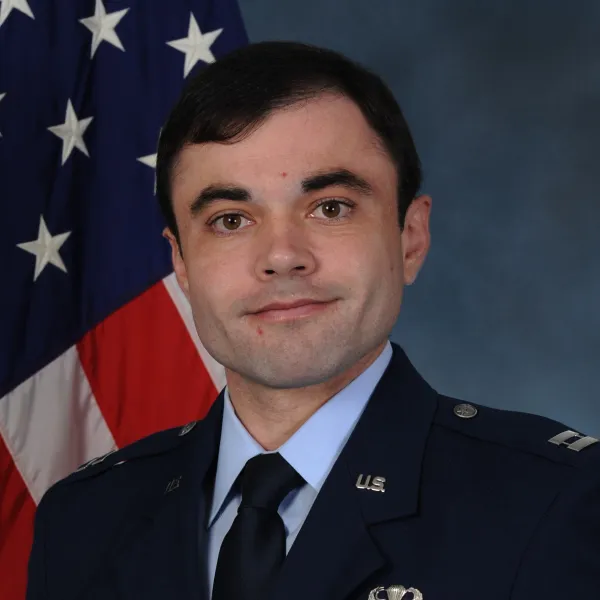
Andrew Carroll
Andrew Carroll is a U.S. Air Force Nuclear & Missile Operations Officer and doctoral candidate in defense and strategic studies at Missouri State University’s School of Defense and Strategic Studies in Washington, D.C. Andrew previously served as Chief of Intercontinental Ballistic Missile (ICBM) Targeting Operations with the 341st Missile Wing, overseeing deterrence operations and treaty compliance for 150 nuclear ICBMs. He has also served as an ICBM instructor and evaluator. Beyond his military career, Andrew’s experience includes work as a Research Fellow with the Stanford U.S.-Russia Forum, a Policy Fellow with the U.S. Commission on Security and Cooperation in Europe, and a Nuclear Risk Reduction Fellow with the Council on Strategic Risks. Additionally, he previously participated in the Center for Strategic and International Studies (CSIS) Nuclear Scholars Initiative and the Manfred Wörner Seminar. Andrew holds an M.A. in European History & Politics from Columbia University and a B.S. in Foreign Area Studies from the U.S. Air Force Academy.
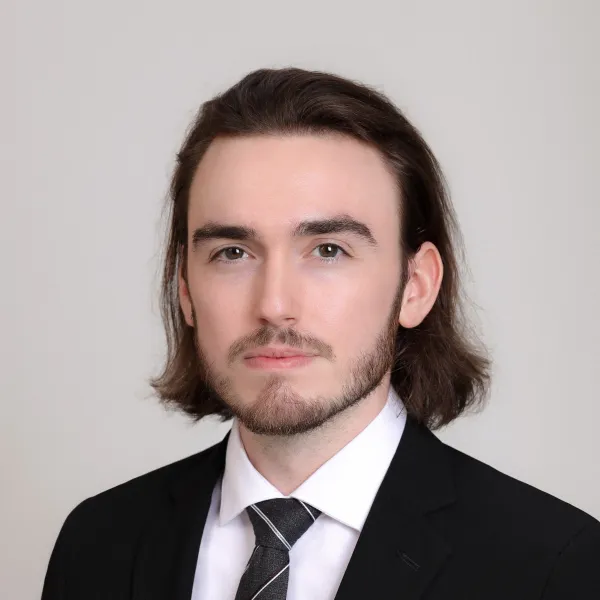
Matthew F. Fleming
Matthew F. Fleming is a Ph.D. student in political science at Northeastern University and a Graduate Fellow at Northeastern’s Center for International Affairs and World Cultures where he leads the Indo-Pacific Minilateral Cooperation Ideas Lab. His research focuses on Indo-Pacific security, minilateralism, and strategic competition in Northeast Asia, with particular attention to U.S.-ROK-Japan trilateralism, Indo-Pacific strategies, and U.S. foreign relations with South Korea and Japan. He was previously a Non-Resident James A. Kelly Korea Fellow at Pacific Forum and a U.S. Delegate to the U.S.-ROK-Japan Trilateral Global Leadership Youth Summit, a U.S. Department of State initiative organized through the U.S. embassies in Seoul and Tokyo and hosted by the East-West Center in 2024. His previous policy and research experience includes work with the Indo-Pacific Strategy Team in the Office of Regional and Security Policy at the U.S. Department of State’s Bureau of East Asian and Pacific Affairs, the East Asia Institute, and the academic journals of the Yonsei Institute for North Korean Studies. Fleming holds a Master of Global Affairs and Policy from Yonsei University in Seoul, South Korea, where he specialized in international security and foreign policy, and a Master of Media and Governance from Keio University in Tokyo, Japan, where he focused on global governance and regional strategy. His research and commentary have appeared in The Diplomat, Pacific Forum, the CDA Institute, the East-West Center, North Korean Review, and the Journal of Territorial and Maritime Studies.

Kotai Kuroda
Kotai Kuroda is a master’s student in International Relations at Waseda University. His research interests include international order, political theory, Indo-Pacific security, and nationalism. Alongside his academic work, he is interning at the Research Institute for Advanced Innovation and GeoStrategy (RAIS), a newly established think tank focused on advanced technology and national security, and at a venture capital firm, where he researches defense technology and dual-use innovation. Through these experiences, he is interested in how Japan can strengthen its security strategy and contribute to international cooperation with like-minded partners.

Ayla Lunberry
Ayla Lunberry is an M.A. candidate in Democracy and Governance at Georgetown University. Her career has spanned the financial, nonprofit, and policy sectors, and she most recently served as a Japan research intern at a foreign policy think tank, analyzing issues such as Japan's Three Non-Nuclear Principles and alliance politics. A Japanese American with roots in Hiroshima, she has a close personal connection to nuclear history and is particularly interested in examining the tensions between public sentiment and evolving security concerns.
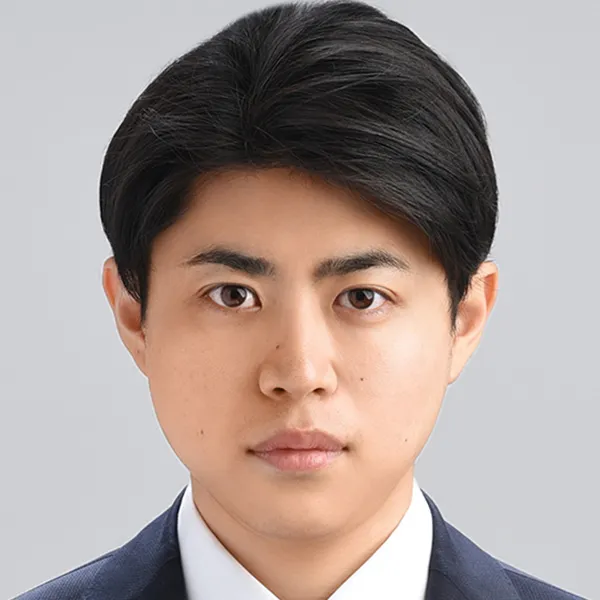
Kento Mashiko
Kento Mashiko is a Ph.D student of The University of Tokyo, Graduate School for Law and Politics, majoring in international relations. His research focuses on East Asian international relations, including US foreign policy toward East Asia, the Cold War history in Asia, and security issues in the Indo-Pacific. Most recently, Kento worked as a researcher in the Consulate General of Japan in Hong Kong. Studied in Seoul National University, Graduate School of International Studies, Peking University, School of International Studies, The University of Queensland for exchange.

Kokoro Nishiyama
Kokoro Nishiyama is a PhD student in Global Humanities and Social Sciences at Nagasaki University, and a visiting researcher at the Research Center for Nuclear Weapons Abolition (RECNA). She graduated from International Christian University (ICU) in Tokyo and holds a master’s degree in Nonproliferation and Terrorism Studies from the Middlebury Institute of International Studies at Monterey. Her experience includes a research internship at the Vienna Center for Disarmament and Non-Proliferation (VCDNP), a fellowship with the Comprehensive Nuclear-Test-Ban Treaty Organization (CTBTO), and a mentor for the UNODA Youth Leader Fund for a World Without Nuclear Weapons.
Ryosuke Nobe
Ryosuke Nobe is a second-year master’s student at the Osaka School of International Public Policy, the University of Osaka. Living near a U.S. military base in Okinawa for four years sparked his interest in postwar U.S. diplomatic history. Building on this experience, his research in this program examines the relationship between U.S. extended deterrence and anti-nuclear identity in Japan. He looks forward to learning from defense and foreign policy practitioners and gaining new perspectives on his research interests. He is also excited to exchange ideas with the other participants throughout the program.
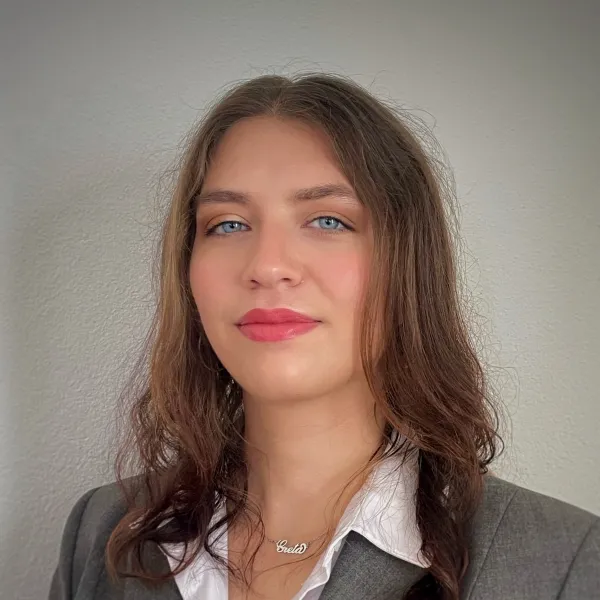
Greta Sangiovanni
Greta Sangiovanni is a Master's student in International Relations at the University of Bologna, where she specializes in East Asian and inter-Korean relations. Her academic path has included exchange periods at the University of Helsinki and Yonsei University in Seoul, as well as participation in the 2020 High School Model UN in New York and in this year’s NATO Model Event in Vicenza, Italy. She is currently writing a comparative study on how South Korea and Taiwan approach deterrence in the face of nuclear adversaries, examining the factors that drive each country's strategic choice between deterrence by denial and deterrence by punishment.

Jakub Witczak
Jakub Witczak holds a BA and an MA in international relations with a master's thesis on the Japanese Self-Defense Forces and Japan's military power. He is also pursuing a master’s degree in global business, finance and governance, as well as the CEMS Master's in International Management. He is an analyst specializing in East Asian affairs and Japanese security at the Boym Institute, a Warsaw-based think-tank, and has previously contributed to the Institute of New Europe, Casimir Pulaski Foundation and the Układ Sił magazine. His research interests also include international security, military alliances, transatlantic relations, Europe-Asia relations, Indo-Pacific and cross-Strait relations. He is an alumnus of the Japanese Ministry of Foreign Affairs' MIRAI programme, during which he completed the Diplomacy and Security Policy track. He served as the Chairman of the Student Association of Pacific Area States and the Dutch Speakers' Scientific Club at the University of Warsaw. He is also an alumnus of the Polish Forum of Young Diplomats, where he coordinated the Asia-Pacific Regional Group. In 2026 he was awarded the scholarship of the Minister of Science and Higher Education of Poland for significant scientific achievements.

Yoshino Yamauchi
Yoshino Yamauchi is a MA candidate at Waseda University’s Graduate School of Asia Pacific Studies and a current Program Assistant Intern at The Maureen and Mike Mansfield Foundation’s Tokyo Office. She is also a recent graduate of the Sakura Scholars Joint BA in Global International Relations program at American University and Ritsumeikan University, which she attended through earning the Sakura Honors and Kyo-Shin Kizo Sakakida Memorial Scholarships. Her areas of professional interest include nuclear nonproliferation, US-Asia relations, international development, and transitional justice. She is also passionate about youth diplomacy, as demonstrated by her selection as a Waseda University representative at the East Asian University Institute (EAUI) Summer School 2026 at Peking University, an inter-Asian academic exchange program administered across five partner institutions. Additionally, she served as a commemorative panelist for Ritsumeikan University’s 125th anniversary event at the Kyoto International Conference Center in 2025, where she presented on the impact of undergraduate internships in navigating careers in security studies for an audience of young policy professionals.