Legal Help for Ukraine’s Defenders: How Pryncyp Supports Veterans and Service Members
Masі Nayyem, a lawyer, volunteered to serve on the front line at the very start of the full-scale Russian invasion. Later, he sustained a severe injury and even lost an eye. During his rehabilitation, he encountered numerous bureaucratic obstacles. Even with his legal background, navigating the system was overwhelming—a clear sign of how challenging it is for service members and veterans in general. To address systemic issues and shift how Ukraine treats its defenders, Masі and the human rights advocate Liubov Halan founded the civil society organization Pryncyp (Principle) in 2023. Today, it not only provides legal support to service members and veterans but also works to reform the legal framework around military service. We spoke with Halan about how to protect those who protect Ukrainians.
What were Pryncyp’s initial goals and how did they evolve?
Because Masі is a lawyer, the original idea was straightforward: provide legal assistance and build a community of legal professionals. But, as soon as we started, it became clear that our advocacy potential was much greater. Direct legal aid can help maybe 1 percent of soldiers. But when you change the rules of the game, everyone benefits. We understood that this was where we needed to invest our efforts.
We also realized how much our audience needed clear information. So, we created a website, which initially offered practical step-by-step guides on what to do in a given situation, specifically for wounded soldiers. Over time, our Legal Navigator expanded to cover the entire cycle of military service and discharge. It quickly became one of our most-used tools: more than 300,000 unique users have already relied on it.
Alongside this, we began developing an analytical direction: studying the needs of our audience through sociological research. That’s how Pryncyp became an analytical and advocacy center while still maintaining a service component. We continue to provide direct legal consultations through volunteer lawyers.
Our core audiences are active service members and veterans.
How did the team form and change over time?
Building the team was difficult because the field has very few specialists—largely due to limited funding. Unfortunately, issues affecting soldiers and veterans weren’t a priority before 2022, which is why we deeply respect the partners and donors who have supported this field since 2014.
Today, our team includes legal analysts, lawyers providing consultations, project managers, researchers, sociologists, anthropologists, a communications team, and administrative staff.
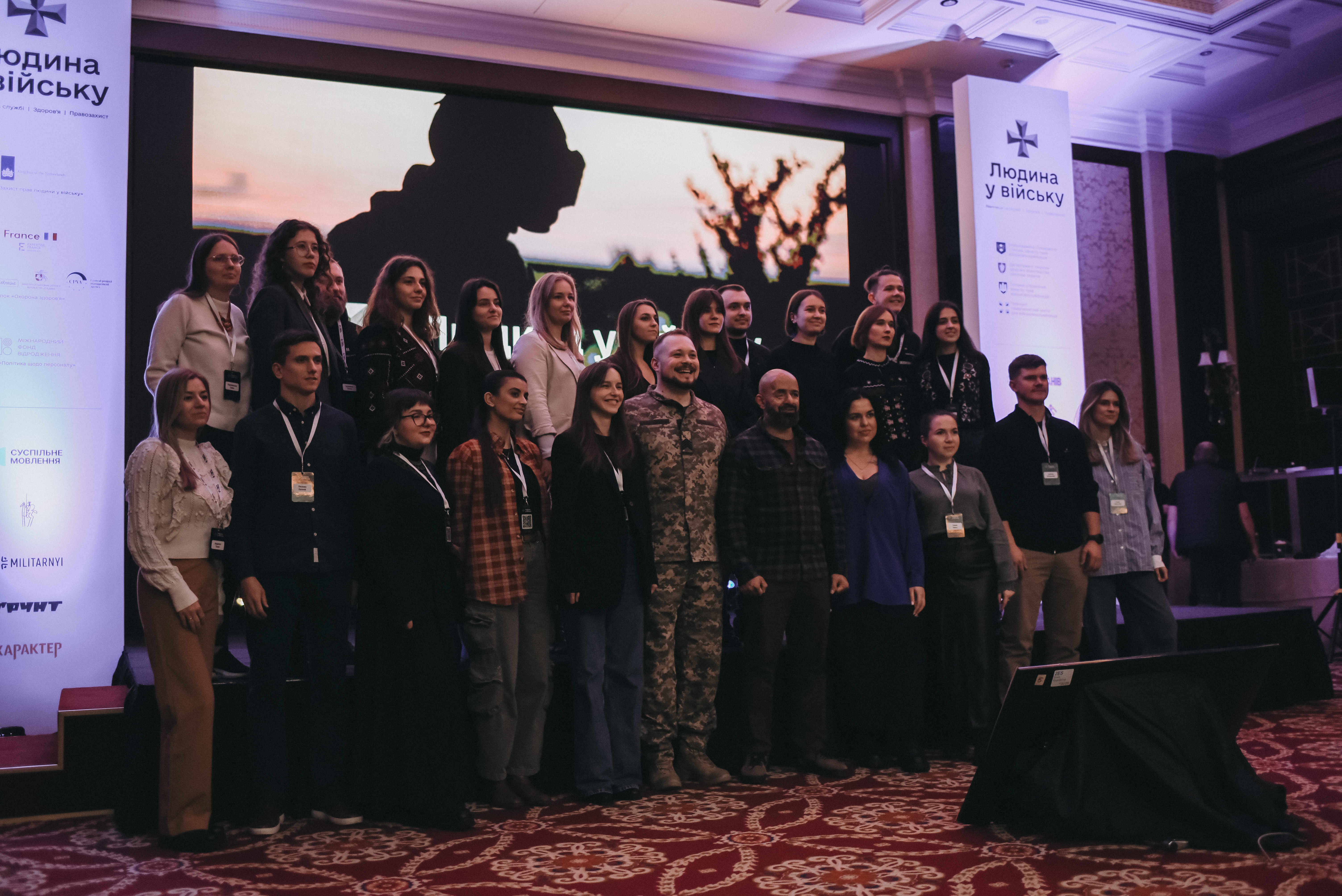
Photo credit: NGO Pryncyp
Most of the team are veterans or relatives of service members. This brings invaluable empathy and lived experience, but also increases burnout risk, which I have to watch closely.
What motivates you? And what results are you proud of?
In our first year, we helped push through key reforms that improved the pathway for wounded soldiers, including digitalizing and automating military medical documentation so that a wounded soldier is no longer treated like a courier carrying papers across institutions just to receive benefits or payments.
We also managed to stop several harmful policy initiatives. For example, there was an attempt to eliminate the “limited fitness” category of the Military Medical Commission, which would have effectively made many unfit soldiers suddenly “fit” for combat.
One of our biggest achievements is the reform of official service requests. We helped launch electronic versions and established a clear procedure for paper submissions.
We also developed the concept for Ukraine’s state veteran policy, which later became the basis for the official national strategy.
But what matters most to me are the messages from people saying that we helped them or that the Legal Navigator allowed them to resolve issues on their own.
Is the Legal Navigator constantly updated?
Yes. It’s far from finished, and it won’t be for a long time. It’s an extremely resource-intensive product because we don’t just add new topics; we constantly update existing ones due to rapid legislative changes or new official clarifications. At least three people work on it at all times.
Next year, we’ll seek funding to redesign the Legal Navigator. What began as a tool for wounded soldiers has grown to cover a huge number of topics—it needs a new interface.
What research has your analytical department carried out, and what insights has it brought?
Our research falls into two areas: military and veteran issues.
In the military sphere, one of our key projects was an analysis of military justice. This is crucial for us because we insist on what some may call a “radical” premise: a service member is a human being with fundamental human rights. There is a common misconception that the army is a small, closed professional group. But during a large-scale war, it is an army of civilians temporarily mobilized, and the relationships between them and their commanders can involve rights violations. This must be addressed.
We conduct a lot of sensitive analytical work for the defense sector, some of which cannot be disclosed.
In the veteran field, one of the most important studies focused on the experiences of wounded soldiers. Standard interviews show only a fragment of a person’s life. So, we adopted mobile ethnography: analysts communicate with veterans and their families for months through messages, voice notes, memes, and daily updates about real-life struggles with documents. This method gave us invaluable insights—a comprehensive view of life after injury, relevant in Ukraine and abroad.
One key finding was the enormous, often invisible burden placed on families, especially on partners of wounded soldiers. Their caregiving is intense, unpaid, and largely unrecognized. So now, together with the Ministry of Veterans Affairs, we’re developing a support program for them.
Over the past year, we also conducted major studies on the transition from military service to civilian life and on access to psychological support for service members.
What is the funding situation in your field?
The share of donor funding earmarked specifically for veterans and service members is very small. But, from the beginning, we chose not to rely on Ukrainian businesses—we didn’t want to compete with fundraising that could directly support the front line. So, we focus on funding that cannot be spent on military equipment, often from international companies whose social responsibility programs align with our mission. We have had very positive experiences with donors, and their trust is crucial.
You also rely on volunteer lawyers. How does that program work?
We noticed that many lawyers began offering help to soldiers and veterans, but often without sufficient expertise. Poor legal assistance can actually harm a service member. So, we created a free online training course to expand the pool of qualified professionals. Graduates commit to providing three months of free legal consultations to our audience. Many continue volunteering far beyond that. This is how we built a network of over 70 volunteer lawyers.
I try to ensure that all work is paid. But some issues are so critical that we will continue addressing them even without funding.
Is it possible to adopt international practices in your field, given the scale and complexity of this war?
There is definitely much to learn, though no foreign system can be copied wholesale. Sometimes we encounter a slightly colonial attitude from partners who come to teach us things we already know. Ukraine has been at war for more than ten years—we’ve learned a great deal, including from international experience, and we’ve tested what actually works.
But there are niche specialists abroad whose expertise we truly value. For example, I don’t need anyone to explain that the United Kingdom has “veteran-friendly” doctors—I know that. What I need are details about how their military medical assessment actually operate. So yes, we still need international experts, as long as they’re willing to invest real resources and to share access to their professionals.