AI Animates Transatlantic Ties


Listen to this article
Audio is generated automatically and may contain minor inaccuracies.
Welcome to the May edition of the TransatlanTech Insider.
This month, GMF Technology hosted its flagship Transatlantic Technology Exchange (TTX), a dialogue that connects EU and US legislators with transatlantic stakeholders across government, industry, civil society, and academia, convened with support from Stiftung Mercator and the Project Liberty Institute. We brought a delegation of ten Members of the European Parliament (MEPs) representing nine different countries to the United States, including a vice president of the European Parliament, party and committee leaders, and the authors of key technology legislation spanning artificial intelligence (AI), digital infrastructure, and data policy.
The delegation engaged with US technology leaders on themes tied to the AI Value Chain: the natural resources, industrial and network infrastructure, data, and public and private investments and inputs that create the machine-learning systems known or marketed as AI.
- In Washington, DC, the delegation heard federal perspectives from the Department of Energy and the Department of State and participated in sessions on AI guardrails and public-interest AI.
- In Virginia, the group focused on AI infrastructure, touring the Corscale Gainesville Crossing data center and meeting with state and local officials on AI resource demands.
- In Massachusetts, the delegation explored AI applications, innovation, and state policy through meetings with startup founders, venture capitalists, and Harvard and MIT scholars, along with exchanges with staff of the governor's office and a state lawmaker.
In this edition of the TransatlanTech Insider, GMF Technology shares highlights from the Transatlantic Tech Exchange as well as insights on middle powers’ role in global technology competition and US-Europe-Japan cooperation on quantum technologies. Subscribe to receive future newsletter editions, follow us on X, and visit our webpage to learn more.
Featured This Month
GMF Hosts European Lawmakers for Transatlantic Tech Exchange
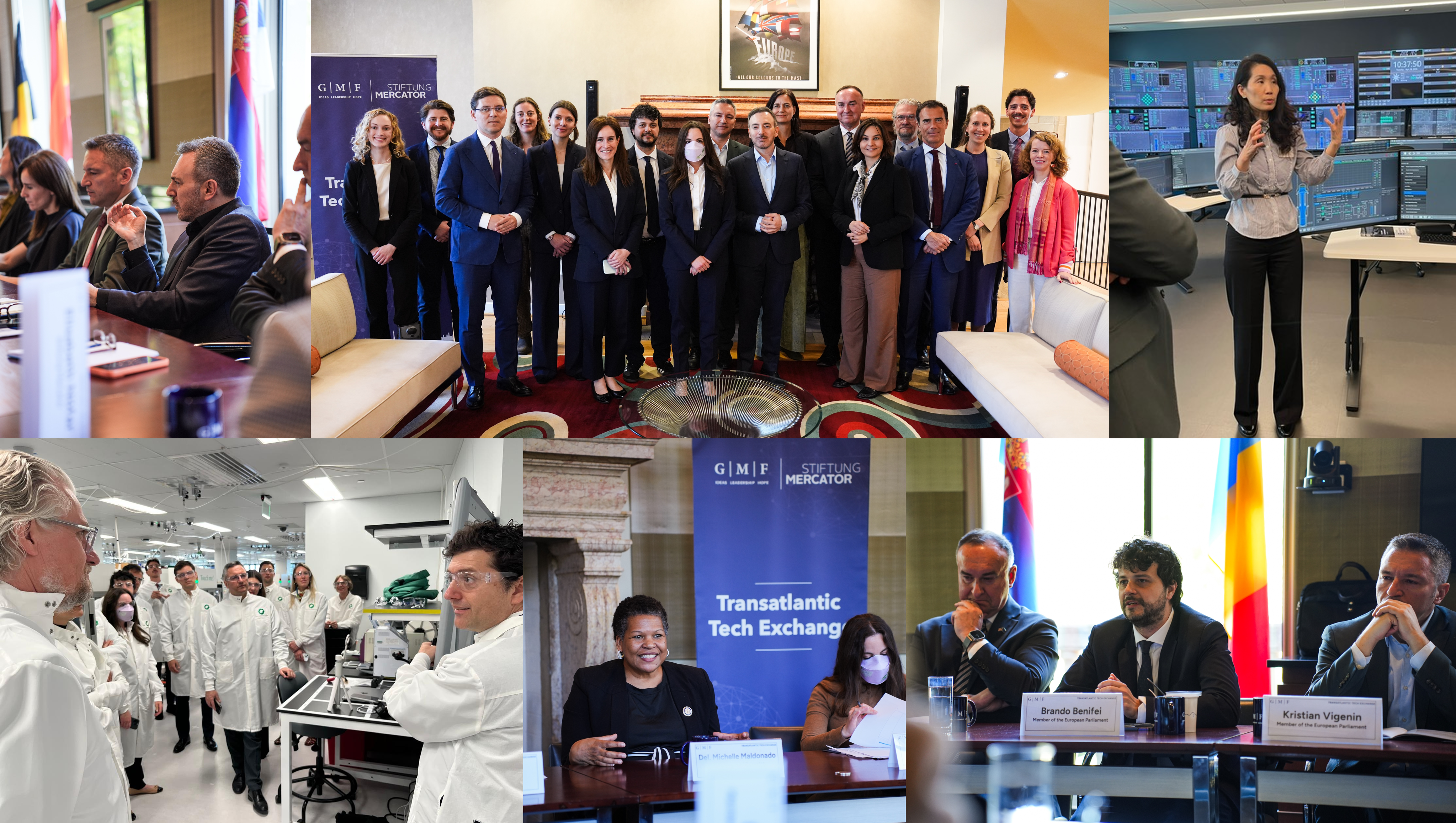
AI applications depend on inputs ranging from semiconductors to data centers to algorithms. For legislators, understanding all nodes of this “AI Value Chain” can help identify policy spillovers from cross-cutting issues and foster a more holistic approach to AI policymaking. As the United States and Europe alike pursue AI leadership, GMF Technology’s Transatlantic Tech Exchange (TTX) is working to identify areas of transatlantic policy alignment on issues across the Value Chain and build a community of practice among US and EU lawmakers at the forefront of AI legislation.
The AI Value Chain served as the thematic focus of the latest edition of TTX. Over the weeklong study tour, the delegation of MEPs explored key elements of US technology innovation ecosystems and homed in on areas of shared transatlantic interest in AI policy, including children’s safety and AI redlines. To complement the TTX study tours, GMF Technology publishes a series of analyses on the future of transatlantic AI innovation and policy.
GMF Speaks on Middle Powers’ Role in Global Technology Competition
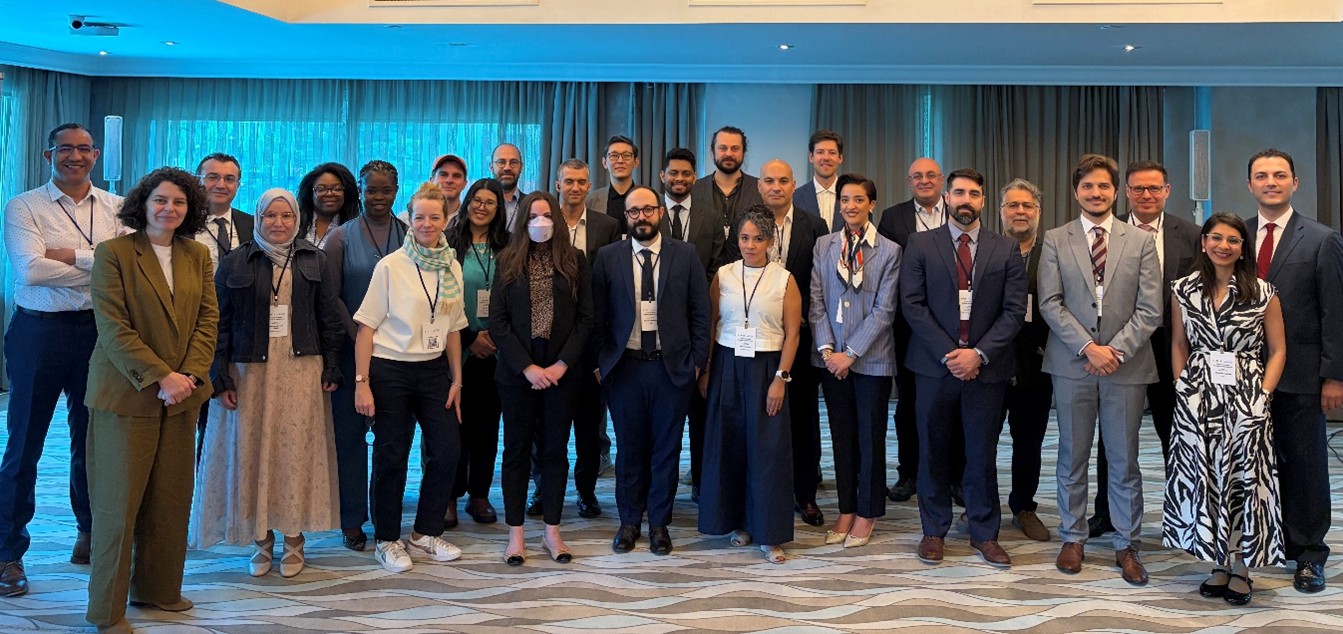
Emerging technologies are increasingly enablers of geopolitical, economic, and military power. As technology competition supercharges great-power rivalries and global influence, middle powers must determine what role to play in increasingly complex and transnational technology landscapes. New innovation hubs in the “Global South” are also showcasing alternative pathways to developing and scaling technologies as countries work around resource constraints and institutional barriers.
GMF Technology explored these issues at the Turkish–European Dialogue on Global Affairs in Ankara, hosted by GMF Global Power Shifts with support from Stiftung Mercator. Lindsay Gorman examined control of critical technologies as a source of geopolitical power, speaking alongside a member of the Turkish parliament and other leading technology policy experts. Deputy Managing Director Astrid Ziebarth unpacked challenges and opportunities of cross-border technology development, and Fellow Sharinee Jagtiani discussed lessons from Global South innovation ecosystems for Global North actors.
Lindsay Gorman and Alexandra Pugh Explore US-Europe-Japan Quantum Cooperation
Quantum technologies hold transformative potential for sectors from defense and finance to energy and manufacturing. As these technologies move from lab to market, allies have a key opportunity to coordinate approaches to international standard-setting. Technical standards, while at times perceived as purely neutral, are a significant tool of geopolitical power that will help determine which actors and economic systems shape the future of the quantum industry.
Lindsay Gorman and Program Coordinator Alexandra Pugh examine how the United States, Europe, and Japan can better coordinate on quantum standards in “Entangled Interests in Quantum Technologies”. As the PRC expands its influence across international standard-setting bodies, they write, the trilateral partners should resist trends toward technological self-sufficiency and cooperate more closely on economic security tools and technical standards strategies for quantum technologies. The piece appears in the volume “Technology Standards as Foreign Policy”, which also features contributions from Gautam Kamath and Shotaro Nagino. GMF Senior Fellow for Japan Sayuri Romei edited the volume.
Media Mentions
Lindsay Gorman on DW News on OpenAI Trial
“Most governments haven’t enacted meaningful [AI] guardrails”, Gorman said on “Musk vs OpenAI: The trial over who controls AI”. “The guardrails that OpenAI might call for could be different from the ones that Anthropic would call for … could be different from the ones that, for example, the folks in Brussels with the EU AI Act would call for. But the reality is that, I think, there is large-scale agreement that some regulatory measures—some guardrails—need to be put in place.”
Byte-Sized Bulletin
The US-PRC summit concluded without any major technology agreements, although US Treasury Secretary Scott Bessent stated that the two countries would begin talks on AI. The prospect of US chipmaker NVIDIA selling H200 chips to PRC customers remains unresolved despite some observers’ expectations of a breakthrough after NVIDIA CEO Jensen Huang joined the delegation to the PRC.
The European Commission (EC) could present a proposal for EU-wide social media restrictions for minors as early as this summer, EC President Ursula von der Leyen said. Australia, France, and Denmark are among the countries that have enacted or are considering similar limits as concern mounts over children’s safety online.
Google and the US Department of Defense signed an agreement allowing the use of Google’s AI tools in classified settings over the objections of hundreds of the company’s employees, some 600 of whom signed a letter urging CEO Sundar Pichai to refuse such a deal. Firms including OpenAI and xAI have recently entered into similar agreements, while Anthropic remains in a legal battle with the Pentagon over its designation as a supply-chain risk.
Germany’s domestic intelligence agency reportedly chose the French AI firm ChapsVision over US-based Palantir to analyze intelligence data. The decision comes amid a wider debate over the use of Palantir products in German agencies, which critics argue could undercut fundamental rights and technological sovereignty ambitions.
Electric vehicle (EV) demand in Europe rose 27% year-over-year in April as high gasoline prices squeezed consumers. PRC-built EVs are capturing a growing share of the European market, with market share rising by three percentage points from 2025 despite EU tariffs and concerns over surveillance and data privacy.
The Download
- Visiting Distinguished Fellow Heli Tiirmaa-Klaar spoke at the UN Institute for Disarmament Research’s Cyber Stability Conference, which convened experts across government, industry, academia, and civil society as part of Geneva Cyber Week. Tiirmaa-Klaar examined how international cyber governance can keep pace with advances in emerging technologies such as AI and quantum computing.
- Sharinee Jagtiani participated in GMF’s 28th India Trilateral Forum, which brought together European, US, and Indian policy stakeholders and business leaders in Brussels for discussions of the future of the trilateral relationship. Led by GMF Indo-Pacific Senior Fellow Garima Mohan, the forum offered practical recommendations for how Europe can advance cooperation with India on emerging technology and other key security and competitiveness issues.
- China Technology Analyst Dylan Welch examines the intersection of quantum technologies and space in a new piece for GMF Technology. Welch unpacks the roles of quantum communications, sensing, and computing in the next space age as countries including the United States, Europe, and the PRC race to shape the future of cislunar activity. Read the full article here.
- Dylan Welch moderated a GMF Alumni Leadership Council briefing titled “Transatlantic Defense Tech Cooperation: Competing and Collaborating in the Age of Space and AI”. Welch discussed AI as an enabler for space and defense capabilities and examined opportunities for transatlantic industrial partnerships.
GMF Technology is dedicated to ensuring that democracies together win the strategic technology competition with autocrats.
Alexandra Pugh coordinated this month’s TransatlanTech Insider.