TransatlanTech Insider—January 2026 Edition


Welcome to the January edition of the TransatlanTech Insider.
In 2026, US President Donald Trump’s threats over Greenland have eclipsed technology matters as the most volatile touchpoints in a strained transatlantic relationship. But shifts on AI, competition with the People’s Republic of China (PRC), and cybersecurity continue on both sides of the pond. In Washington, the Trump administration formally approved sales of NVIDIA’s H200 AI chips to the PRC despite concerns about fueling Beijing’s AI ambitions. The approval adds conditions: NVIDIA has to certify that there are enough AI chips to serve American customers, and PRC-based customers cannot use the chips for military purposes—though enforcement will be difficult. The deal to divest TikTok to US ownership has also closed, with key questions on the degree of involvement of PRC-based engineers in the new US entity still unanswered.
In Brussels, draft revisions to the EU’s Cybersecurity Act include a phase-out of equipment from high-risk suppliers in 18 critical sectors spanning connected vehicles, medical devices, and satellite networks. PRC suppliers are not named explicitly, but the European Commission’s Executive Vice-President for Tech Sovereignty, Security, and Democracy Henna Virkkunen stated the Commission would designate its 5G Cybersecurity Toolbox, designed to derisk from Huawei and ZTE, a mandatory approach. The PRC called the move “blatant protectionism”. On the AI front, Europe’s discontent with Elon Musk’s X is growing, as sexualized images of women and children created with Grok proliferated across the platform. The Commission is mulling another investigation of X under its Digital Services Act, with one spokesperson stating, “This has no place in Europe.”
In this edition, GMF Technology shares new work on the geopolitics of quantum, cyber and societal resilience in the age of AI, and US-Europe-Japan cooperation on emerging technologies. Subscribe to receive future newsletter editions, follow us on X, and visit our webpage to learn more.
Event Spotlight
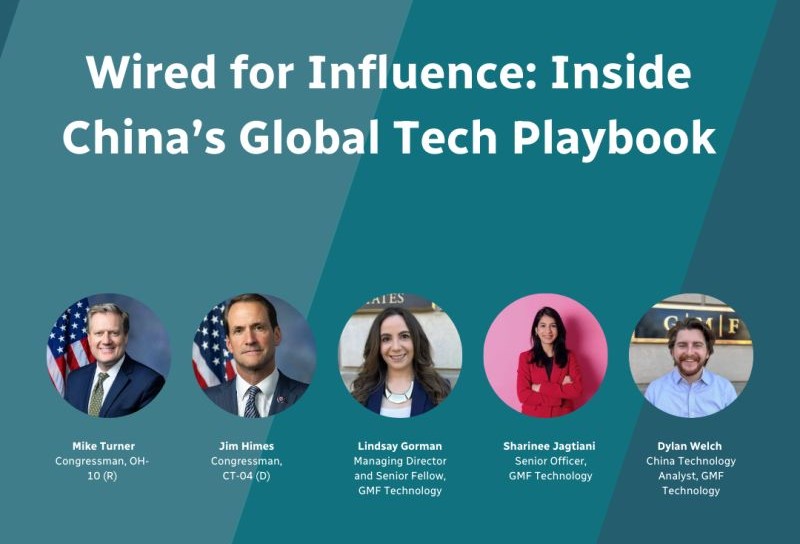
Registration is open for the DC launch of GMF Technology’s China Tech Stack research reports, Wired for Influence: Inside China’s Global Tech Playbook, featuring Congressman Mike Turner and Congressman Jim Himes alongside GMF Technology’s Lindsay Gorman, Dylan Welch, and Sharinee Jagtiani. As the PRC builds and exports digital infrastructure as part of its Belt and Road Initiative, it is imperative for US and European leaders to understand the PRC's technological footprint and evaluate its global economic and security implications. Join us on February 3 at 8:30am ET online or in person in Washington, DC to explore how the United States and Europe can counter the PRC’s global digital influence.
Media Spotlight
Lindsay Gorman Featured on Bloomberg News on the Future of Tech and Geopolitics in 2026
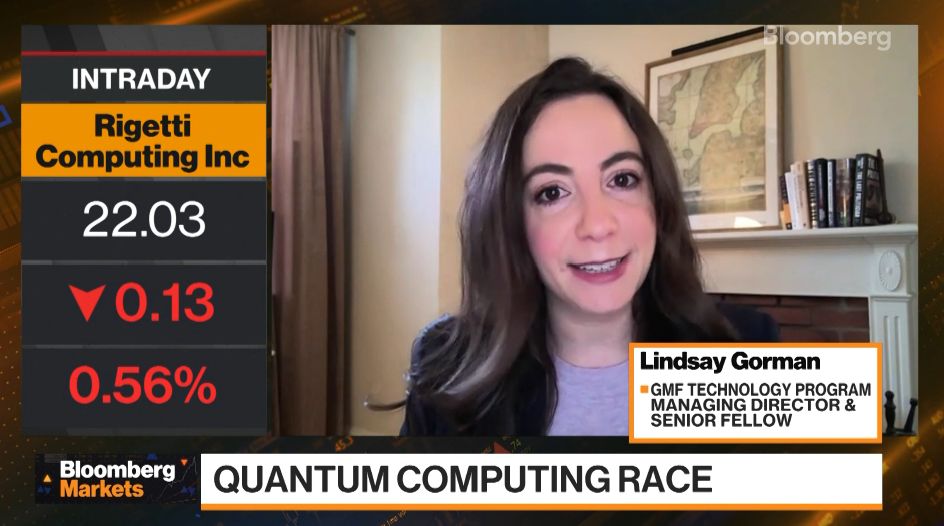
Lindsay Gorman joined Bloomberg Markets to discuss the future of AI, quantum, and technology competition with the PRC in “AI, Quantum, and the World Order”. Gorman forecasted a breakneck AI race between the United States and the PRC on both innovation and adoption in 2026, as well as answers to long-standing questions on TikTok’s national security risks as the app’s new ownership structure takes shape. She also underscored quantum’s increasing geopolitical relevance and highlighted looming conflicts between US federal and state-level AI legislation as well as US and EU technology regulatory frameworks.
Featured this Month
Lindsay Gorman Speaks on Quantum and the Transatlantic Relationship on Microsoft’s Tech Talk Series

Lindsay Gorman spoke with Microsoft’s Tomas Jakimavicius on the geopolitics of quantum technologies, examining likely risks and rewards from future quantum breakthroughs as the technology rapidly moves from theoretical possibilities to real-world impact. While universal fault-tolerant quantum computers remain in the research stage, she said, their promise is already reshaping global investment priorities and strategic competition.
Gorman also noted the threat quantum computing poses to today’s cryptographic systems and the urgency of transitioning to post-quantum cryptography. She highlighted the historic role of transatlantic cooperation in driving scientific progress, pointing to shared technical advances, cross-border research, and industry collaboration between Europe and the United States.
Looking ahead, Gorman outlined four priorities for transatlantic technology leadership: deepening quantum research and standards alignment; building innovation ecosystems for collective defense; aligning on AI governance; and accelerating biotech cooperation. She underscored that sustained collaboration is essential to ensuring that emerging technologies advance democratic values and shared prosperity.
Program Manager and Fellow Julia Tréhu Offers Recommendations for Societal and Cyber Resilience
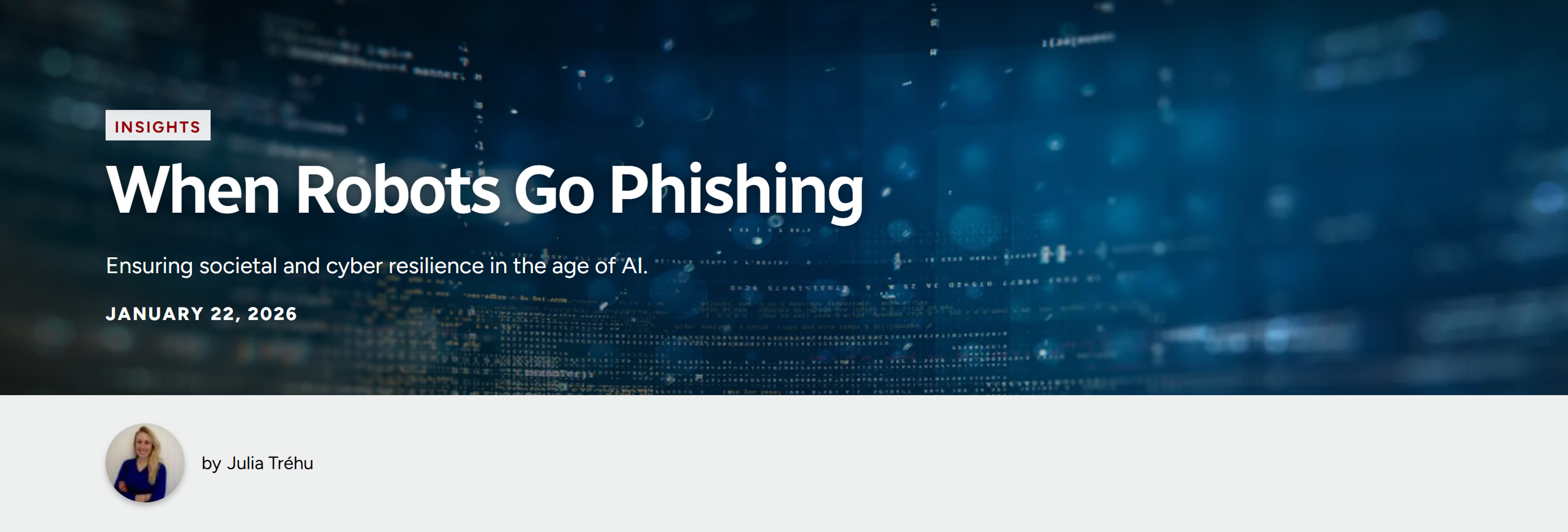
Julia Tréhu explores strategies for resilience in a threat landscape transformed by AI in her new piece “When Robots Go Phishing: Ensuring Societal and Cyber Resilience in the Age of AI”. She analyzes the impact of AI on cybersecurity, noting risks of data poisoning and prompt injection by malicious actors, and explores opportunities to use AI as a tool for cyber defense. Tréhu concludes with recommendations to harness the benefits of AI while strengthening defenses against its risks. She suggests that EU and national governments create an AI-cyber working group to break down barriers between the public and private sectors and launch AI-cyber tax programs to incentivize public-private collaboration in critical sectors. Tréhu also advises private-sector leaders to emphasize cyber hygiene and security by design while elevating cybersecurity to an executive-level priority to respond to the new scale of threats.
GMF Technology Speaks at Japanese Embassy Roundtable on US-Europe-Japan Cooperation on Emerging Technologies Organized by GMF Indo-Pacific
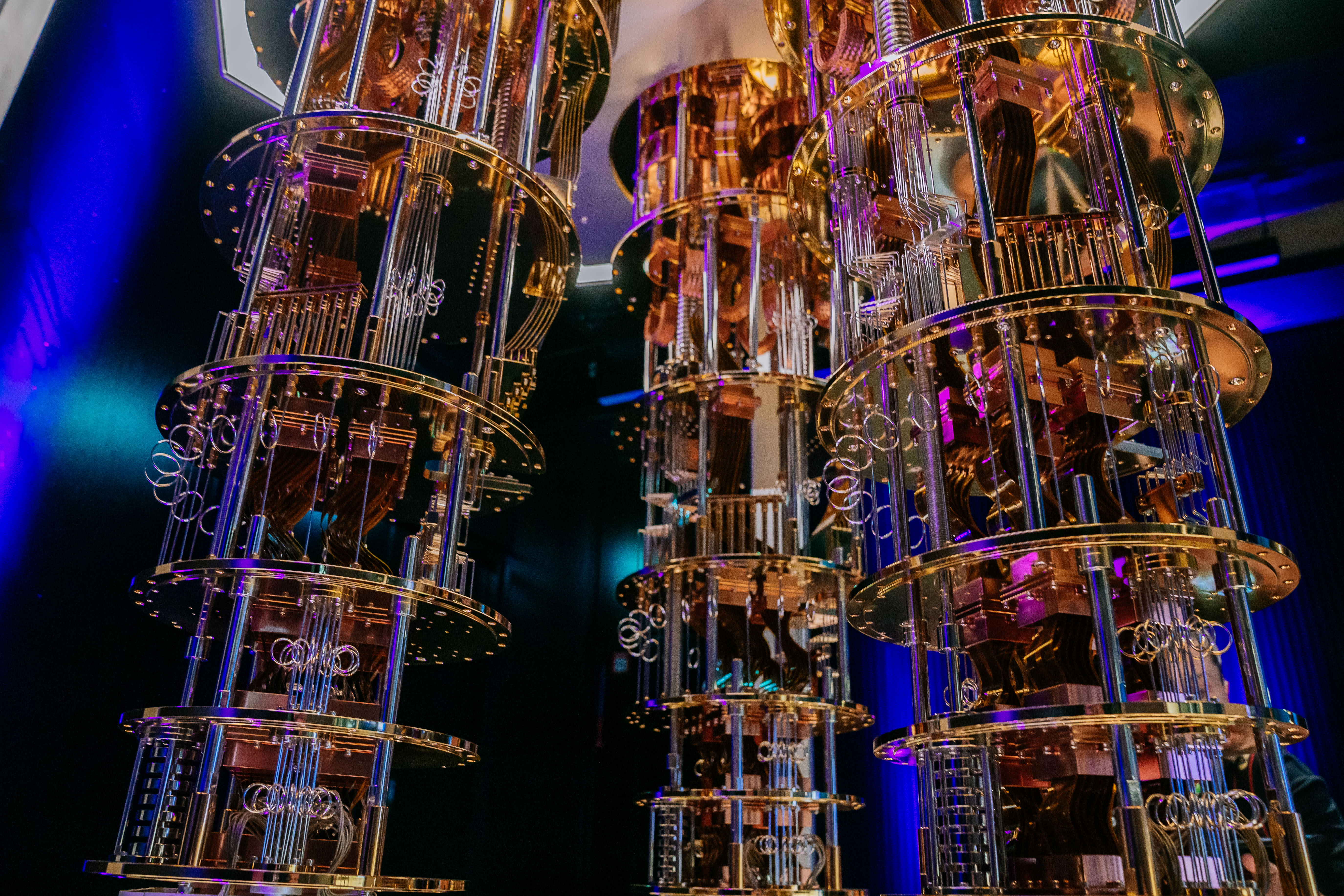
Lindsay Gorman and Program Coordinator Alexandra Pugh spoke on US-Europe-Japan cooperation on quantum technologies for defense applications at a closed-door roundtable hosted by GMF Indo-Pacific and the embassy of Japan to the United States. Gorman and Pugh explored strategies for the United States, Europe, and Japan to enhance competitiveness and interoperability in emerging technologies alongside Gautam Kamath of Eurus Advisory and Pacific Forum’s Shotaro Nagino. Dr. Sayuri Romei, Senior Fellow for Japan at GMF Indo-Pacific, hosted the roundtable.
Media Mentions
Lindsay Gorman in The New York Times on TikTok Deal and US National Security
“We’ve gone round and round and ended up not too far from where we started,” said Gorman in “TikTok Strikes Deal for New U.S. Entity, Ending Long Legal Saga”.
Lindsay Gorman in DW News on Grok’s Sexualized Deepfakes
“Where I do think we need to move is towards the images themselves being much clearer. Technologies like content authenticity technology and provenance information can actually provide transparency and put the information in the hands of the consumer so we can better tell what’s real from what’s not,” Gorman said in “Elon Musk's chatbot under investigation in Europe for 'spicy mode'”. “This recent spate of content is already prompting investigations into xAI and Grok for how this spread is happening.”
Lindsay Gorman in POLITICO on US Cyberattack on Venezuela
In using cyberattacks against Venezuela, “we could be tipping our hand a bit”, Gorman said in “Venezuela strike marks a turning point for US cyber warfare”. “There’s a reason we keep things closer to the vest, and that’s because our adversaries are watching how we do things.”
Lindsay Gorman in CNN on US-EU Technology Tensions
“There’s kind of a collision … between the Trump administration’s complaints about censorship and the desire of Big Tech firms to, in some cases, scrap the digital legislation from the EU entirely,” Gorman said in “Trump administration’s vision of US tech dominance is colliding with Europe”. “We could be on an increased collision course because EU officials have said that they’re not going to be bulldozed.”
Lindsay Gorman in NewsMax on US Cyberattack on Venezuela
Gorman expressed concern that disclosing cyberattacks may weaken future attempts at cyber warfare. “[Our adversaries] have intelligence operations dedicated to figuring out what U.S. cyber doctrine and capabilities are,” Gorman said in “Venezuela Strikes Show Power of US Cyber Warfare”.
Julia Tréhu in The Christian Science Monitor on European investigations into Grok’s deepfakes
“Deregulation is the word of the day in the U.S.,” Tréhu said in “Musk reins in Grok from making provocative images. Is it a victory for Europe?”. It is a central pillar of the AI Action Plan, an initiative that the Trump administration released in July and has framed as a way to “accelerate American leadership”.
Byte-Sized Bulletin
AI and Democracy
- AI-generated images and videos related to the US capture of Venezuelan President Nicolás Maduro proliferated on social media within hours of the US operation in Caracas. Tech mogul Elon Musk reposted an AI-generated video of Venezuelans celebrating Maduro's ouster on his platform X that garnered millions of views before its removal.
- Google and AI chatbot company Character.AI agreed to settle a lawsuit brought by the mother of a Florida teen who killed himself after conversing with one of Character.AI’s chatbots. The settlement coincides with US officials’ heightened scrutiny of AI’s risks for children.
US-EU-China Technology Competition
- The PRC Ministry of Commerce will investigate US tech giant Meta’s purchase of the AI startup Manus to assess compliance with PRC export control laws. Manus is based in Singapore but began as part of the PRC startup Butterfly Effect.
- Donald Trump signed an executive order instructing photonics firm HieFo Corporation to unwind a 2024 deal in which it acquired digital chips and related wafer design, fabrication, and processing businesses from the US-based Emcore Corporation. The White House cited national security concerns in its decision, stating that a PRC national controlled HieFo.
- The PRC banned the export of dual-use goods to “Japanese military users, for military purposes, and for any other end-user purposes that could enhance Japan’s military capabilities”. The ban comes after Japanese Prime Minister Sanae Takaichi remarked that a PRC attack on Taiwan could become a “survival-threatening situation” for Japan, alluding to the potential of Japanese military involvement.
Allied Coordination and Competitiveness
- NVIDIA unveiled its new Rubin computing architecture, a suite of six microchips that operate five times faster than their Blackwell predecessors on inference tasks, according to the company. The chips will be used by tech powerhouses including OpenAI, Anthropic, and Amazon Web Services, as well as by Lawrence Berkeley National Lab.
- Naver, the Korean internet conglomerate, is pitching its cloud services to Southeast Asian and Middle Eastern countries as an alternative to US and PRC providers. The company offers tailored systems and local data storage, positioning itself as an attractive partner for countries pursuing sovereign AI capabilities.
- Germany’s Quantum Systems and Ukraine’s Frontline Robotics are establishing a drone production line in Germany to manufacture Zoom and Linza drones for the Ukrainian Armed Forces. The initiative marks Europe’s first automated, industrial-scale foreign production line for drones for the Ukrainian military, the companies said.
GMF Technology is dedicated to ensuring that democracies together win the strategic technology competition with autocrats.
Alexandra Pugh coordinated this month’s TransatlanTech Insider.