Petros Hub: A Second Chance and a Community for Ukrainian Veterans
Petros Hub in Ivano-Frankivsk is a space where veterans and civilians come together to connect, learn new skills, play sports, and take part in shared activities. Building connections is an important part of recovery for people who have lived through the experience of war, though it is only one piece of the puzzle. The initiative’s founder, Natalka Naida, talks about how a chance encounter grew into an archery-instructor school, and how her background in business has shaped her approach to working with veterans.
How did you get started working with veterans?
Before the full-scale invasion, I was in business. I had a women’s clothing brand and a sewing workshop. After the invasion began, we started sewing everything the army needed: sleeping bags, raincoats, pilot uniforms. Around the end of 2022, we got a request to make adaptive clothing—special T-shirts, pants, and shorts with fasteners that people with prosthetics can put on.
Around that time, Yurko, the son of close friends of mine, was killed at the front. His mother found a note in his notebook: “People climb out of tougher places.” We decided to make T-shirts with this phrase, at first just for people who knew him. We called the project Yurko’s Antidepressants. Later we decided to sell the T-shirts to raise money for something useful. We understood we wouldn’t raise much for drones this way, so we decided that for every T-shirt sold, we would sew one set of adaptive clothing for a wounded soldier. It’s a simple, understandable donation system for civilians, and people started ordering the shirts.
I started traveling to hospitals with this clothing. That’s how I met guys going through rehabilitation.
We talked and I asked what they did while being treated. Basically nothing, it turned out. Now there are many organizations and activities, but back then, at the very beginning, there was nothing. After sessions with a physiotherapist, the guys just lay in their wards.
So we talked it over with the team and started coming to them with workshops. I also had my own leather workshop, so we taught them to make simple items they could keep. At first the doctors looked at us with confusion, but then they saw that we kept coming back and that the guys were genuinely interested, and they started waiting for us themselves.
How did this grow into a stable project and even a physical space for veterans?
When the invasion started, Katia Dubrovina—a silver Olympic medalist in archery—moved to Ivano-Frankivsk from Kharkiv. I happened to see her at the stadium and we got to know each other. Archery is about a moment of concentration that’s so often missing from modern life. At some point, I suggested she come with us to the hospital and shoot arrows with the guys.
Back then we had no grants. We bought everyone pizza with our own money, made tea, played music, shot arrows in the hospital courtyard, and talked.
Later we started taking them outside the hospital too—fishing, for example. Once there was a concert at the Promprylad art cluster and we brought them there. I saw the wide eyes of civilians when they saw guys in wheelchairs and with prosthetics, and I realized how important this interaction is. How few chances they have to be together like that. For the guys, the event mattered too. Most are from completely different regions, the south and east, often small towns, and ended up here for rehabilitation. Many had never seen anything like Promprylad—a huge, modern space that looks like a spaceship to them.
Some of the guys came to Ivano-Frankivsk with wives and children, and you could immediately see they had support and motivation to get out of bed, to learn to use a wheelchair or prosthetics. But not everyone has that kind of support, and that’s when problems with alcohol start. I thought:
We’re already losing people at war, and now we’re losing them on the home front too. We civilians can’t force them to do or not do anything, but we can give them a choice—between drinking and shooting a bow or doing something else.
So we decided to create a permanent space for veterans and civilians to meet and spend time together—to learn, relax, and talk. I reached out to Promprylad, and I specifically asked for a space on the ground floor, so it would be a high-traffic area and not hidden away. It’s a commercial rental zone, but we came to an agreement. We pay for the space at a social rate.
We spread the word through hospitals and launched a page online, and people started coming. Right now, we run a combat sports club there. We launched it with grant funding, but we want to make it self-sustaining. Civilians will pay for classes while everyone else trains for free.
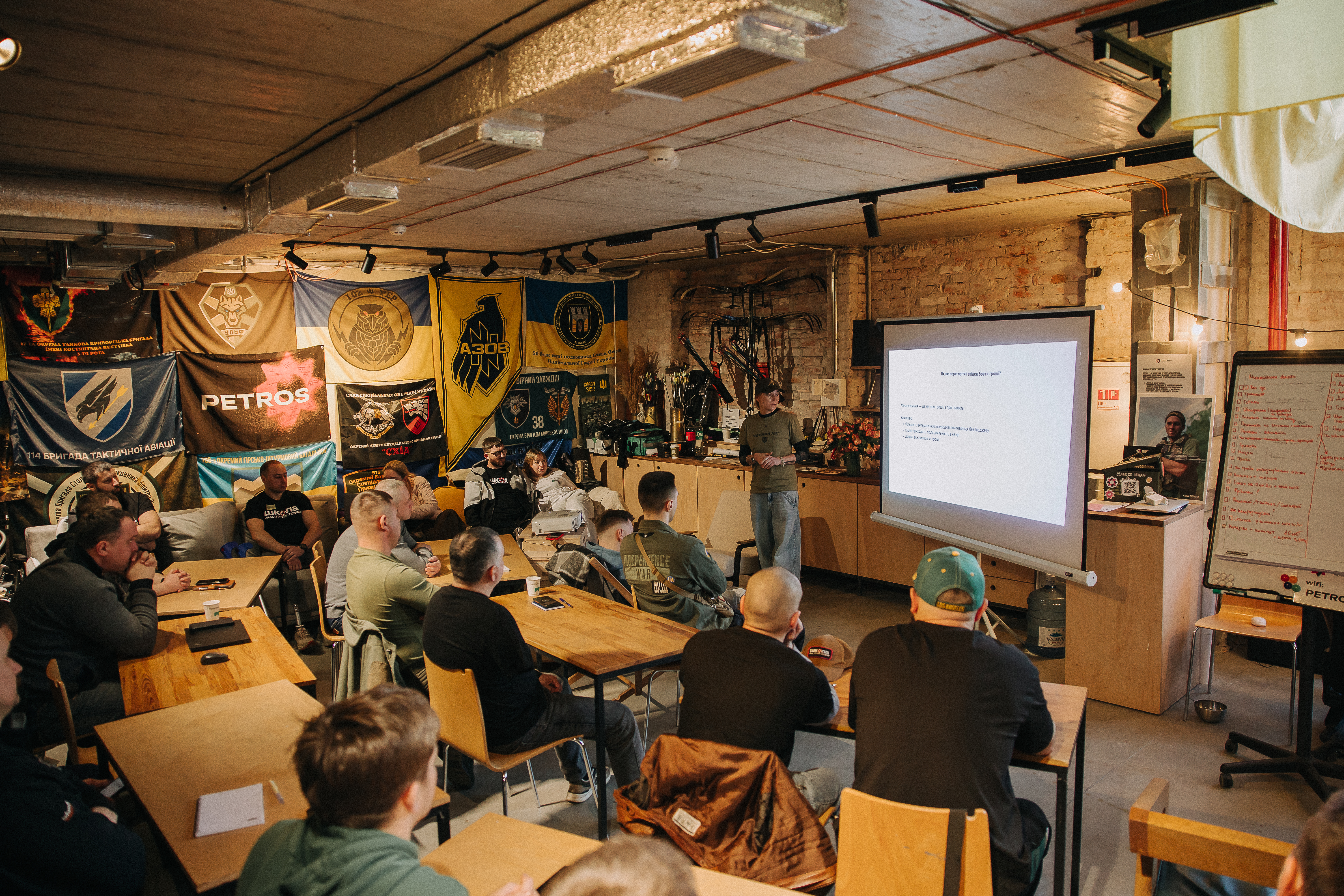
Photo credit: NGO Petros Hub
You also have the women’s club. What is the purpose of this project?
We realized that wives, sisters, and mothers carry the heaviest burden while their men are at war. Household duties, children, and elderly parents—it often falls entirely on them. So we decided to organize meetings for women. We had no money for this either but by then we already had the space. At first, a female veteran who was studying to become a psychologist helped run the meetings. But essentially the women just got together and talked. It turned out that simply having a chance to talk things through is hugely important.
Once we got a grant, we were able to bring in a psychologist on an ongoing basis. Yevheniia is from Mariupol and works specifically with war-related trauma. We came up with all sorts of ways to spend time together. The women made perfume, reenacted medieval battles, had barbecues, and wove fabric.
We’d like the first group, once they’ve gotten to know each other, to keep meeting on their own while we bring in a new group, since there were always more people wanting to join than spots available.
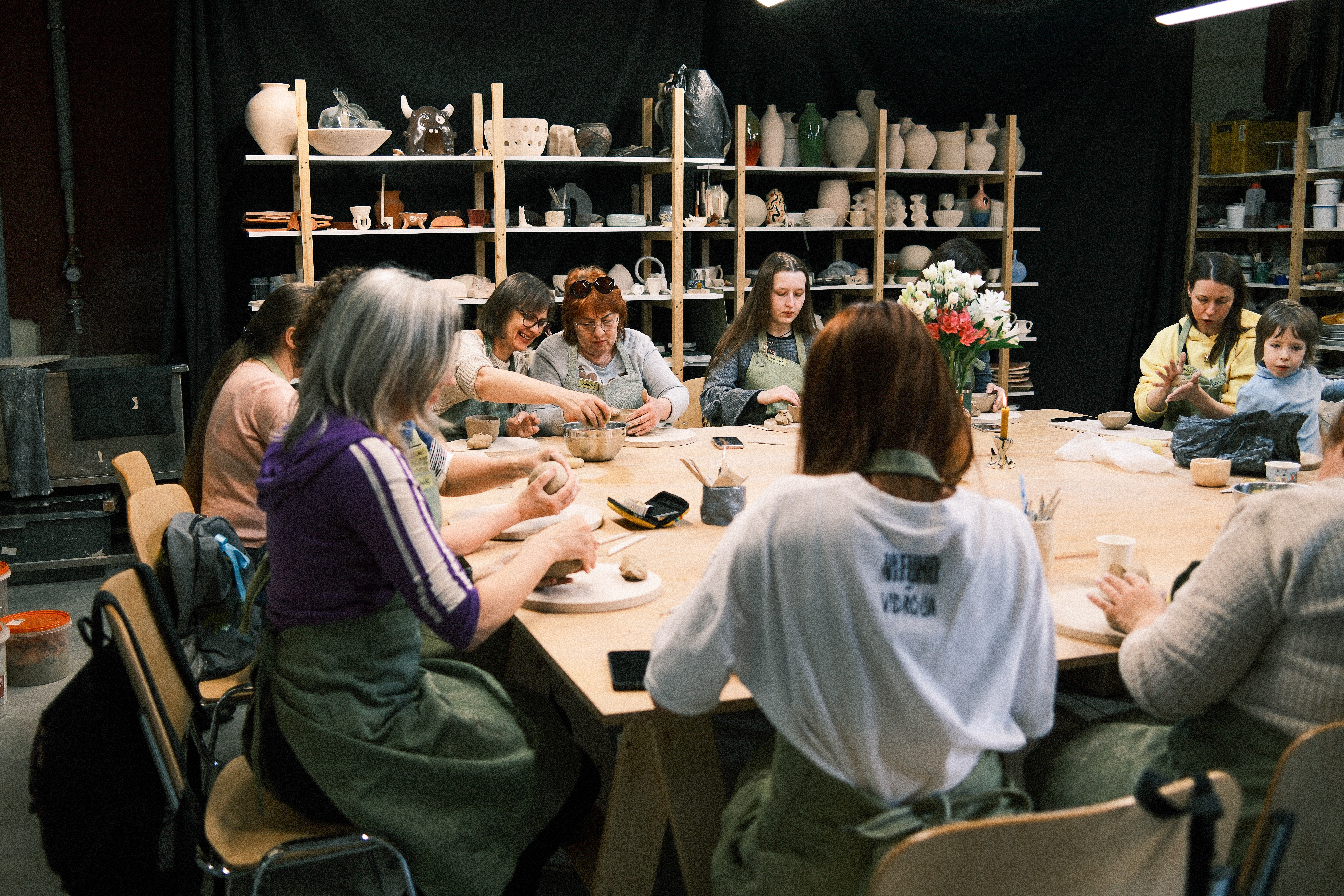
Photo credit: NGO Petros Hub
How did you go from workshops to an archery-instructor school?
It turns out that even after the Second World War veterans practiced archery during rehabilitation. Besides, it was the first Paralympic sport. But we didn’t know any of this when we started; people just enjoyed it. And this sport is very accessible; even people who have lost three limbs can do it.
We started getting more and more requests from hospitals to come and run events for soldiers. But I have a job; Katia has a job. We simply couldn’t go out shooting arrows every day. That’s when the idea came to create a school, to train instructors, and buy them equipment.
We launched the first school as a pilot in the Ivano-Frankivsk region.
Twenty-four veterans took part and the training lasted more than two months. Besides archery, the program included tactical-medicine classes and history lessons about the sport. We raised 1 million hryvnias in donations and used that money to buy equipment. Afterward, we even helped some graduates find work.
We traveled to different communities, talked to local heads and mayors, and asked them to provide municipal spaces for archery classes. As a result, instructors can run lessons anywhere from one to five times a week, depending on what they’re able to manage. Many have different injuries, including amputations.
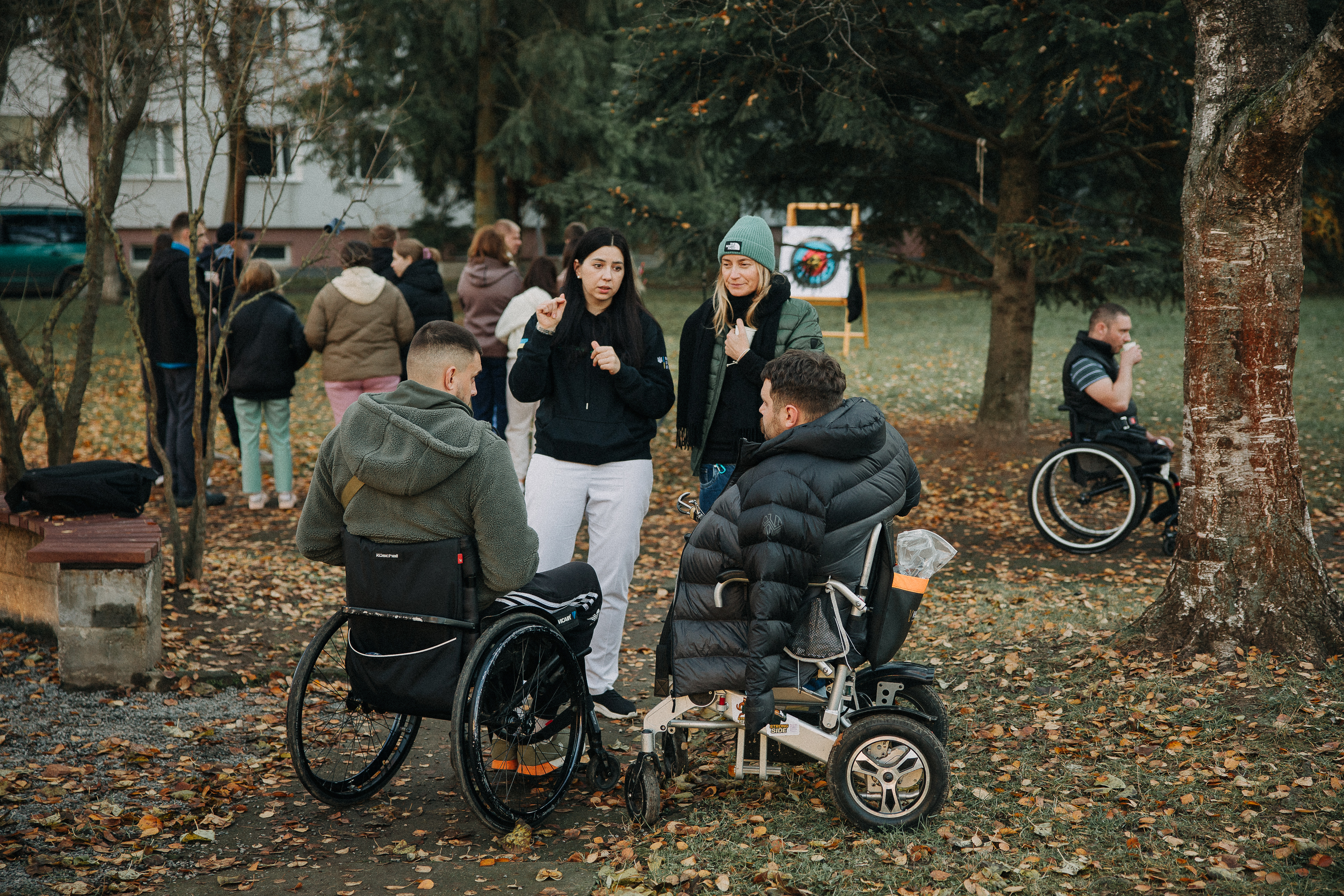
Photo credit: NGO Petros Hub
There’s an extra effect from the project too. Our instructors don’t just work with veterans, they also teach children. This is especially important in small towns and villages, where there often isn’t much else to do. The kids love it.
Katia and I keep traveling around Ukraine training instructors. I give talks on how to organize this kind of work, find funding, collaborate with businesses, earn money by also training civilians, communicate effectively, and put together presentations. So we’re giving people more than just archery skills. This is already working in the Mykolaiv region as well, and we keep getting requests from different communities.
I’m a businessperson at heart, and my dream is for veterans to be financially secure and earn good money.
People who came back from the war and lost their health, even their limbs, were given a chance at another life. They often say that the day they were wounded is their second birthday. And it’s better to spend that second chance on something useful and meaningful. Helping fellow veterans, brothers and sisters in arms, recover; that is exactly that kind of meaningful work.