Ukrainian Activists on the Move: New Druzhkivka Is Building Civil Society Across Regions
In 2014, Druzhkivka, a town in Ukraine’s Donetsk region, was temporarily occupied by Russian forces. Since the full-scale invasion of 2022, the city has avoided a second occupation but it remains under constant shelling, with many residents forced to evacuate. The civic organization New Druzhkivka, which had been helping the city develop after the occupation, eventually decided to relocate. From its new base in Kirovohrad Oblast it now works with different local communities in supporting the integration of internally displaced people, fostering youth initiatives, and strengthening local safety and resilience. We spoke with New Druzhkivka’s head, Serhii Pronkin, about how lessons learned in one context can be applied to new challenges and communities.
What was Druzkhivka like and what problems did it face when you founded the organization in 2016?
There were five of us, all originally from Druzhkivka. As often happens with small towns, we were drawn to bigger cities—Donetsk, in particular. But after Russia occupied Donetsk, we had no choice but to return home. Druzhkivka had also been occupied, though only briefly. Once it was liberated, we found ourselves back there with a sense that our old ties had been severed and no clear idea of what to do next. So we decided: we could actually do something to improve the town. I had management skills; my friends had design backgrounds. We started by making a tram map. That was our first volunteer project.
When a young civic organization is just starting out, its first initiatives tend to grow naturally from whatever troubles its founders most. That was true for us. We began with the map and only gradually started listening to what was bothering other people. Eventually, we concluded that one-off initiatives had their place but that lasting change required a direct conversation with the city’s leadership.
At the time, most seats on the city council were still held by pro-Russia deputies. But that was slowly shifting. With each elections, more opposition politicians got through.
People began to feel that they could actually influence decisions in their own town. The experience of occupation had also triggered a sharp rise in civic and volunteer activity across the region as a whole.
By the time the full-scale invasion began, we already had a substantial body of experience—enough to share with others. We had been mentoring activists in Pokrovsk, Novohorodivka, and what is now occupied Lyman. We were in the middle of an ambitious project to bring local government, business, and civil society together on a single platform in Druzhkivka. And then the full-scale invasion happened.
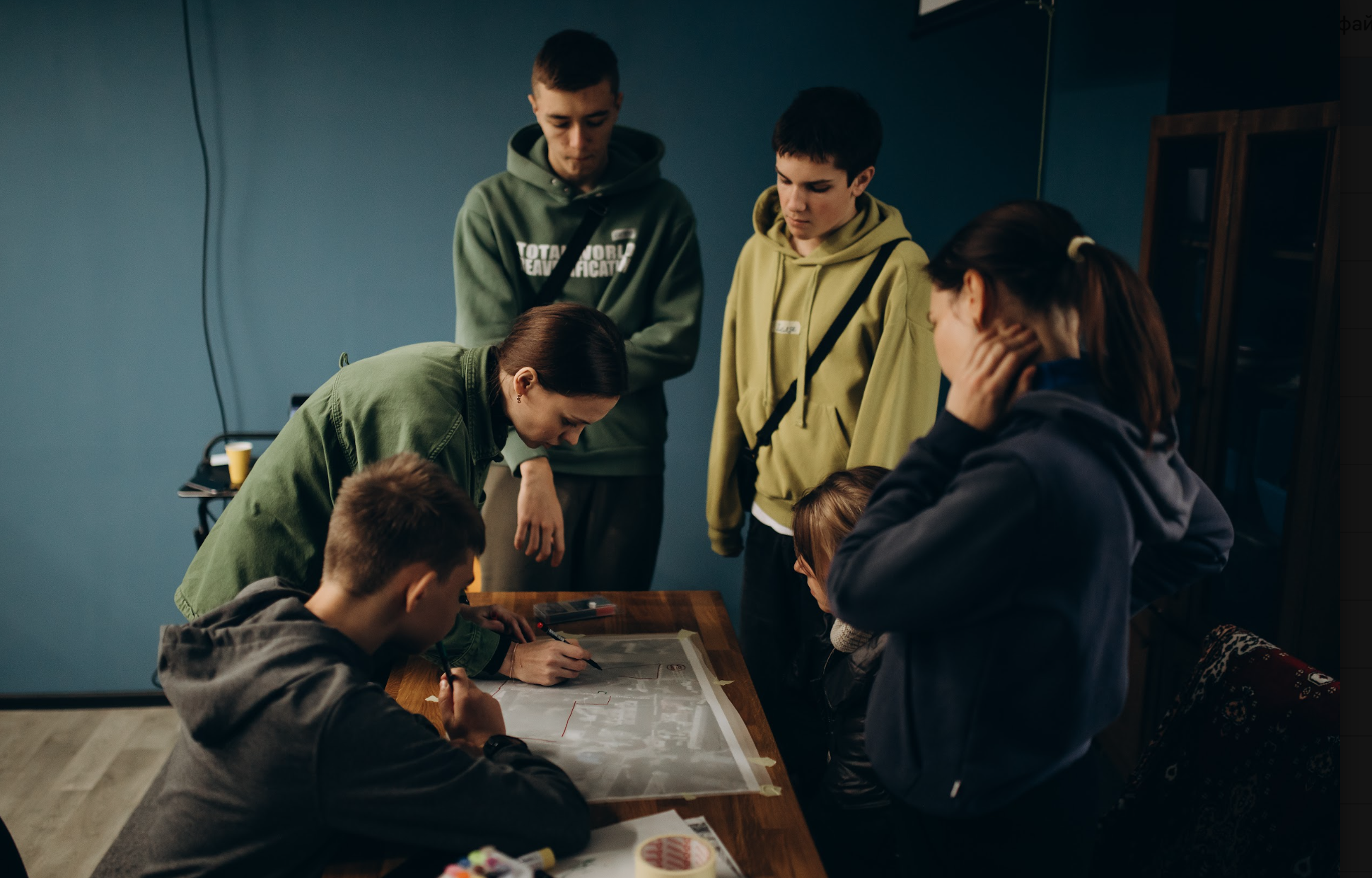
Photo credit: NGO New Druzhkivka
How did you respond when it started?
Like a lot of people in those early days, we threw ourselves into humanitarian aid. We had a 100 square meter space, management experience, and a network of contacts. We helped local residents and displaced people, essentially acting as a stopgap while the central authorities got their processes in order. Once we realized we were starting to duplicate what others were already doing, we decided to pivot.
A wave of relocation was underway, and we thought that we could help people who were on the move. Receiving communities were struggling to manage on their own, so we decided to go to them and work on the ground.
How did you organize that work?
There were no official statistics yet, so we trawled open sources to find out where people from our region were mostly heading—literally tracking news like: “Oleksandriia is welcoming displaced people from Donetsk region.” We also looked for communities that were relatively nearby and had some resemblance to Druzhkivka; then we wrote to city councils and local civic organizations offering help and partnership.
That process led to collaboration with three communities in Kirovohrad Oblast: Znamianka, Oleksandriia, and Pryiutivka. Though more recently we have focused primarily on Pryiutivka and Oleksandriia.
What makes Kirovohrad Oblast distinctive?
Kirovohrad Oblast sits in the center of Ukraine. It has always been somewhere in-between, neither here nor there. When the occupation of the Donetsk region began, most resources and international partners concentrated on the east of Ukraine. The organizations that went there tended to come from western Ukraine, as they already had a strong tradition of cross-border projects. After the full-scale invasion, many organizations relocated westward. Throughout all of this, Kirovohrad Oblast remained somewhere in the middle and largely out of sight.
Even so, new civic organizations had been emerging there, working on humanitarian aid and support for displaced people. We wanted to help them grow: to work out their purpose, identify their audiences, and become self-sufficient.
In effect, we set up a school of civic activism, running a series of training sessions.
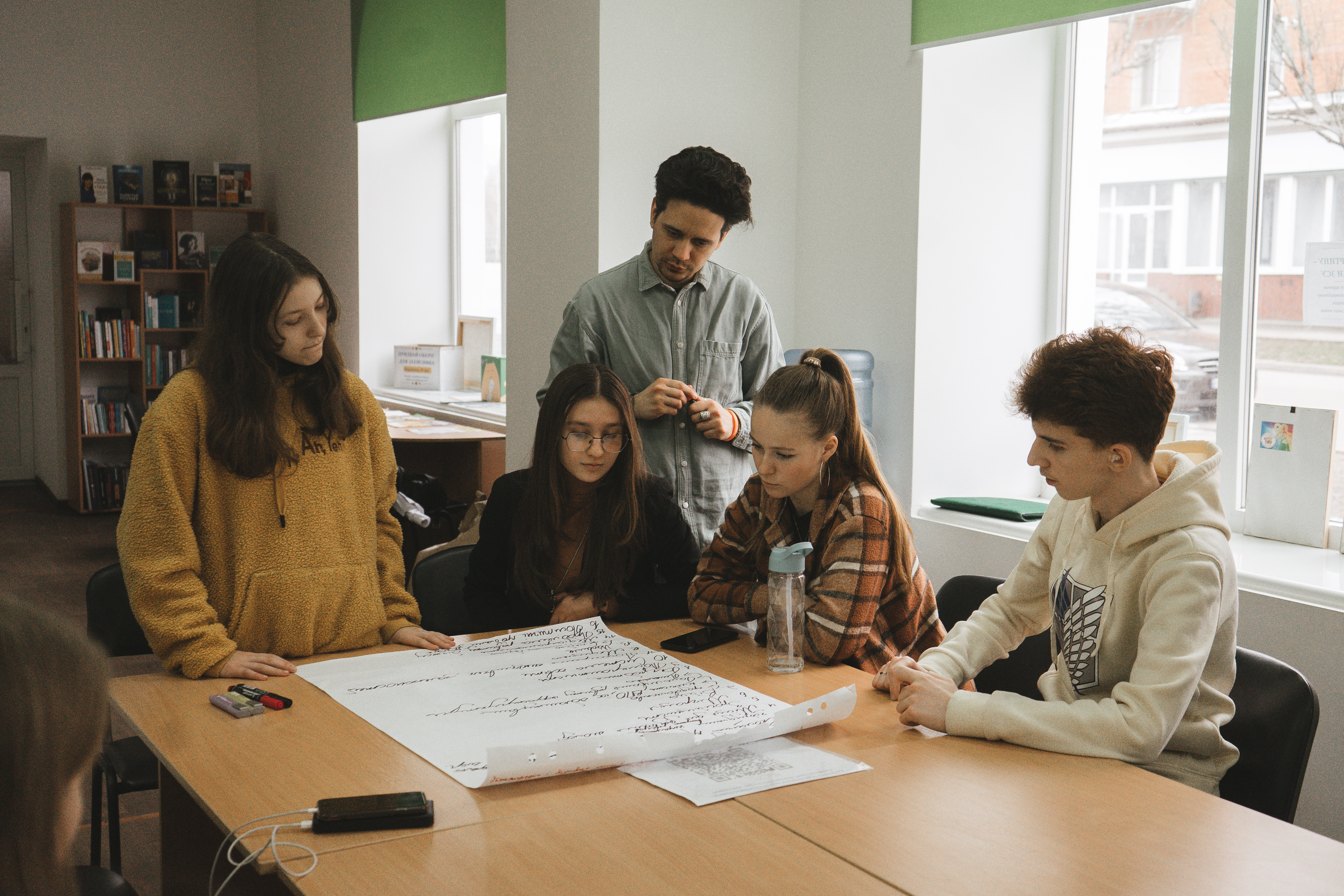
Photo credit: NGO New Druzhkivka
How did you draw on your experience from the Donetsk region?
One example is that back home we had run joint projects with the State Emergency Service. Together we set up a resource center at a local fire station, initially just a room for staff training. Emergency workers used it to train employees who worked with children, teaching them basic safety. We helped take that to another level. We brought in specialist training equipment, ran gamification workshops, and bought games so that instead of pointing at diagrams, they could actually walk children through what to do and what not to do in an engaging way. Eventually, that refurbished space became a coordination hub for emergency workers from across the region whenever they needed to act together.
In Oleksandriia, we followed the same approach. We spoke with the local emergency service and helped establish a similar resource center. It is now used for fire-safety training for staff at higher education institutions, as well as for internal meetings.
You transferred a great deal of your experience. But did you gain any new experience?
This is where we first started working with young people in any systematic way. Znamianka, Pryiutivka, and Oleksandriia all have youth centers that wanted to develop, but they were running into a familiar problem.
Experienced adults were deciding what young people needed and what would interest them, without ever asking them. We ran strategic sessions where we made the case that decisions need to be made with young people, not on their behalf.
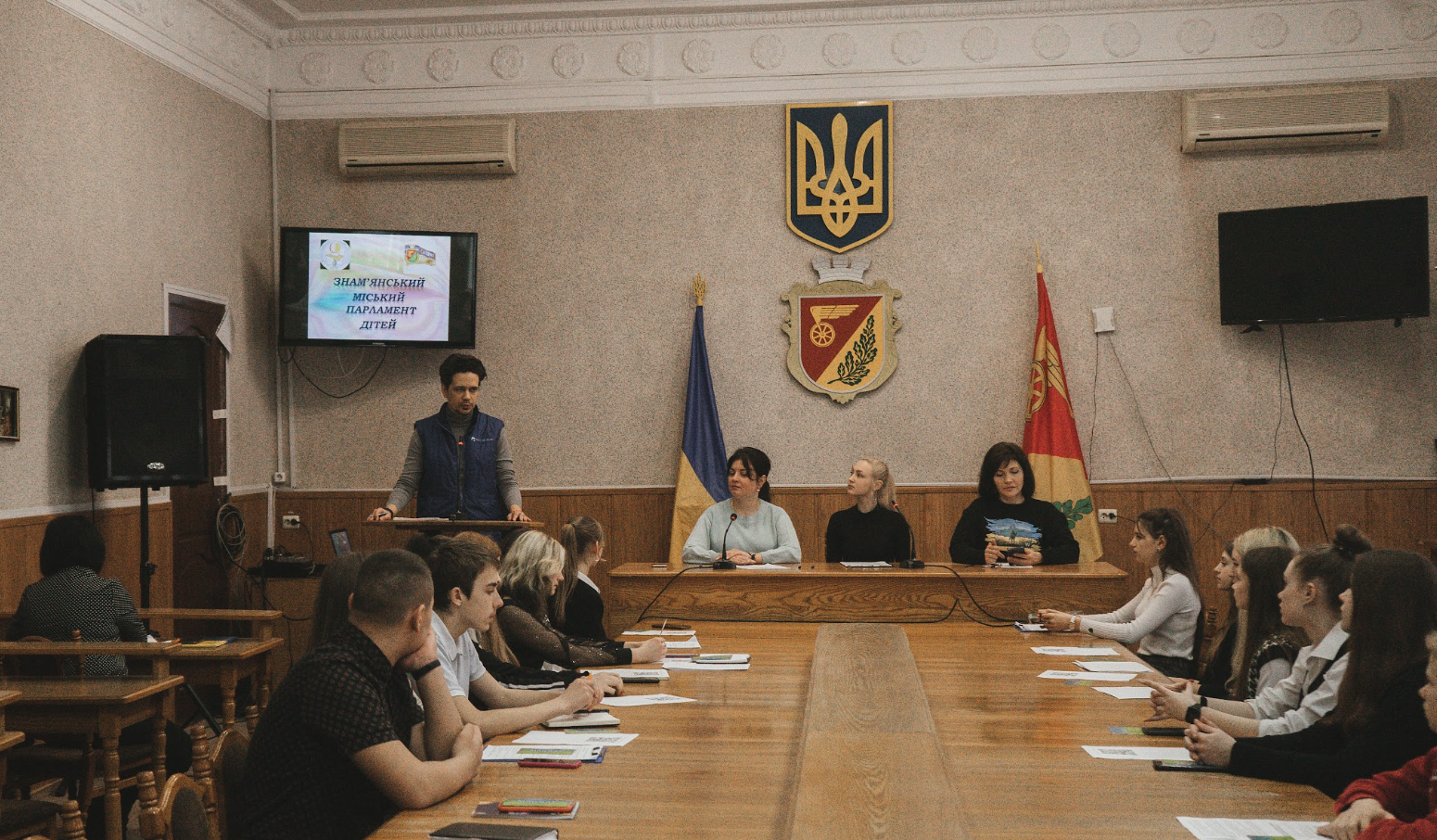
Photo credit: NGO New Druzhkivka
The organization has gone through significant changes. How has the team evolved?
We lost people along the way. Some left in the first few days; others over the following months. But, while they were still finding their footing in new places and hadn’t yet secured work, they kept in touch and kept contributing.
Over time, in the places where we were working, we found local coordinators, partner organizations, and specialists we could bring into our work. But it was hard. You spend ten years building a team, and then you’re faced all over again with the challenge of finding people who share your values.
New Druzhkivka focuses closely on the situation of internally displaced people. How exactly do you approach that work?
We started by trying to change how local authorities thought about them. The message is that displaced people are not simply in need of help; they are a resource for the community. Many arrived with experience, knowledge, and skills, filling gaps left by local residents who had moved abroad. To the displaced people themselves, we tried to convey that they have exactly the same rights as any other resident of that community.
We made a conscious decision to stay out of humanitarian aid—there were plenty of others doing that—though we did use some remaining resources from Druzhkivka to buy household appliances for accommodation where displaced people were living.
What are the main problems facing displaced people in their new locations?
We have carried out several research projects and the central problem has been the same every time: housing.
Those who had the financial means and found decent work have already bought somewhere and put down roots. Everyone else remains in persistent anxiety. Up to 70% of their income goes on rent. Before the full-scale invasion, prices in a place like Oleksandriia were modest. Now, housing in small towns costs as much as in regional centers. The market responds to demand.
Are there new areas of work you are planning to take on?
Until now we have never had a dedicated environmental strand. What has caught our attention recently is the question of composting fallen leaves—local municipal workers collect them by the ton every year. We want to set up an ecological composting process on the grounds of municipal enterprises.