Do Americans Like Trade?

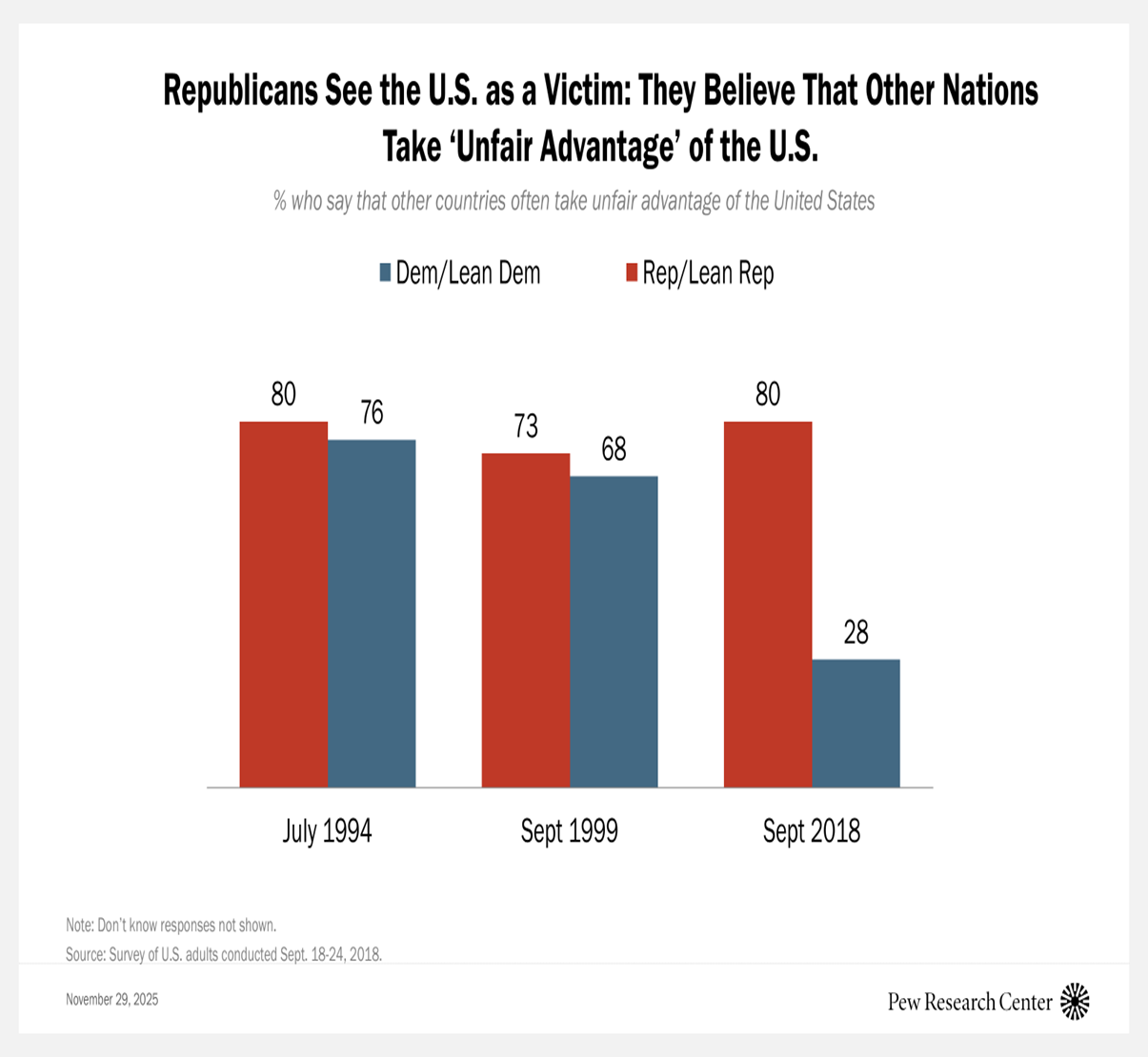
Americans’ attitudes toward trade fluctuate in a reflection of economic realities, political debates, and global events. Widespread sentiment in the United States that trading partners have taken advantage of the country has also helped shape perspectives.
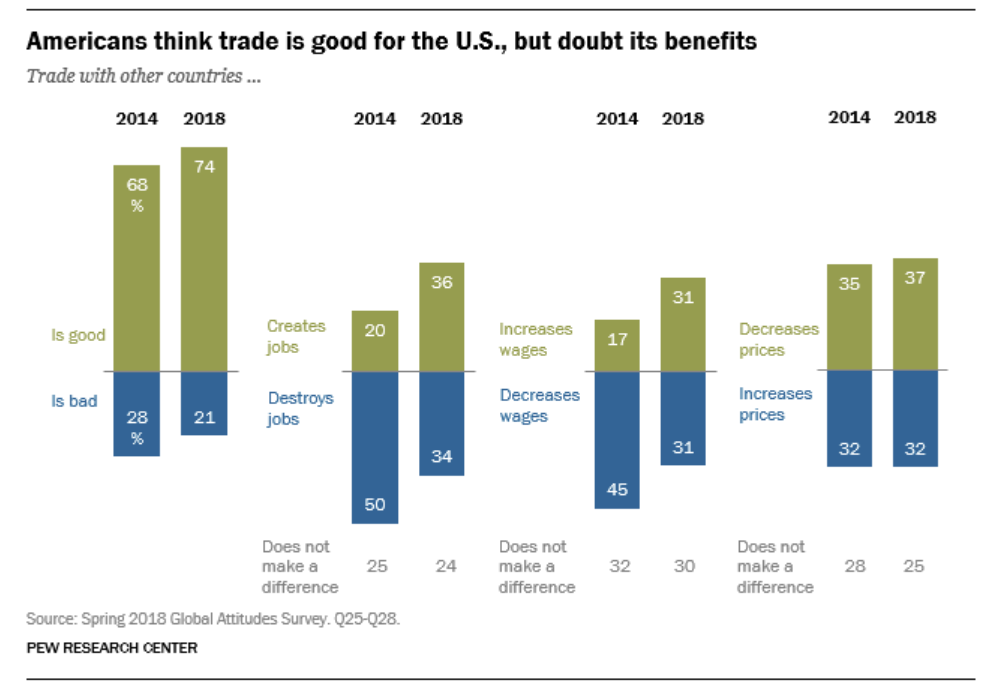
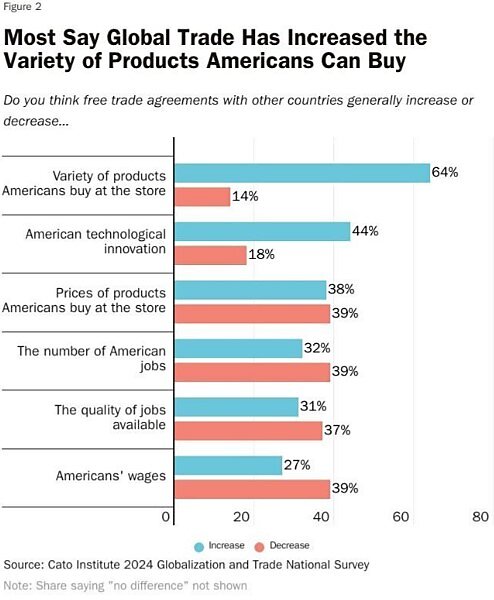
Americans are actually of two minds about trade. They recognize the benefits such as lower prices for goods, increased variety, and economic growth. However, worries about job losses, especially in manufacturing, persist, in part due to outsourcing to countries with lower labor costs. Americans want fairer trade agreements that protect US workers and industries, even if it means implementing tariffs or renegotiating existing deals. There is also growing interest in reshoring supply chains for critical goods.
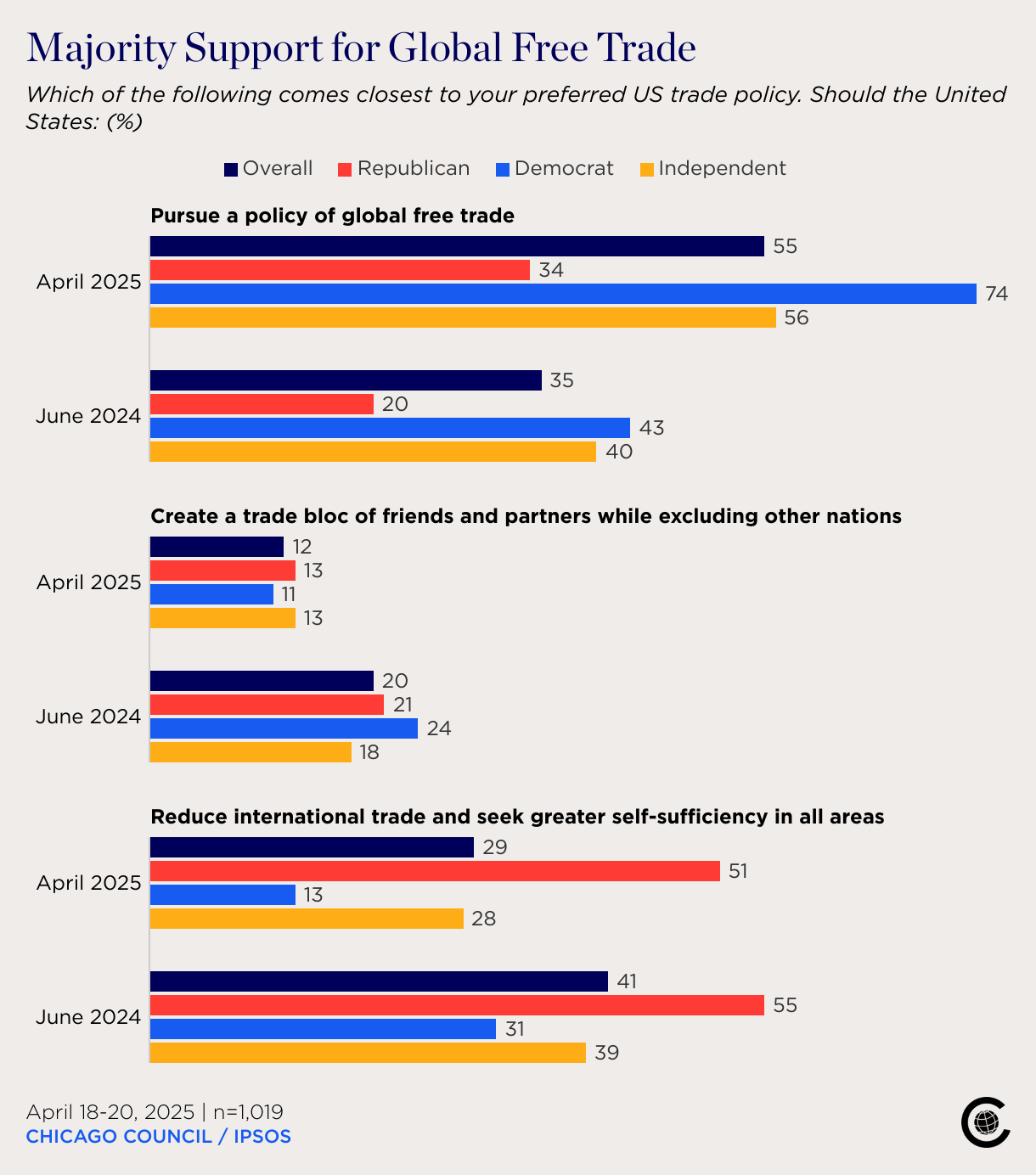
As the Trump administration has imposed and expanded tariffs, Americans show growing concern about their impact on inflation and, consequently, family finances and the national economy. But surveys also reveal a stark partisan divide. Democrats tend to be more supportive of trade pacts, viewing them as beneficial for promoting global cooperation and consumer choice. Republicans, although historically pro-business and supportive of open markets, are increasingly skeptical of such agreements. The change coincides with changing compositions of the two parties. Older, less educated, and rural Americans—often those who lose their jobs to trade—have been gravitating toward the Republican Party, while younger, more educated, urban Americans—those who thrive in a global economy—move toward the Democratic Party.
The following is part of a presentation made by Bruce Stokes at the Brookings Institution on December 4, 2025.
American Public Opinion and Trade
Americans have long believed that other nations take unfair advantage of the US.
Source: Pew Research Center
Americans have also felt that trade destroys jobs and decreases wages, but does not decrease prices.
Source: Pew Research Center
Americans believe that trade has boosted consumer choice and innovation, but they still believe it destroys jobs and lowers wages.
Source: Cato Institute
A majority of Americans backs global free trade, but there is a 30-point partisan difference in sentiment.
Source: Chicago Council/IPSOS
Only 10% of Americans see the US as the greater beneficiary of trade with China. Conservative Republicans are most likely to say China is the greater beneficiary.
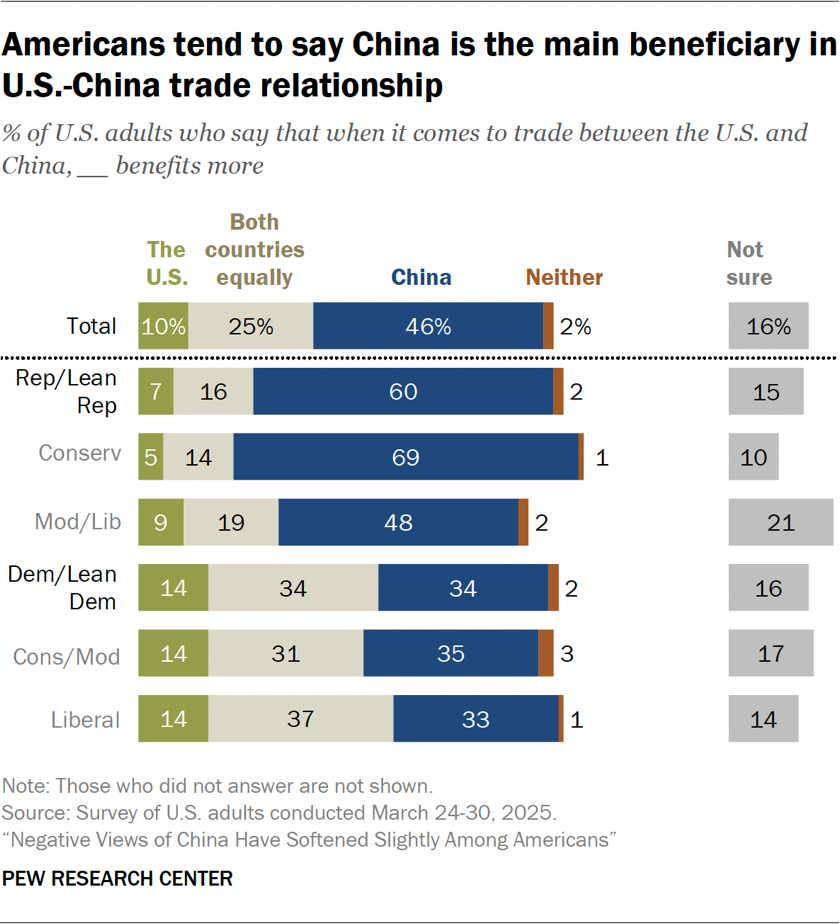
Source: Pew Research Center
Unsurprisingly, two-thirds of Republicans, but only one-seventh of Democrats backs higher tariffs on China.
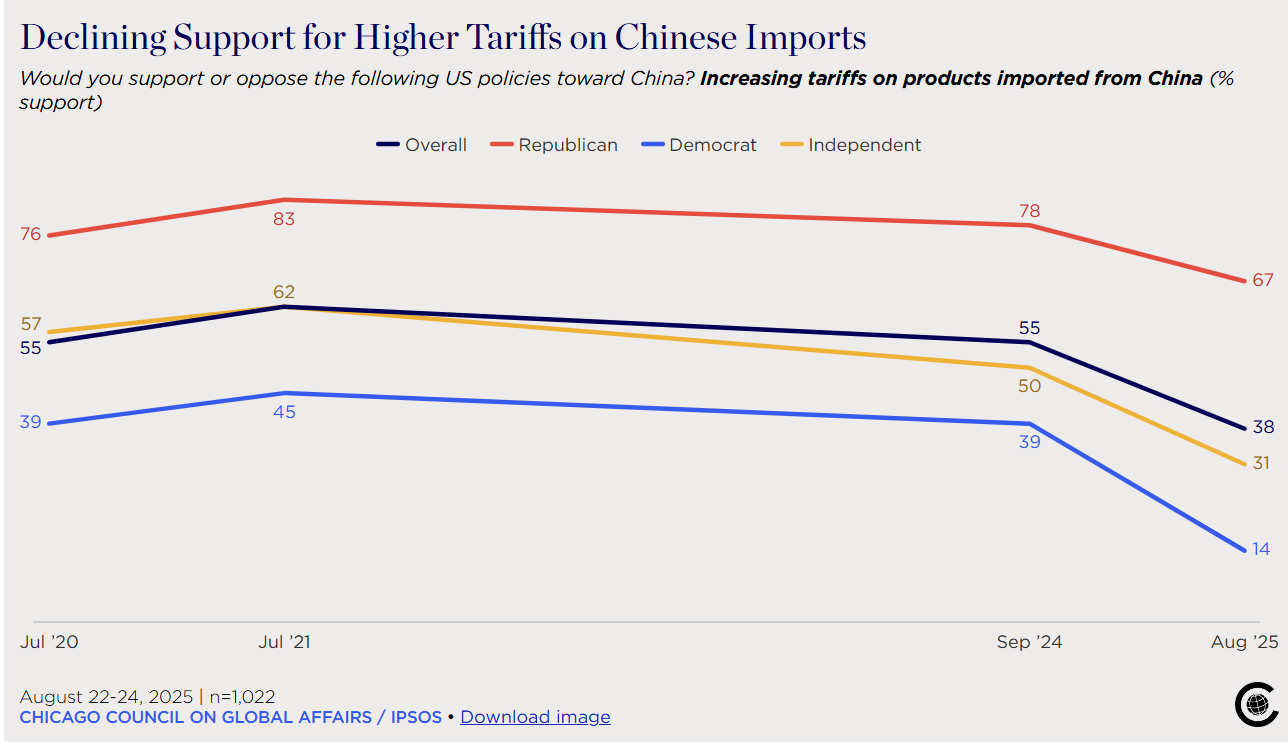
US Public Reaction to Trump’s Tariffs
Between the 2024 US presidential election and the inauguration, fewer than half of Americans understood that importers pay tariffs.
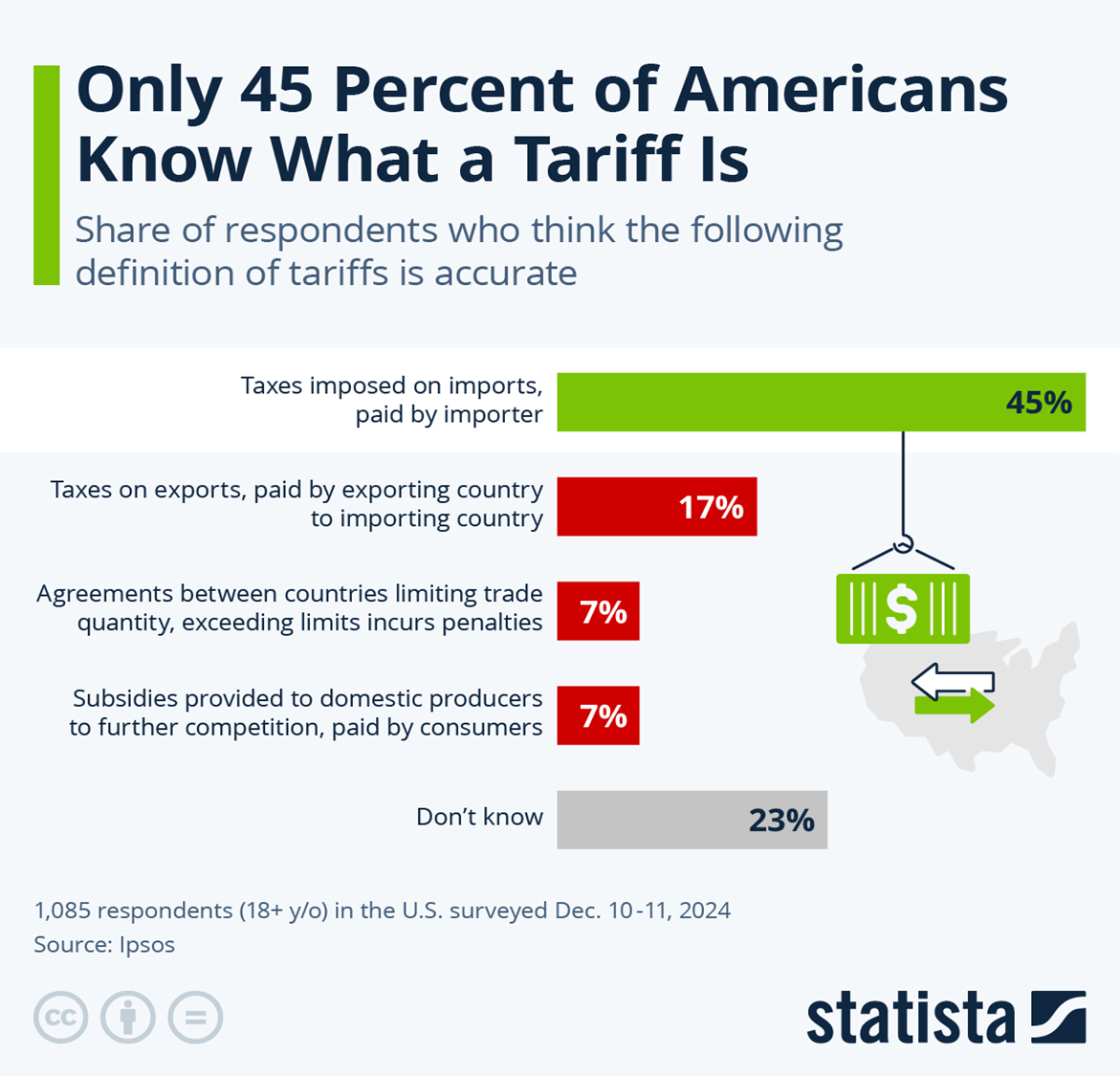
Source: Statista
Yet 7 in 10 US adults, including a majority of Republicans, understood that tariffs would increase prices.
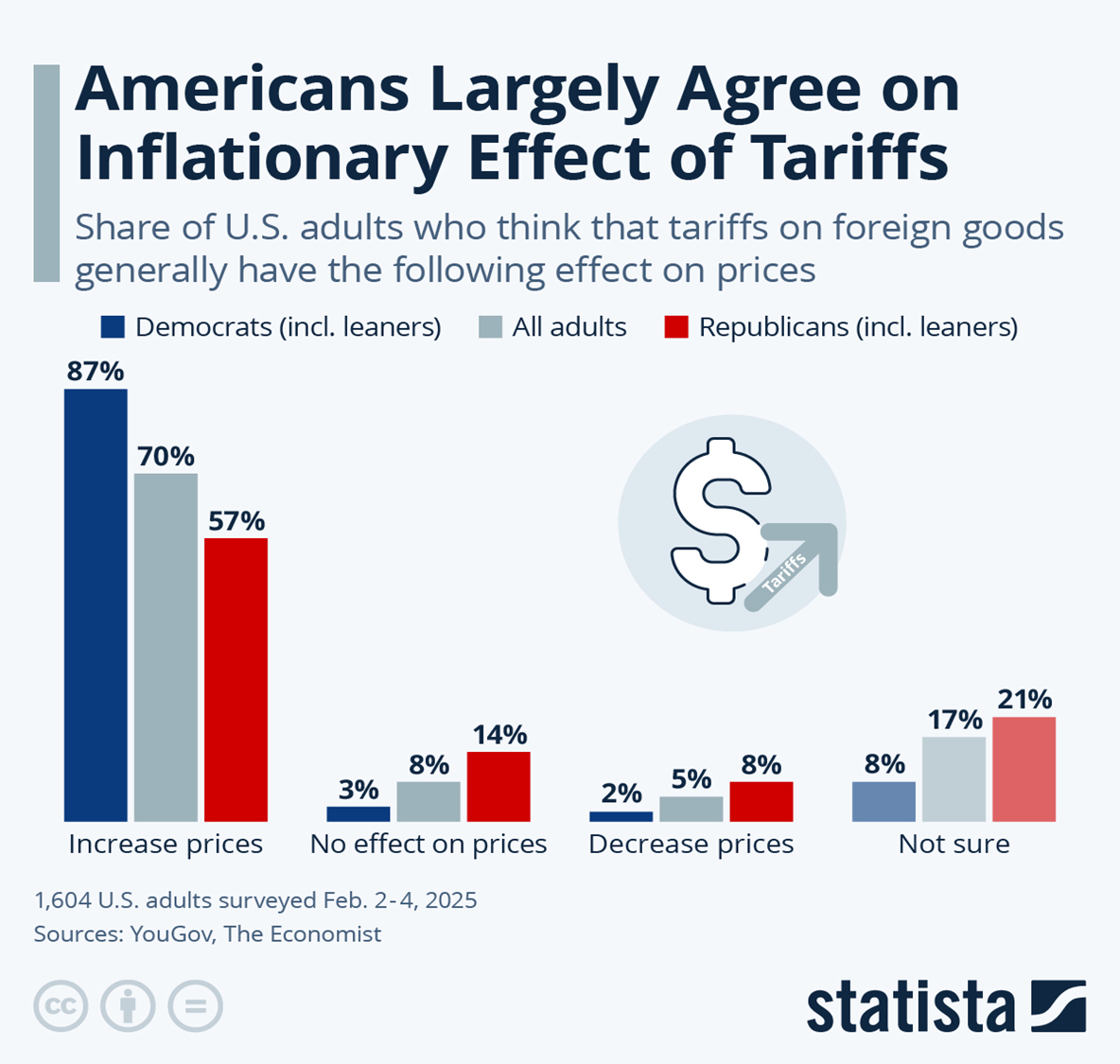
Source: Statista
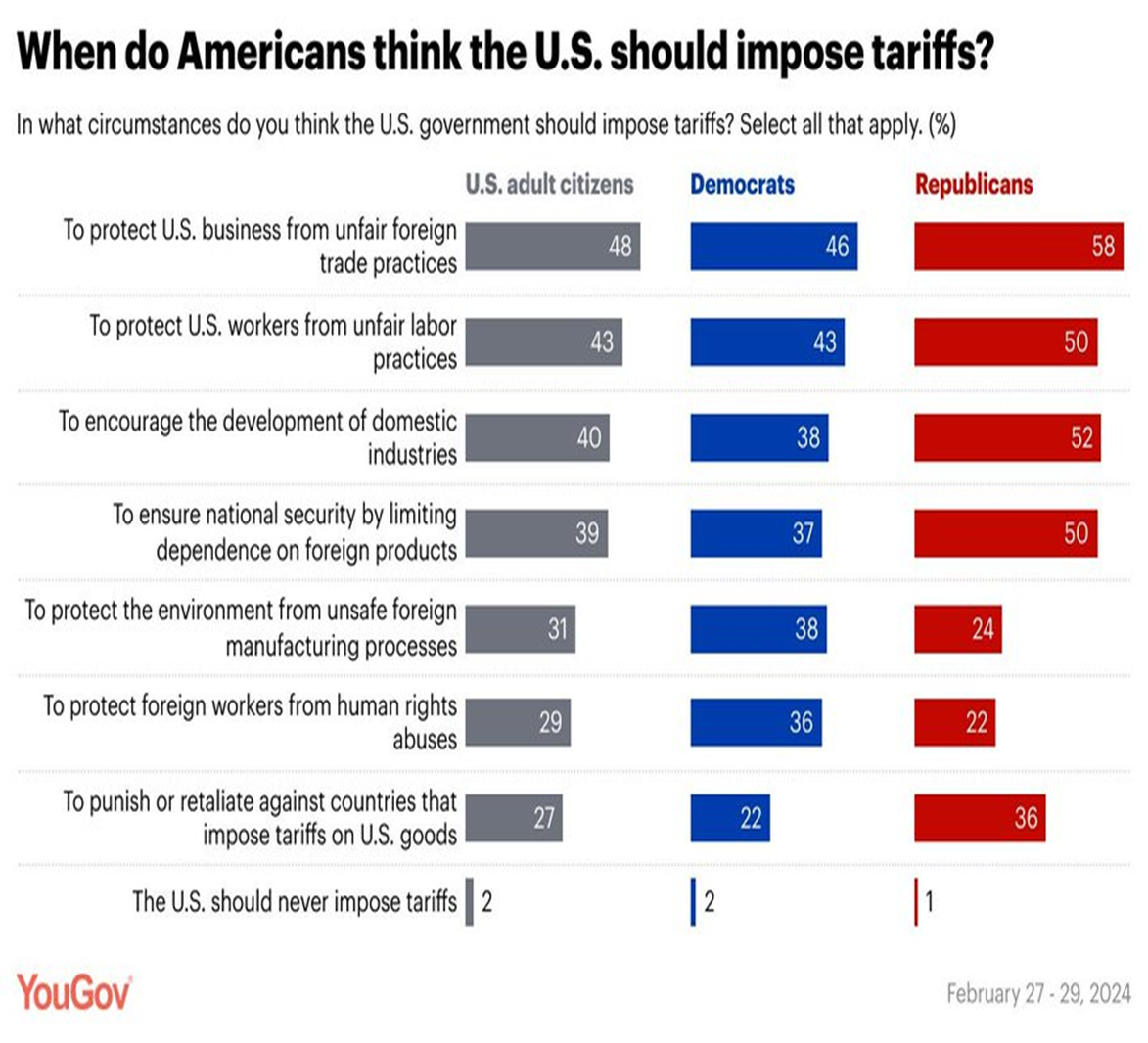
As Trump’s second term began, many Americanssupported tariffs to protect US businesses and workers, but only 27% backed tariffs to punish other nations.
Source: YouGov
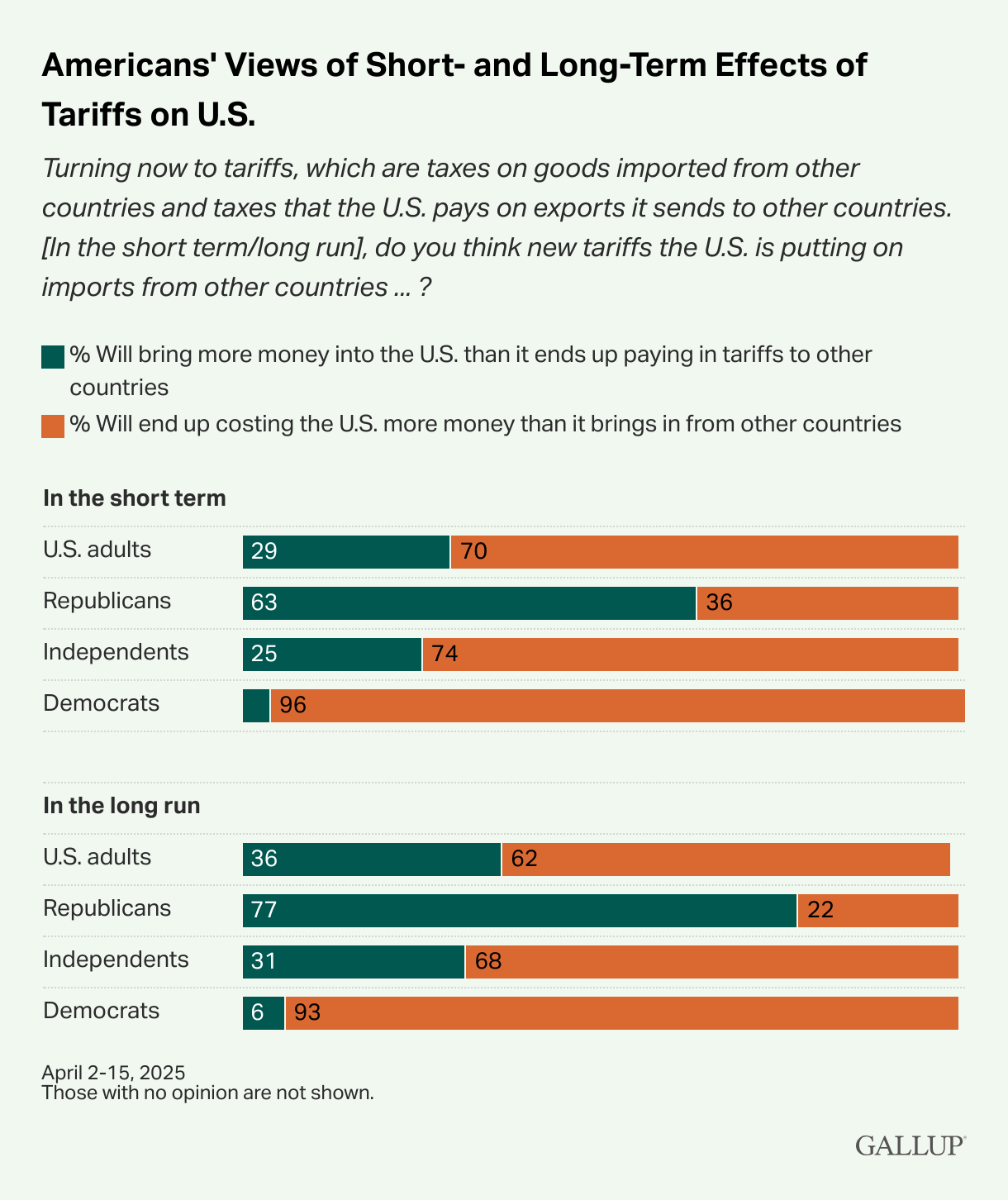
In April, 7 in 10 Americans said the short-term cost of tariffs will exceed revenue; 6 in 10 believed they will also cost more in the long run.
Source: Gallup
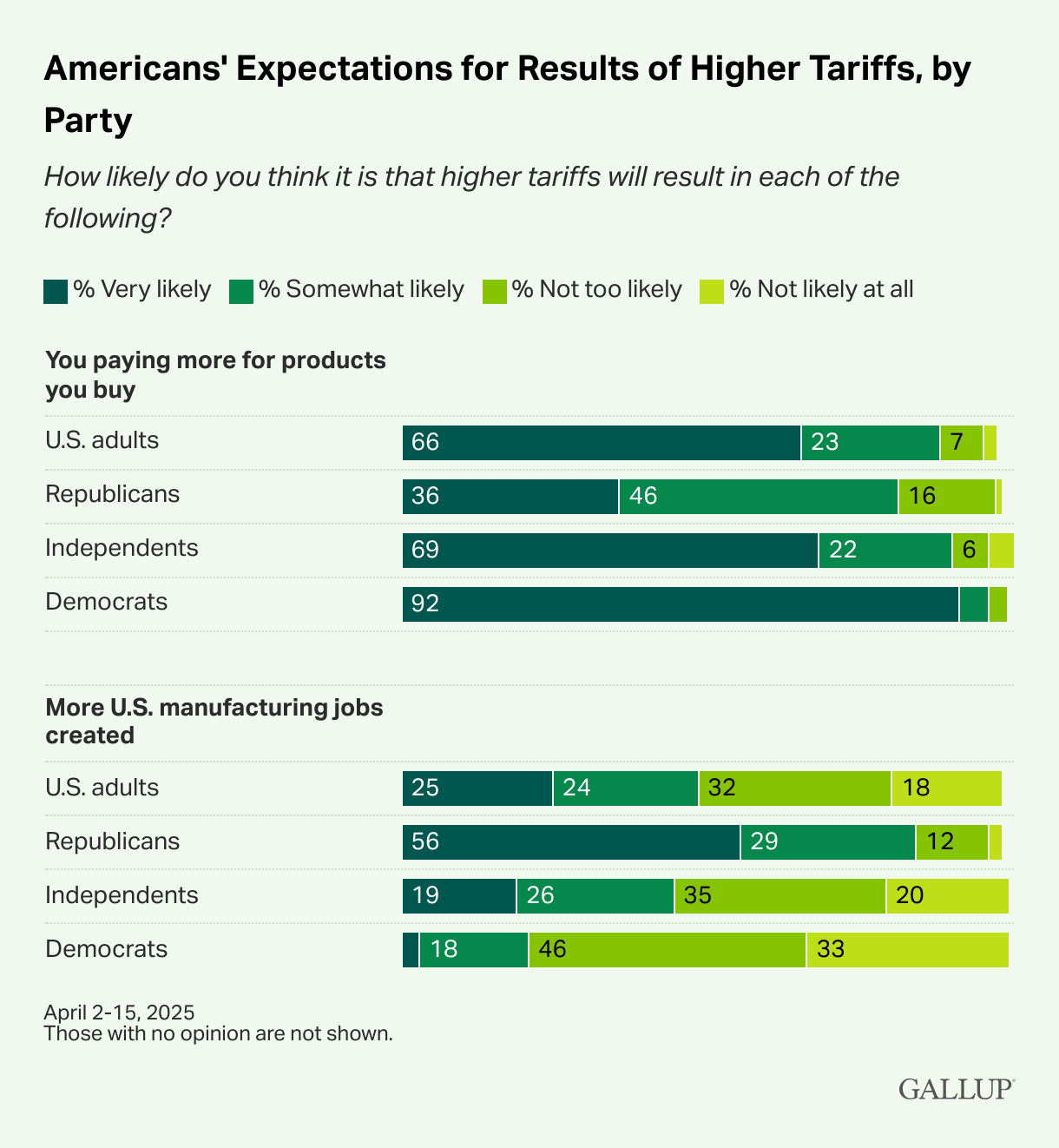
9 in 10 Americans said that they would be forced to pay for higher tariffs; division on whether tariffs would create jobs.
Source: Gallup
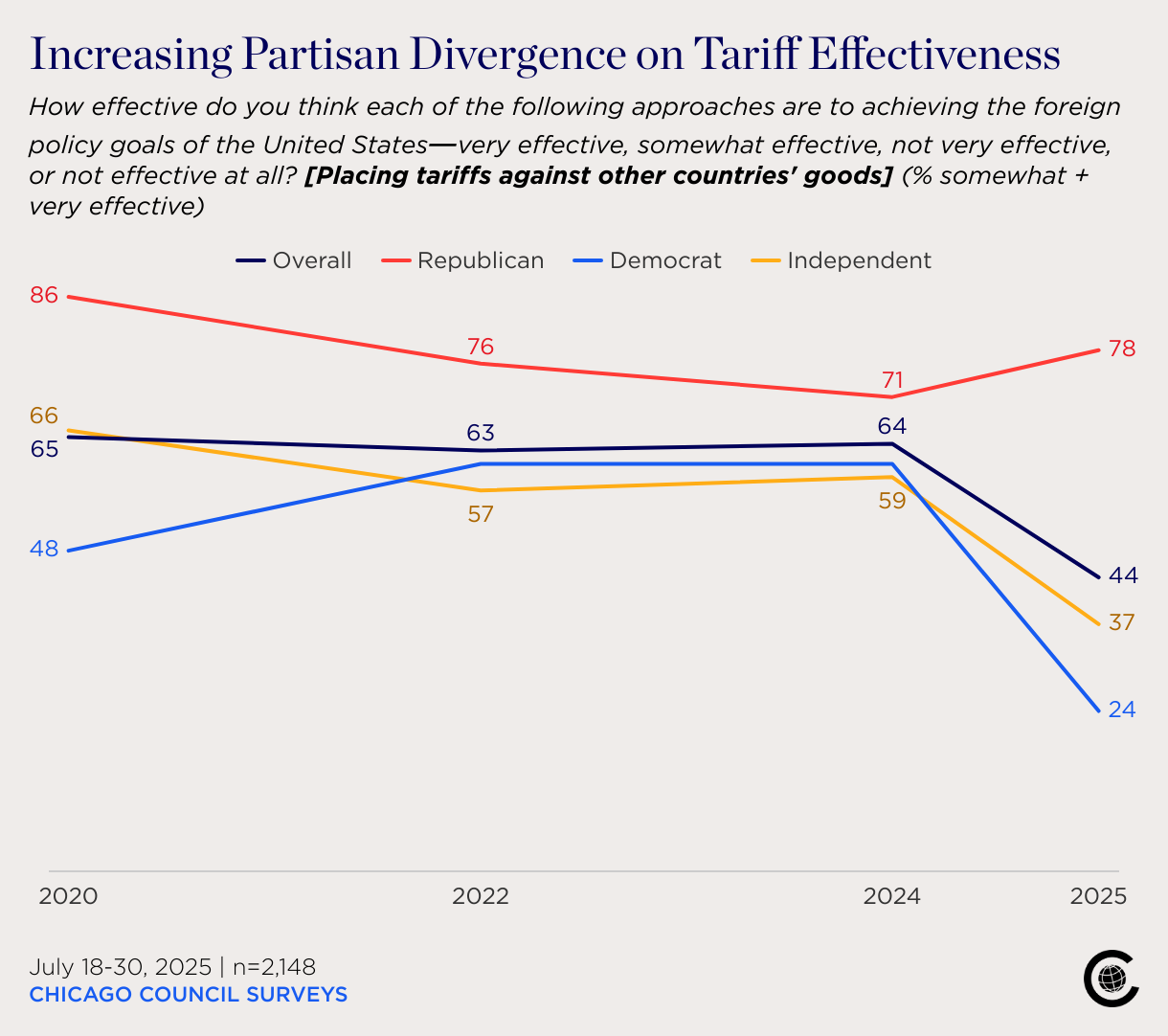
By July, only 4 in 10 Americans thought tariffs were effective in achieving foreign policy goals; the partisan difference was 54 percentage points.
Source: Chicago Council Surveys
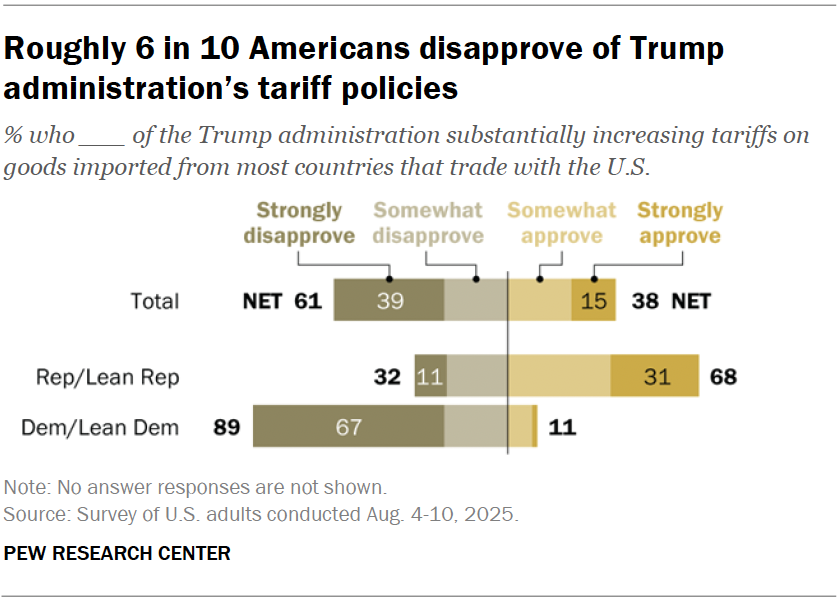
And a majority thought tariffs would harm the their families and the US despite a wide partisan gap.
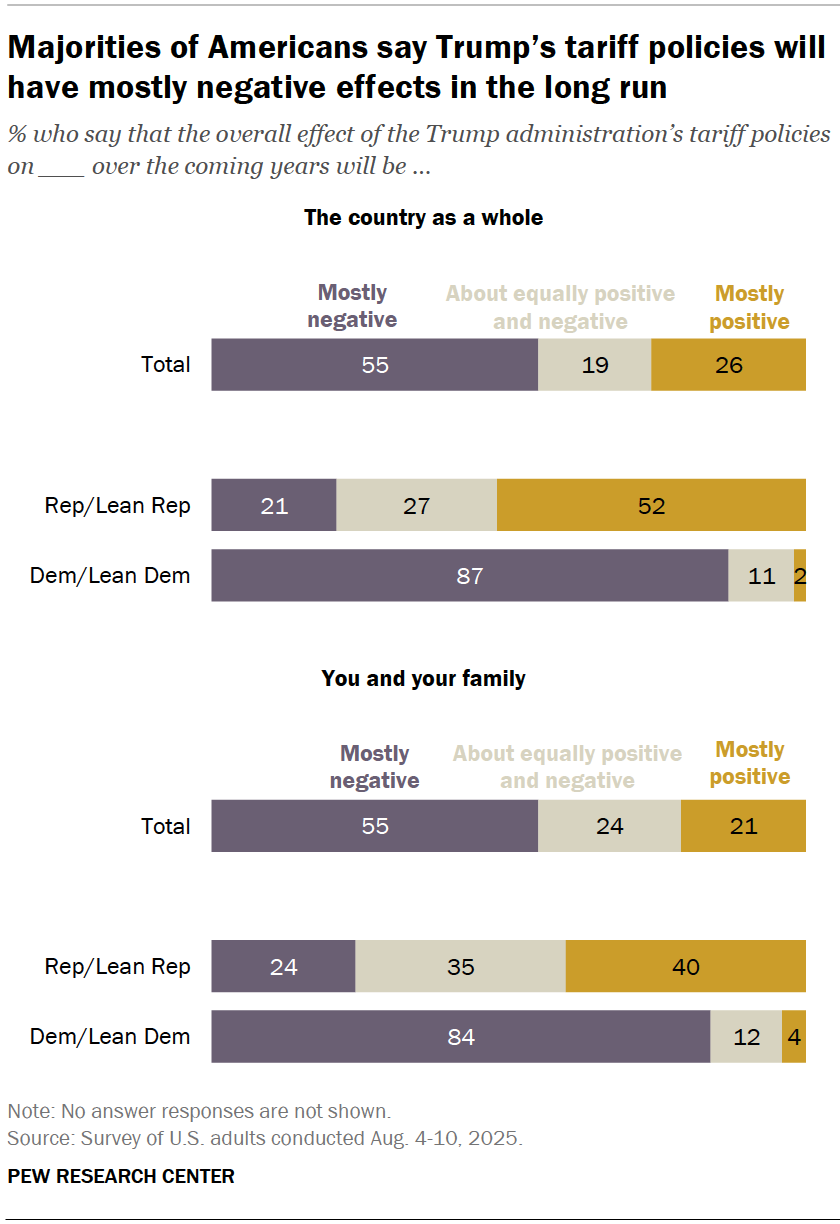
Source: Pew Research Center
The Whole World Is Watching
In this April survey, the majority of Europeans backed retaliation against Trump’s tariffs.
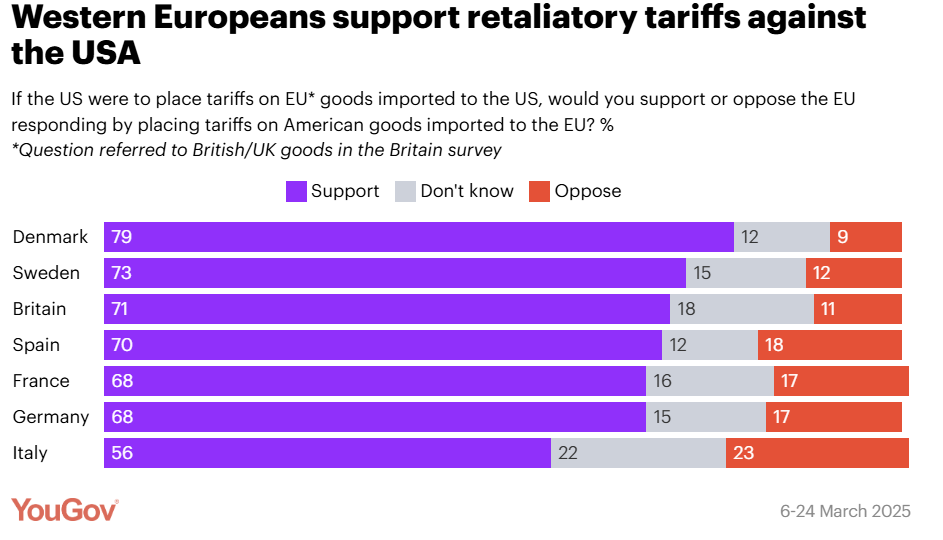
Source: YouGov
And more than 2 in 3 Canadians want Ottawa to stand firm in trade talks with the US.
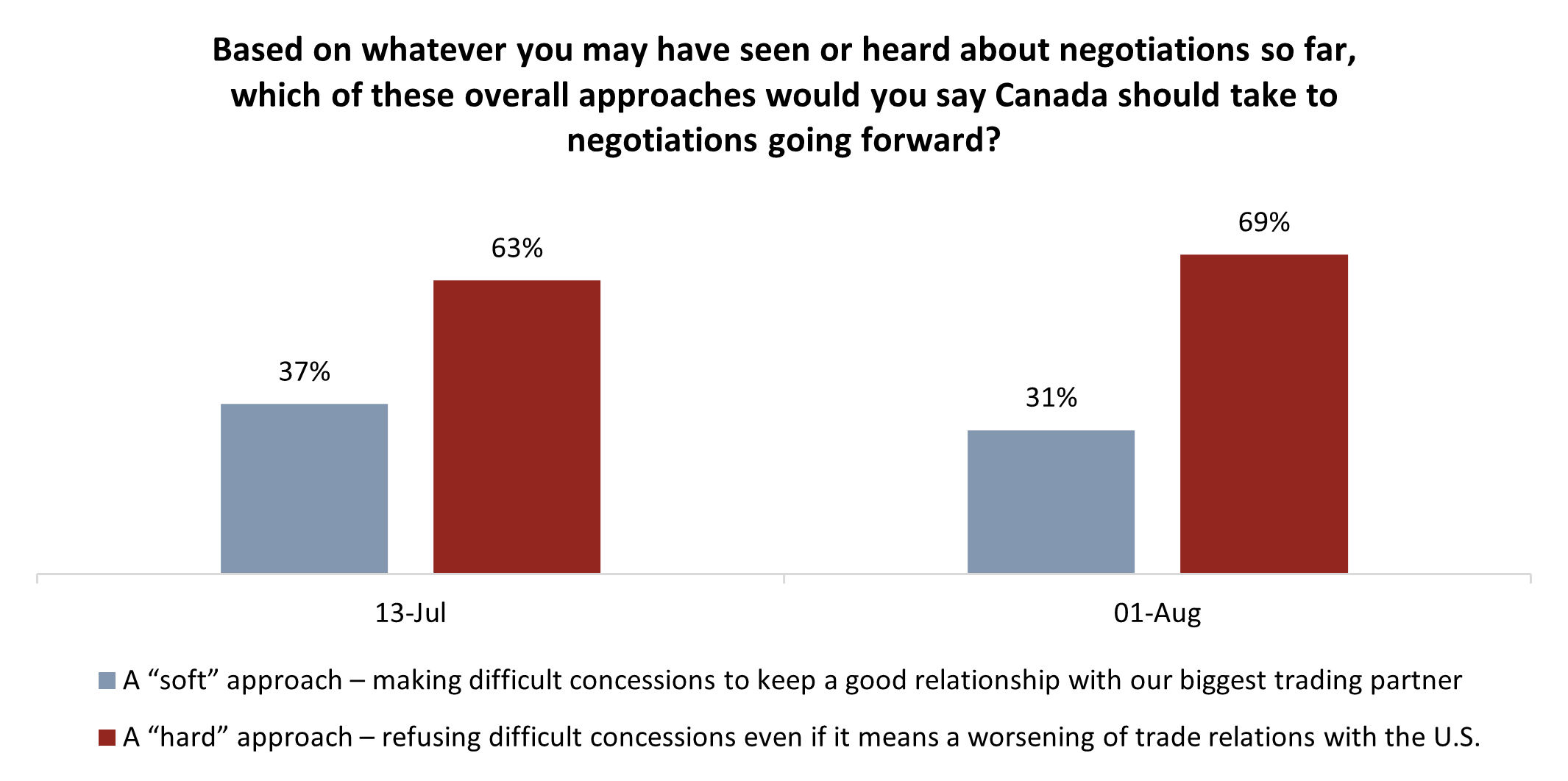
Source: Angus Reid