US Public Opinion and the Midterm Congressional Elections

Fourteen months into US President Donald Trump's second term in office, eight months before midterm Congressional elections, and amid a war with Iran, Americans are uneasy. They are worried about rising prices, exacerbated by a volatile oil market. Only three in 10 Americans think the economy is doing well, and only about four in 10 approve of the war. The split on both, however, is highly partisan.
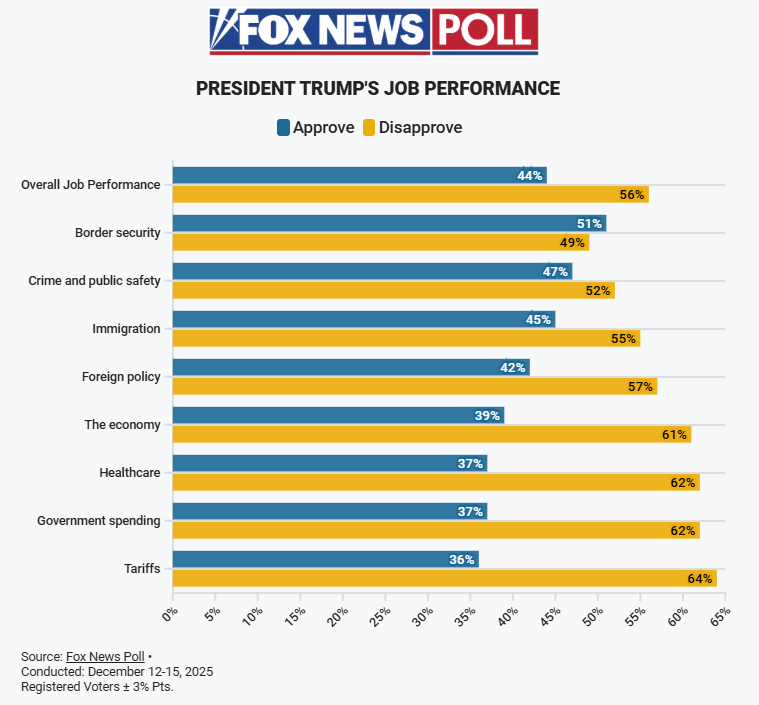
Public opinion is hurting the president's approval rating, which has been worsening since soon after his inauguration. It now hovers near historic lows as majorities express dissatisfaction with Trump's handling of almost every major issue.
Half of registered US voters now say they want the Democrats to control Congress. And, with Democrats more than Republicans saying they are absolutely committed to voting in the midterms, Republican control of at least the House of Representatives is at risk.
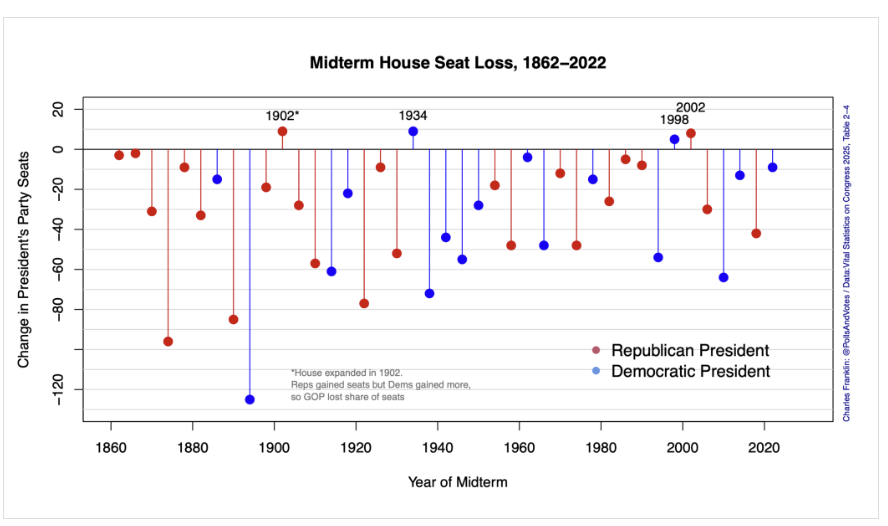
History is on the Democrats' side. Only four times in the last 164 years has the party that controlled the White House gained seats in Congress after midterm elections.
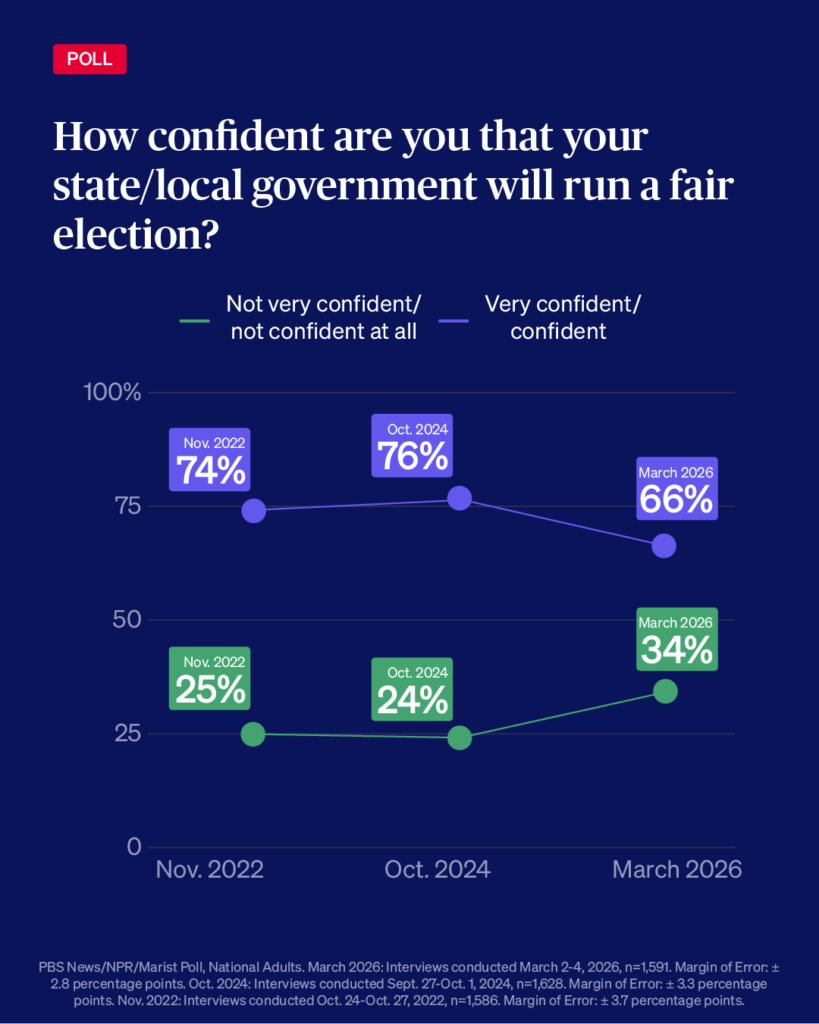
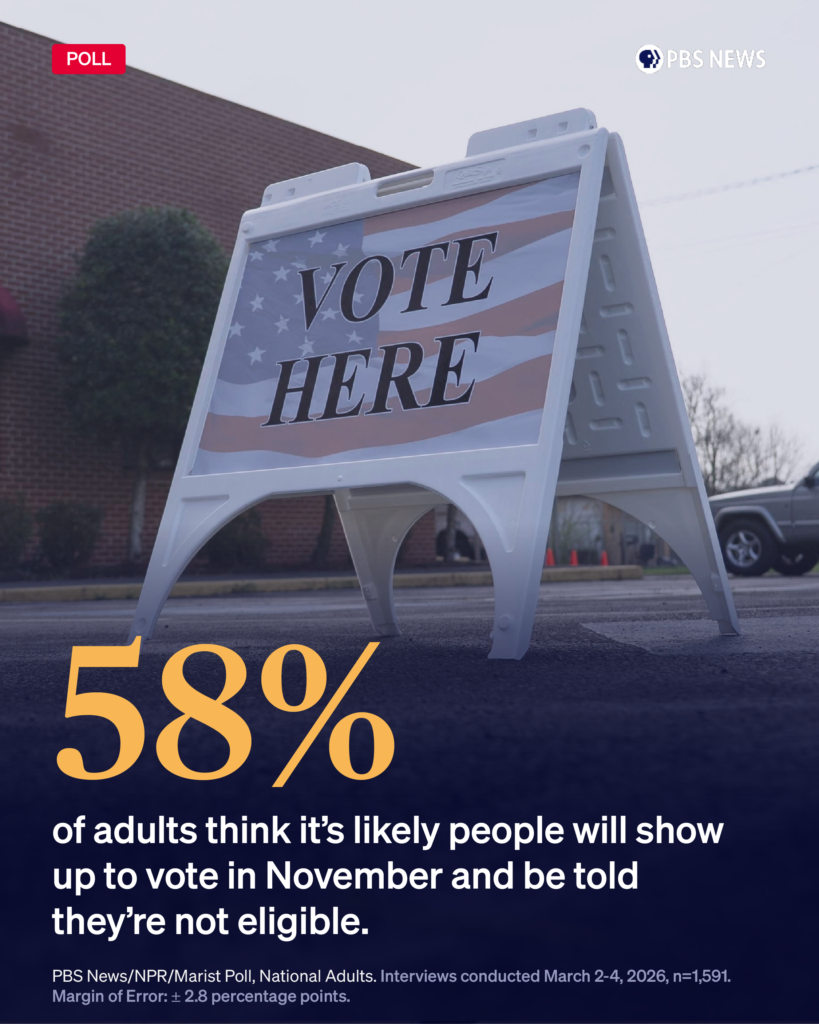
All this is happening as confidence among Americans in a fair vote in November declines.
The following presentation on US public opinion was given by Visiting Senior Fellow Bruce Stokes at an event at the New Zealand embassy in Washington, DC on March 19, 2026.
Americans’ Views of Domestic and Foreign Policy Issues
Americans’ top priorities are the cost of living and domestic political division.
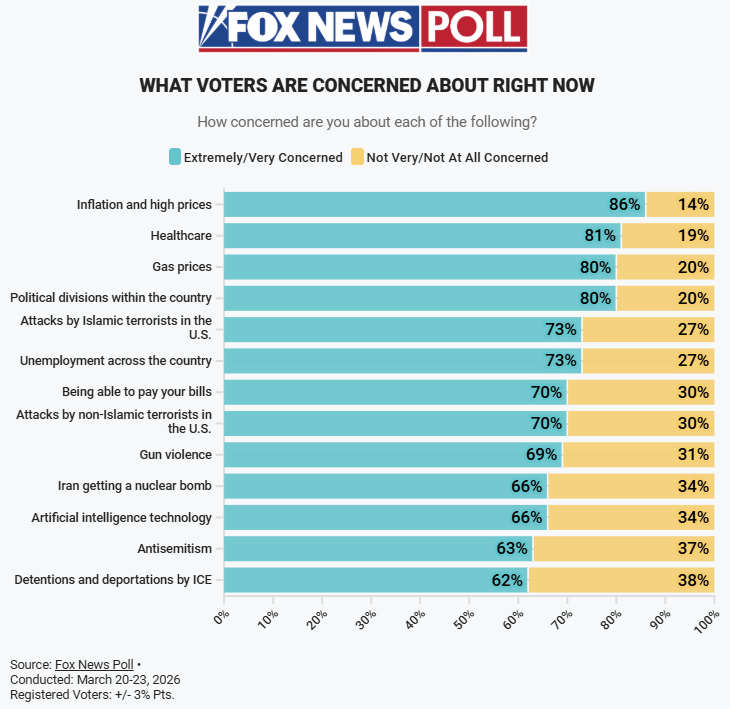
Source: Opinion Today.
Most Americans see US economic conditions unfavorably but views are highly partisan.
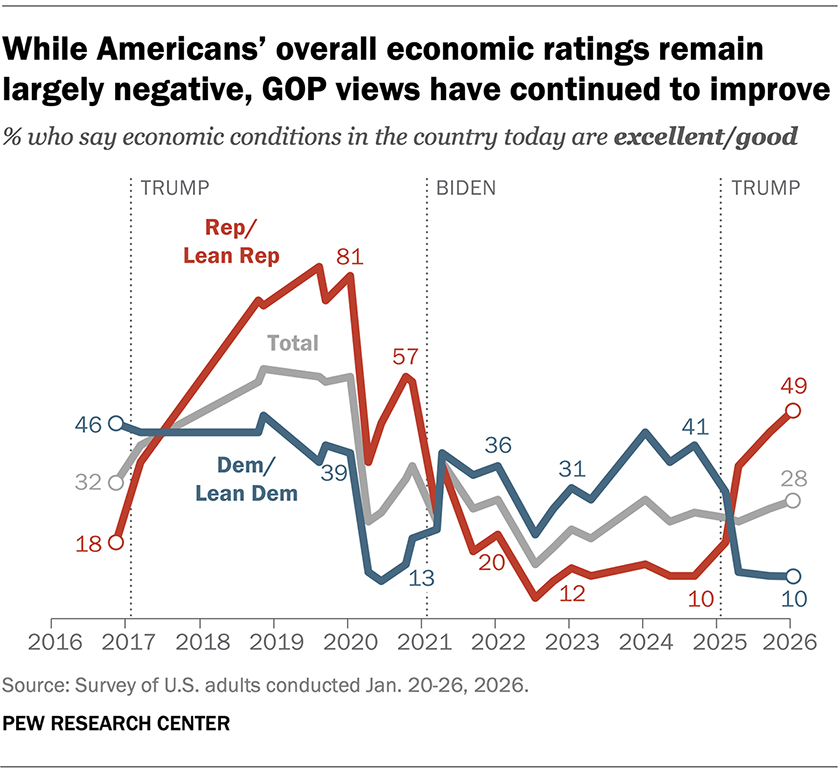
Source: Pew Research Center.

Two weeks into the conflict, only 28% of Americans thought the war was going well; 48% disagreed.
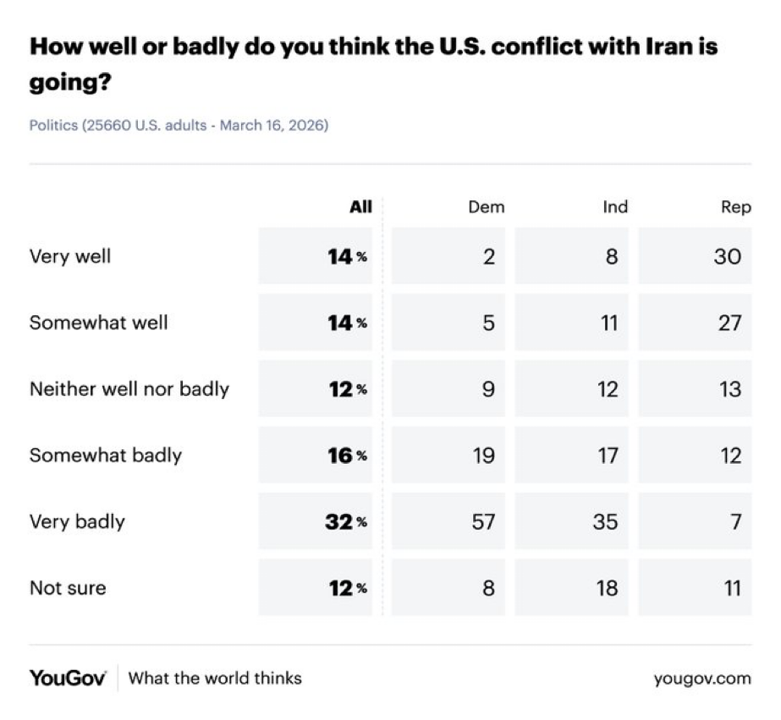
Source: YouGov.
Views of President Trump
Americans’ disapproval of Trump has been growing since soon after his inauguration.
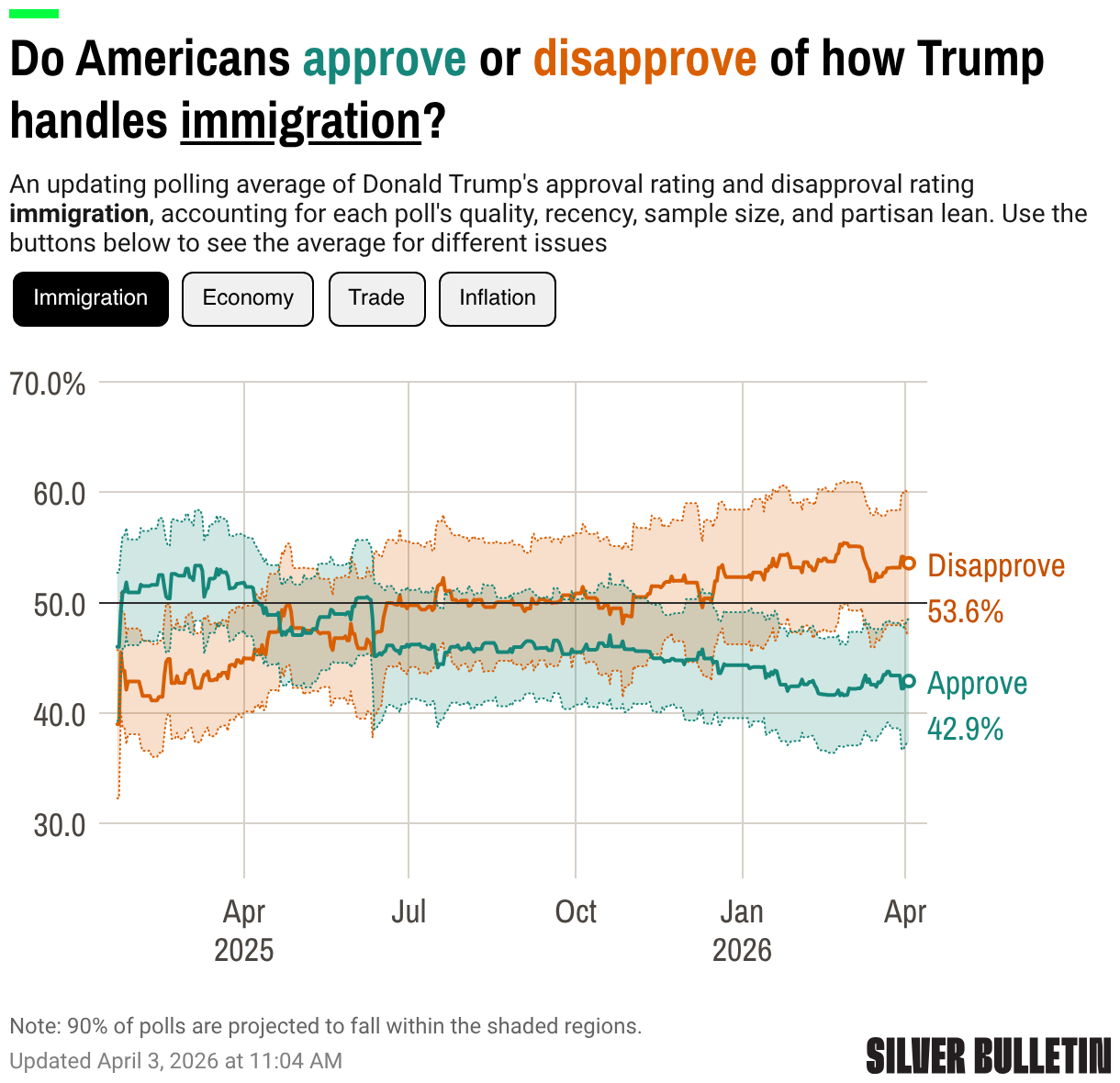
Source: Silver Bulletin.
Wars initially tend to boost presidential approval ratings, but two weeks into the Iran war, Trump has not seen this.
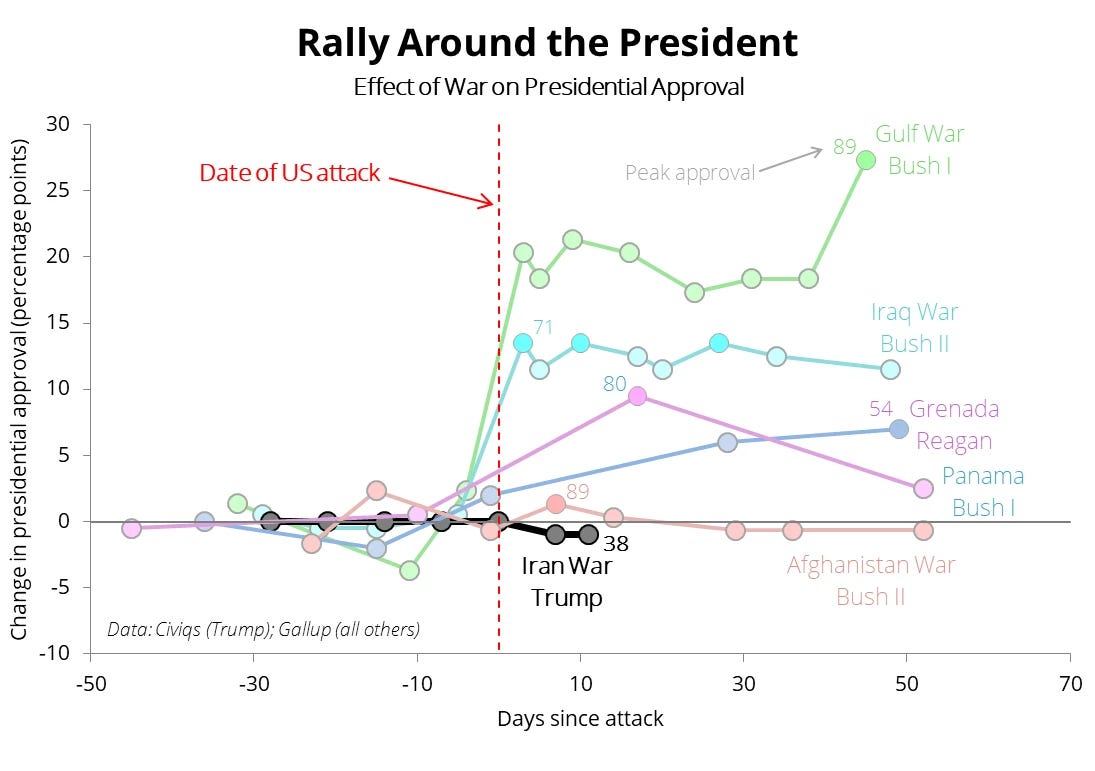
Source: Strength in Numbers
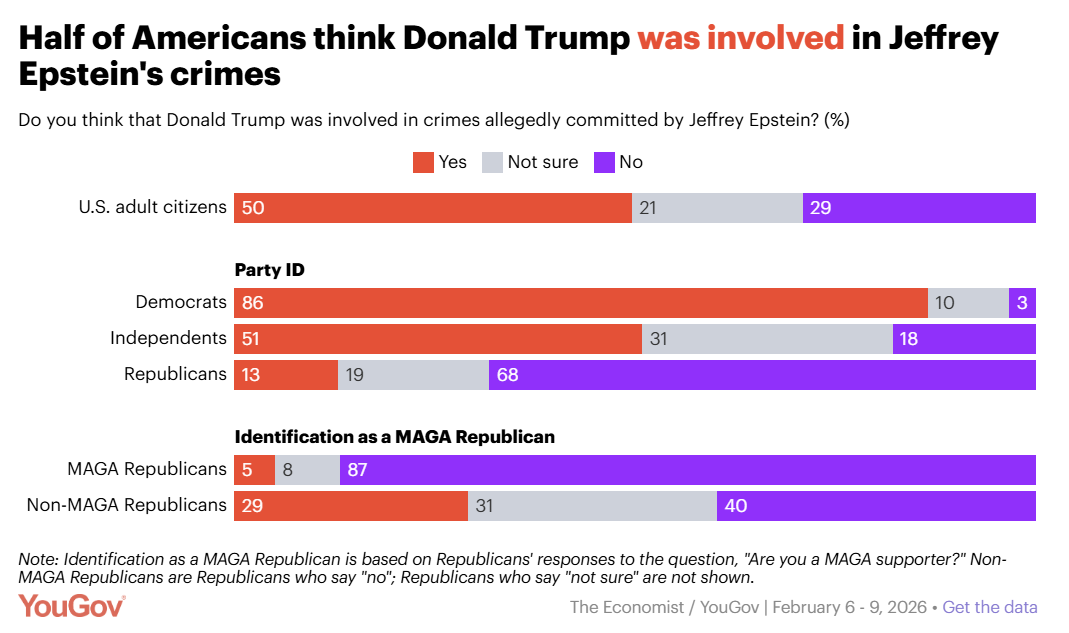
The Midterm Congressional Elections: A Way-Too-Early Assessment
The US public prefers Democratic control of Congress.
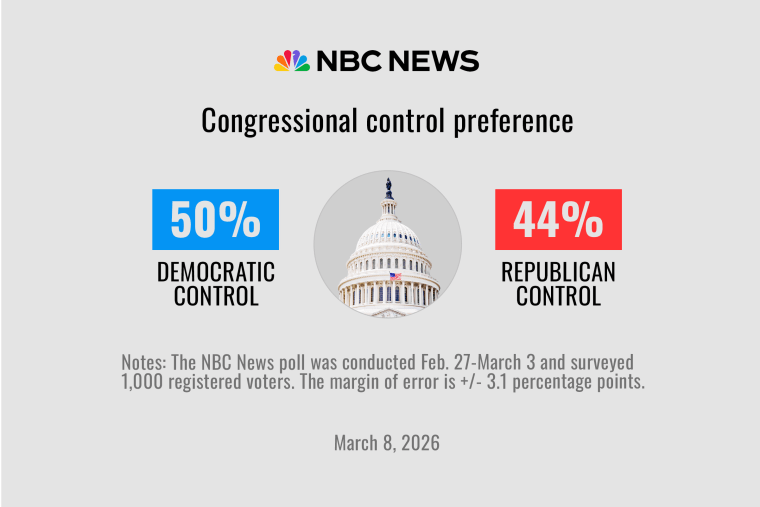
Source: NBC News
And, eight months before the midterms, Democrats were much more likely to say that they are “absolutely certain” to vote.
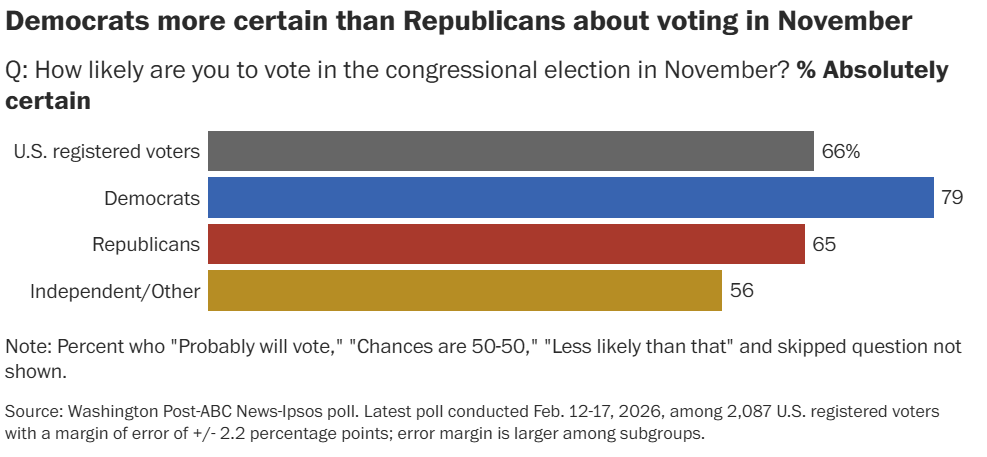
Source: Washington Post
What Might Be the Outcome?
Recent House of Representatives and gubernatorial elections show a sharp swing away toward Democratic candidates, even if they lose.
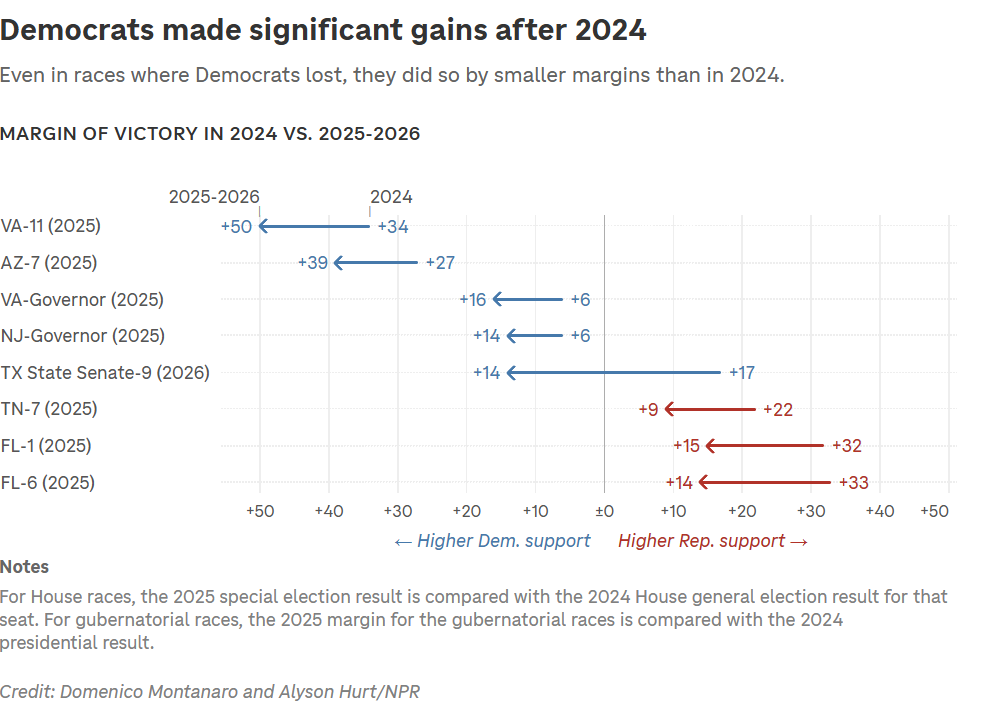
Source: NPR News
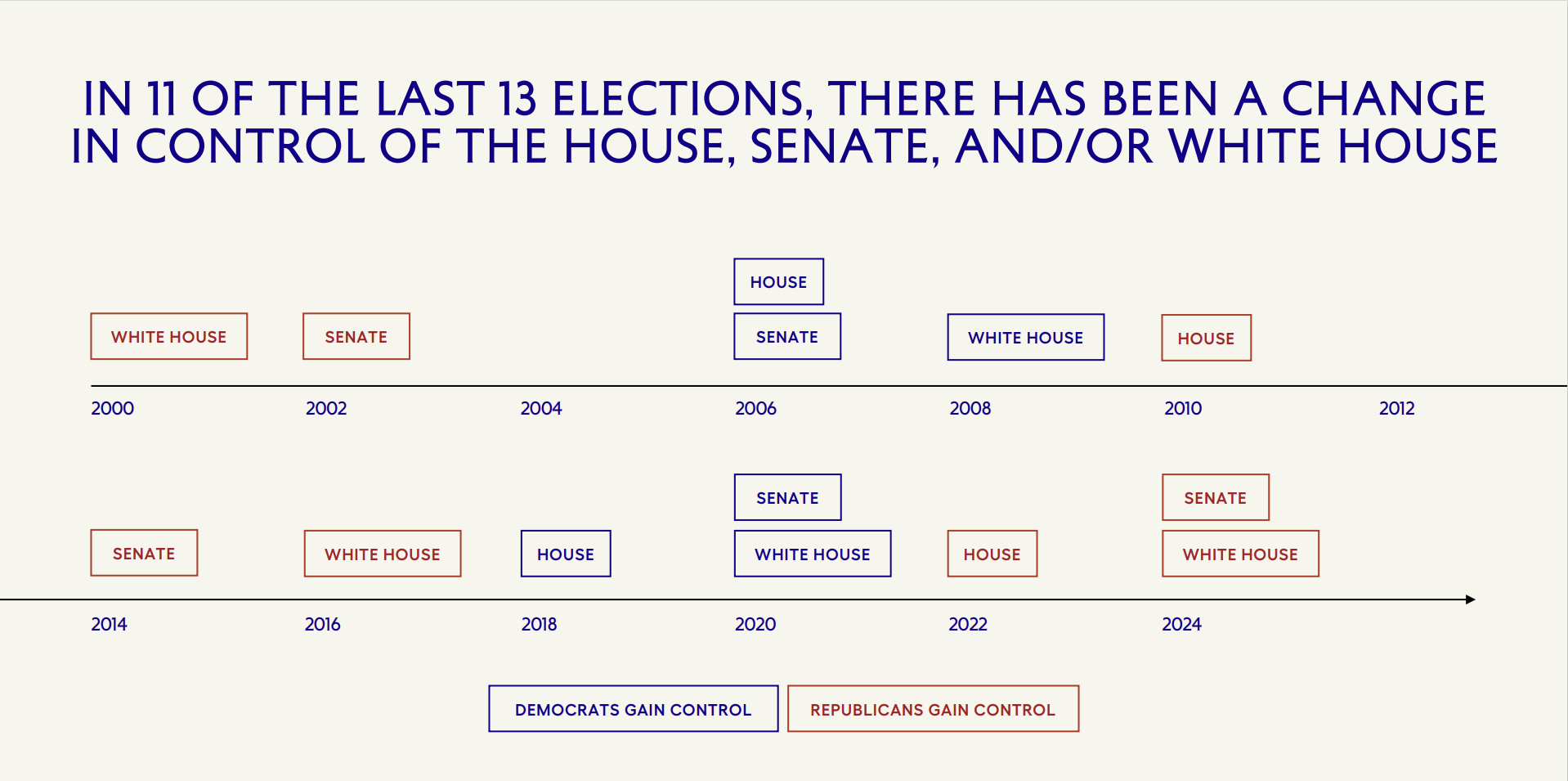
The balance of power in Washington is increasingly volatile, suggesting a likelihood of more change.
Source: POLITICO
History is also on the Democrats’ side: Only Four times in the last 164 Years has a president’s party gained seats in the House of Representatives after a midterm election.
Source: Polls and Votes
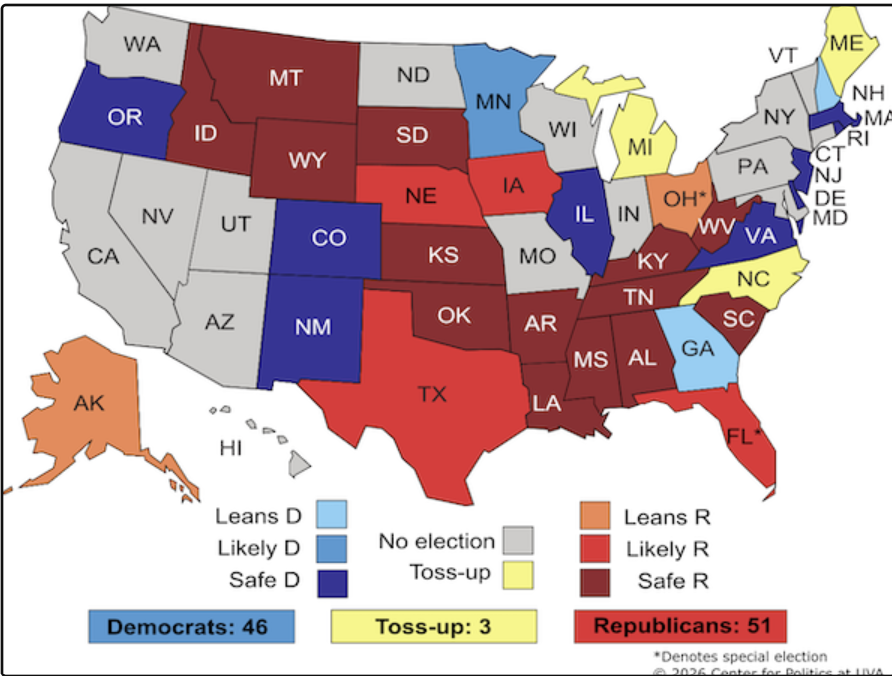
But Democrats face a tougher challenge in the Senate. They need to win four seats to regain control, but only two held by Republicans are “toss-ups” (North Carolina and Maine). Democrats have their own “toss-up” to defend (Michigan).
Source: Center for Politics
What the 2026 Election Says About US Democracy
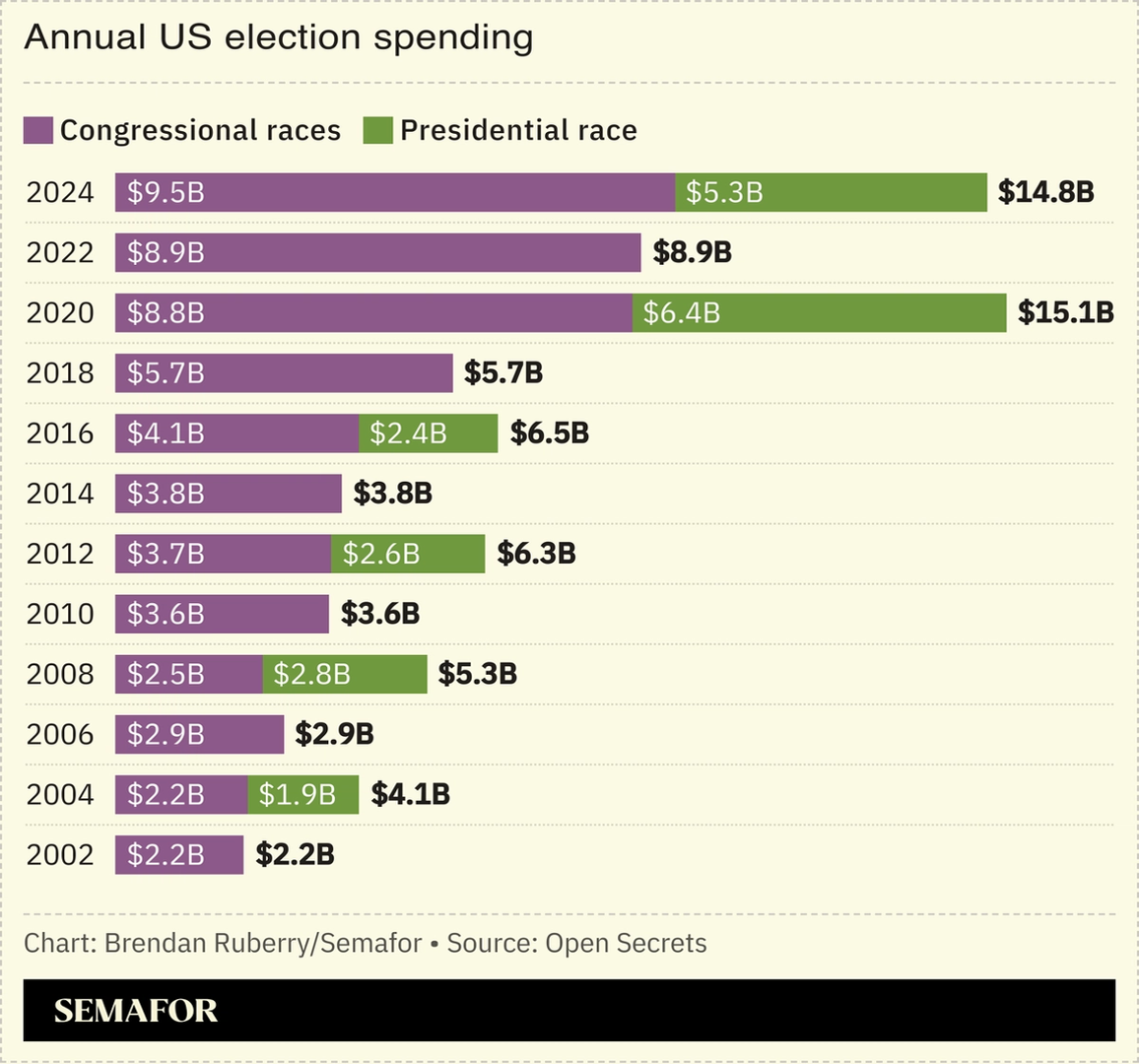
The 2026 midterm elections could see spending exceed $10 billion.
Source: Open Secrets