Europe Tackles Tech Sovereignty


Listen to this article
Audio is generated automatically and may contain minor inaccuracies.
Welcome to the June edition of the TransatlanTech Insider.
This month marked a major milestone for the technology sovereignty movement. Words were turned into concrete action, as countries rejected the premise of borderlessness that has defined the internet since its inception. They signaled instead sovereign approaches to AI and technology development. That milestone is the unveiling of the EU’s Technological Sovereignty Package. Within it is the Cloud and AI Development Act, which proposes a four-level framework for assessing the sovereignty and security of AI and cloud systems. Its aim? Ensure that no suppliers have a “kill switch” for sensitive European public workloads and “mitigate the risks stemming from the EU’s reliance on third countries”. The package would put into practice the de-risking architecture that observers of People’s Republic of China (PRC) tech in Europe, the United States, and elsewhere have long called for in the context of Huawei and the PRC technology stack. Europe’s target, however, is not eastward, but westward. Alarmed by the prospect of a mercurial White House cutting off access to critical services, Brussels is moving to reduce its technology dependence on the United States.
This perception of unreliability was reinforced by the Trump administration’s snap decision to issue an export control directive halting access by non-US nationals to Anthropic’s Fable 5 and Mythos 5 models after Amazon CEO Andy Jassy alerted senior American officials to a “jailbreak” his researchers had found for Fable 5. Anthropic responded by suspending access for all users.
The White House measure reflects an aim to control powerful AI technology with significant security implications and potential for grave misuse. For the cybersecurity community, however, open access to emerging models for testing and red teaming is vital for robustness. For many Europeans, the measure made clear that additional tech dependencies on the United States—now in the AI age—would further expose the continent to risk. President Donald Trump will have left office before many of the Tech Sovereignty Package’s de-risking provisions are expected to take effect, but the impact on transatlantic technology development will resound for years.
In this edition of the TransatlanTech Insider, GMF Technology shares insights on the 6G race, public-interest AI, European digital resilience, and AI governance in cyber and military domains. Subscribe to receive future newsletter editions, follow us on X, and visit our webpage to learn more.
Featured This Month
The Transatlantic Race for 6G
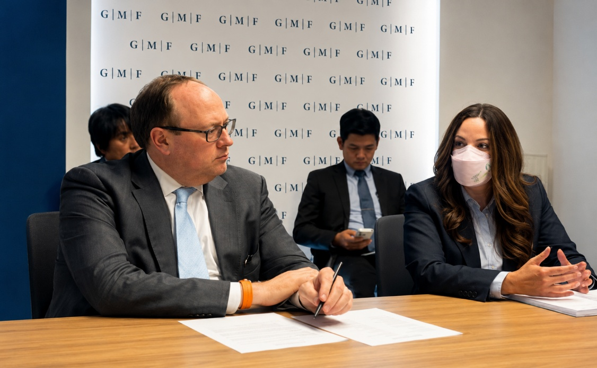
The next generation of wireless communication, 6G, will be a critical enabler of economies, societies, and militaries. The technology will facilitate AI integration and improve connectivity, sensing, and compute across devices, the network edge, and the cloud. With its rollout expected by 2029, the United States, Europe, and allies face pressing questions about leading this transition and designing security and resilience into such critical infrastructure.
To discuss those issues, GMF Technology convened a private roundtable in Brussels of senior government, industry, and academic experts. Senior Fellow Peter Chase moderated the conversation, and Managing Director Lindsay Gorman, who previously worked on 5G and AI policy issues in the White House, previewed her forthcoming report that compares the United States and Europe with the People’s Republic of China in 6G. She also discussed the economic, security, and resilience implications of the 6G race.
Governing AI in the Public Interest
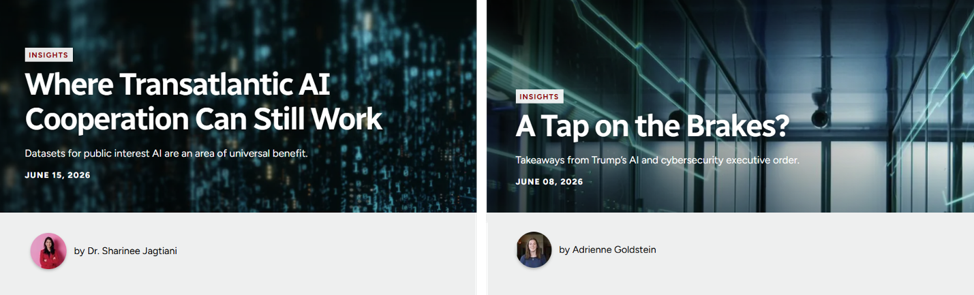
Two new GMF Technology publications examine how governments can promote AI systems that better serve the public interest while managing emerging security risks.
In “Where Transatlantic AI Cooperation Can Still Work”, Fellow Sharinee Jagtiani identifies high-quality public datasets for public interest AI as a promising area for US-Europe cooperation. She argues that interoperable standards and shared data foundations can support socially beneficial uses of AI.
In “A Tap on the Brakes?”, Senior Program Coordinator Adrienne Goldstein analyzes the Trump administration’s new AI and cybersecurity risk executive order as a limited but potentially meaningful step toward stronger security review. She notes that the directive’s impact will depend on industry cooperation and federal capacity.
Together, the pieces highlight two practical governance challenges: building public-interest AI infrastructure and strengthening the government’s ability to assess frontier-model risks.
Europe’s Path to Digital Resilience

Is the path to European digital resilience excluding potential partners, or cooperating with them? Fellow Sharinee Jagtiani argued the case for cooperation in an Oxford-style debate at Aspen Institute Germany’s German-American Trade and Tech Conference (GATT-C 2026) on Europe’s digital future.
Jagtiani emphasized that Europe’s path to strategic autonomy does not mean isolation or “walling off” in the literal sense. She pointed instead to managed, risk-based partnerships that can withstand geopolitical shocks and reduce the risks of weaponized dependencies. Drawing on India’s experience navigating geopolitical shocks without the backstop of an alliance, she highlighted diversification, pragmatism, and resilience as useful reference points for Europe.
Advancing Cyber and Military AI Governance
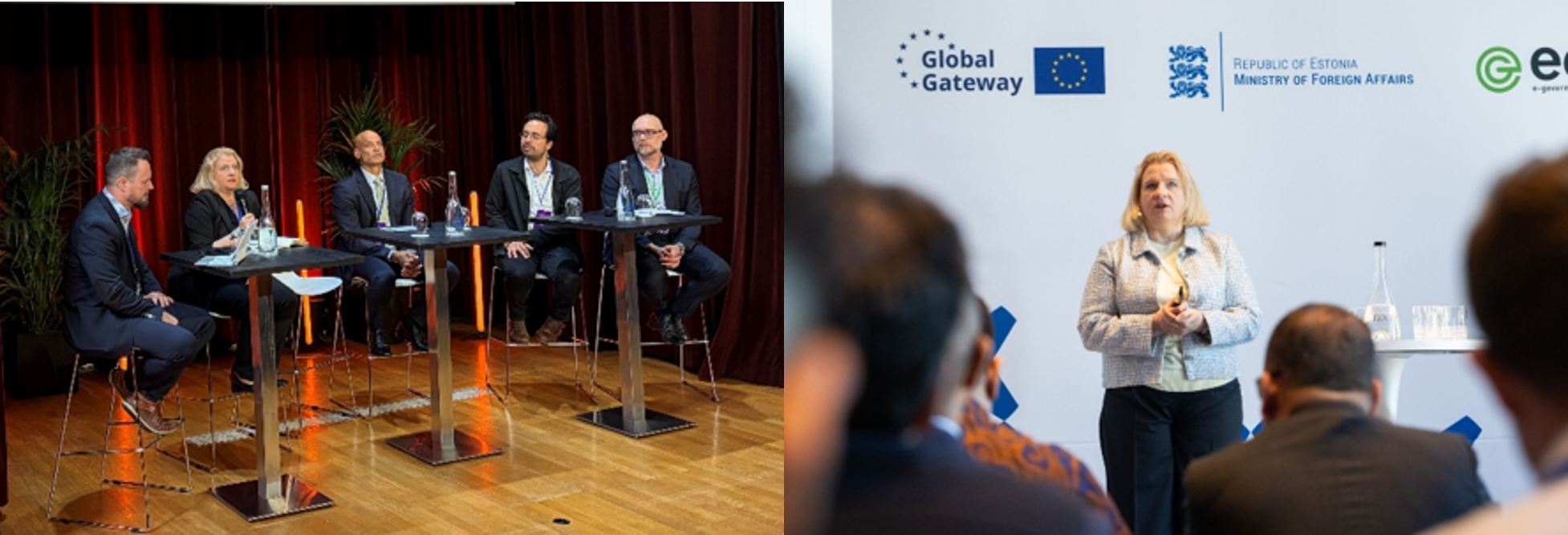
As AI reshapes cyberspace and enters the military domain, questions of governance, resilience, and responsible use are moving to the center of transatlantic security debates. Visiting Distinguished Fellow Heli Tiirmaa-Klaar took up these issues in three major convenings in June.
At the Paris Cyber Summit, she spoke alongside NATO Deputy Assistant Secretary General James Appathurai and other European cyber experts on new rules of engagement in AI-enabled cyberspace. She also joined the first UN informal exchanges on AI in the military domain. Participants, who gathered in Geneva, discussed foundational concepts, lifecycle risks, capacity-building, responsible governance, and AI's links to weapons systems and weapons of mass destruction. In Tallinn, Tiirmaa-Klaar delivered a keynote address at the Tallinn Cyber Diplomacy Summer School, which she established in 2019 as Estonia's cyber ambassador, on building resilient national cyber systems.
Media Mentions
Julia Tréhu spoke with L’Opinion on the impact of SpaceX’s IPO on investor expectations for prospective Anthropic and OpenAI listings. She also noted that Europe has begun taking “small steps” toward digital sovereignty, including through cloud, the Chips Act, and open-source initiatives.
Byte-Sized Bulletin
The European Commission unveiled its European Technological Sovereignty Package, which includes the Cloud and AI Development Act, the Chips Act 2.0, a new Open Source Strategy, and the Strategic Roadmap for Digitalisation and AI in Energy. The package aims to expand EU data center capacity, strengthen semiconductor production, and reduce reliance on non-EU technology providers.
Apple blamed privacy and security concerns tied to the Digital Markets Act’s (DMA) interoperability rules for not making its upgraded Siri AI available in the EU at launch. The European Commission said Apple had sought an 18-month exemption from those obligations, which it rejected, and that the DMA does not bar Apple from introducing new products in the EU.
US President Donald Trump signed an executive order to create a voluntary framework for frontier AI developers that gives the federal government access to "covered frontier models" for up to 30 days before release. The order specifies that no mandatory licensing or preclearance requirement for new models exist.
The Pentagon added Alibaba, BYD, and other Chinese companies to its list of “Chinese military companies operating in the United States”. The designation does not prevent the firms from operating in the country but bars them from doing business with the Pentagon.
Anthropic disabled access to its Fable 5 and Mythos 5 models for all users after a US export-control directive required it to suspend non-American nationals' access, a move the company said stemmed from concern over a potential "jailbreak" of safeguards meant to prevent Fable 5 from being used to identify software vulnerabilities. Trump later told Axios that he no longer viewed Anthropic as a national security threat, while the company said it remained committed to working with the administration to resolve the matter.
The Download
- Fellow Sharinee Jagtiani participated in the Körber History Forum and offered insights into the historical interplay between geopolitics and technology and the lessons these episodes provide for today’s era of competition in emerging technologies such as AI.
- Sharinee Jagtiani spoke at “Artificial Intelligence and State Power: Navigating US-PRC Competitive Geopolitics and Diplomacy”, an Oxford China Policy Lab closed-door conference. The gathering focused on weaponized technological dependencies and middle-power strategies in an era of AI competition.
GMF Technology is dedicated to ensuring that democracies together win the strategic technology competition with autocrats.
Adrienne Goldstein, Alexandra Pugh, and Lydia Makrioniti coordinated this month’s TransatlanTech Insider.