NATO’s Southern Exposure

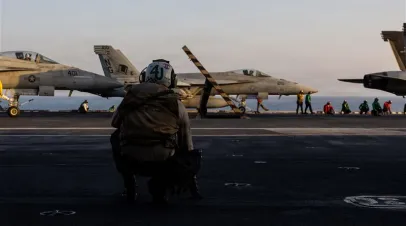
We are still learning details of an attempted March 4 Iranian missile strike—perhaps more than one—targeting Türkiye. These were likely aimed at Incirlik airbase in the country’s south, which hosts a large, longstanding US Air Force presence. The missiles were intercepted, reportedly by US naval forces offshore in the Eastern Mediterranean. Taken together with the March 2 Iranian drone attacks on British sovereign bases in Cyprus, possibly launched from Lebanon, the implications of this enlargement of the war to the Mediterranean are potentially far-reaching.
First, these attacks underscore the harsh reality that parts of Eastern and Southern Europe are well within range of Iranian systems. NATO and the EU are now directly exposed to the escalating conflict in the Middle East. This is not just a matter of future regional spillovers, including energy security, migration, and terrorism. It is also about direct attacks on European territory. Beyond nearby targets in Türkiye, the major US base at Suda Bay on the Greek island of Crete is also within range of Iran’s longer-range missiles. Important liquefied natural gas facilities around the Eastern Mediterranean, including some near Athens, could be struck by Iran or regional proxies.
Second, it is notable that Türkiye was targeted despite its critique of US and Israeli action in Iran. Ankara reportedly has not allowed the use of its facilities to support US strikes on Iran. Still, Türkiye is unlikely to brush off further attacks without a strong response from its very capable military. This raises the important question of who is making critical targeting decisions in Tehran. The decapitation of Iran’s political and military leadership may have had the unintended consequence of decoupling Iranian targeting decisions from any strategic calculus. What logic would encourage Iran to widen the coalition arrayed against them to include NATO and the EU? This is one possible outcome of the conflict as it is evolving, even if short of a formal NATO Article 5 or EU “collective security” response.
Third, the rapidly evolving European security scene, with new patterns of burden-sharing, greatly increased spending, and a drive toward strategic autonomy as a hedge against transatlantic uncertainties will require hard decisions about force posture and focus. With an ongoing war in Europe’s East, deterring Russia is an unavoidable task. (This too may have a southern dimension.) But new twists in the Iran conflict underscore the need for NATO and the EU to address their evident exposure in the Mediterranean. European as well as Middle Eastern security is at stake.
The views expressed herein are those solely of the author(s). GMF as an institution does not take positions.
Related Content