A Year of GMF Technology in Review


2025 was a tempestuous year for the transatlantic relationship and a pivotal one for GMF Technology. A shock to the system from a new US administration hastened Europe’s geopolitical awakening, its competitiveness crisis increasingly centered on the technological underpinnings of security and sovereignty. The United States and the EU clashed over the bloc’s digital regulations and their impact on US tech firms. And the playing field on tech competition with China shifted again as a trade war gave way to a retreat on key US artificial intelligence (AI) chip controls, while leaders such as German Chancellor Friedrich Merz decided to bar Chinese vendors from 6G.
GMF Technology, in its second year, drove debate and impact on its three strategic directions: AI and democracy, EU-US-China technology competition, and allied coordination and competitiveness. We conducted in-depth research, led high-level convenings and conversations, contributed to international diplomatic engagement, and served as a transatlantic “explainer in chief” through timely analysis and a strong media presence.
Here’s a look at the highlights:
Publishing High-Impact Research
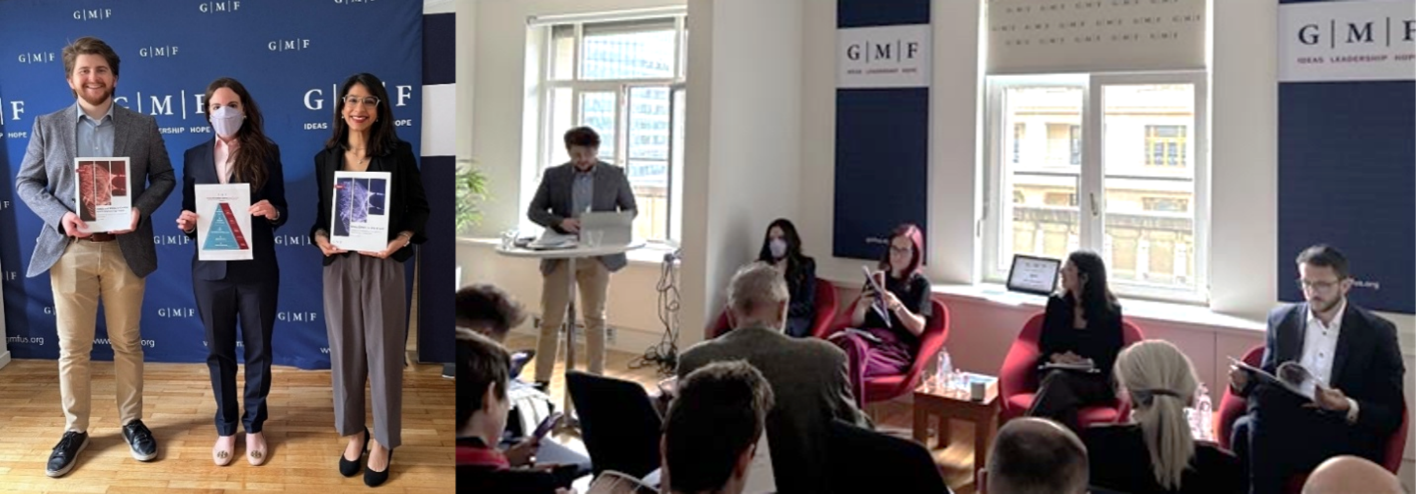
Wired for Influence: China Technology Stack Reports
GMF Technology published three detailed research reports that use a five-layer “technology stack” framework to assess China’s innovation footprint in Germany, Serbia, and Central Asia. Across network infrastructure, data infrastructure, device, application, and governance layers, China is building next-generation applications from 6G and AI to biotechnology and government data centers in Europe’s extended neighborhood.
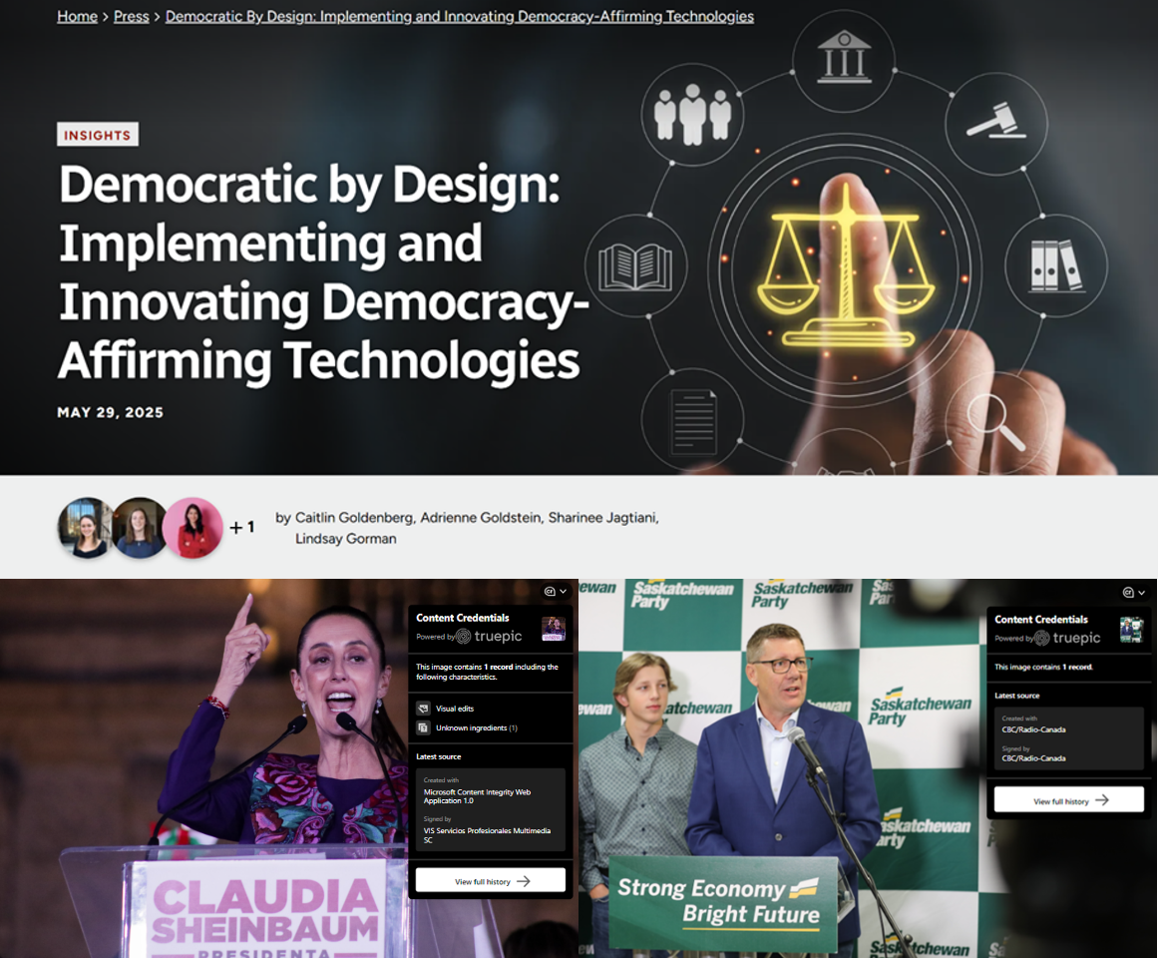
Democracy-Affirming Technologies
In “Democratic by Design: Implementing and Innovating Democracy-Affirming Technologies”, GMF Technology offered recommendations for public- and private-sector building of innovation ecosystems that uphold democratic values. The report draws on GMF’s Elections Content Credentials Repository, a first-of-its-kind online archive of provenanced images covering major 2024 elections worldwide. The archive demonstrates that innovation can help safeguard democracy.
Green Industrial Policy and Economic Security
“A Green Industrial Policy for an Era of Economic Security” details the transatlantic state-of-play on green technology and offers five recommendations for EU investment and policy, providing a roadmap for strengthening competitiveness and bolstering strategic readiness without sacrificing EU climate targets.
Hosting Key Transatlantic Conversations

Transatlantic Innovation Competition vis-à-vis China at Brussels Forum
At GMF’s flagship annual conference, Brussels Forum, Frank McCourt of Project Liberty, Heike Freund of Marvel Fusion, and GMF Technology Managing Director Lindsay Gorman discussed societal values and tech competitiveness in European innovation. GMF Technology also led conversations on “Grading Made in China 2025” and evaluated the long-term future of US-Europe-China technological and industrial leadership in quantum, biotech, and AI. We also assessed 6G competitiveness by exploring supply chain risks and strategies for allied technological leadership.

Defense Innovation and NATO on Disruptive Technologies
At the NATO Parliamentary Assembly’s Transatlantic Forum in Washington, DC, Gorman spoke with Eric Schmidt, former CEO and chairman of Google and chair and CEO of Relativity Space, for a keynote conversation on the future of defense technology and innovation in the age of AI. Schmidt and Gorman discussed NATO's future needs, how Europe’s tech talent is driving change, and how advances in AI could reshape the future of security. In Brussels, GMF Technology hosted a series of salon-style conversations on prospects for European defense innovation, cyber readiness, and quantum information technologies.
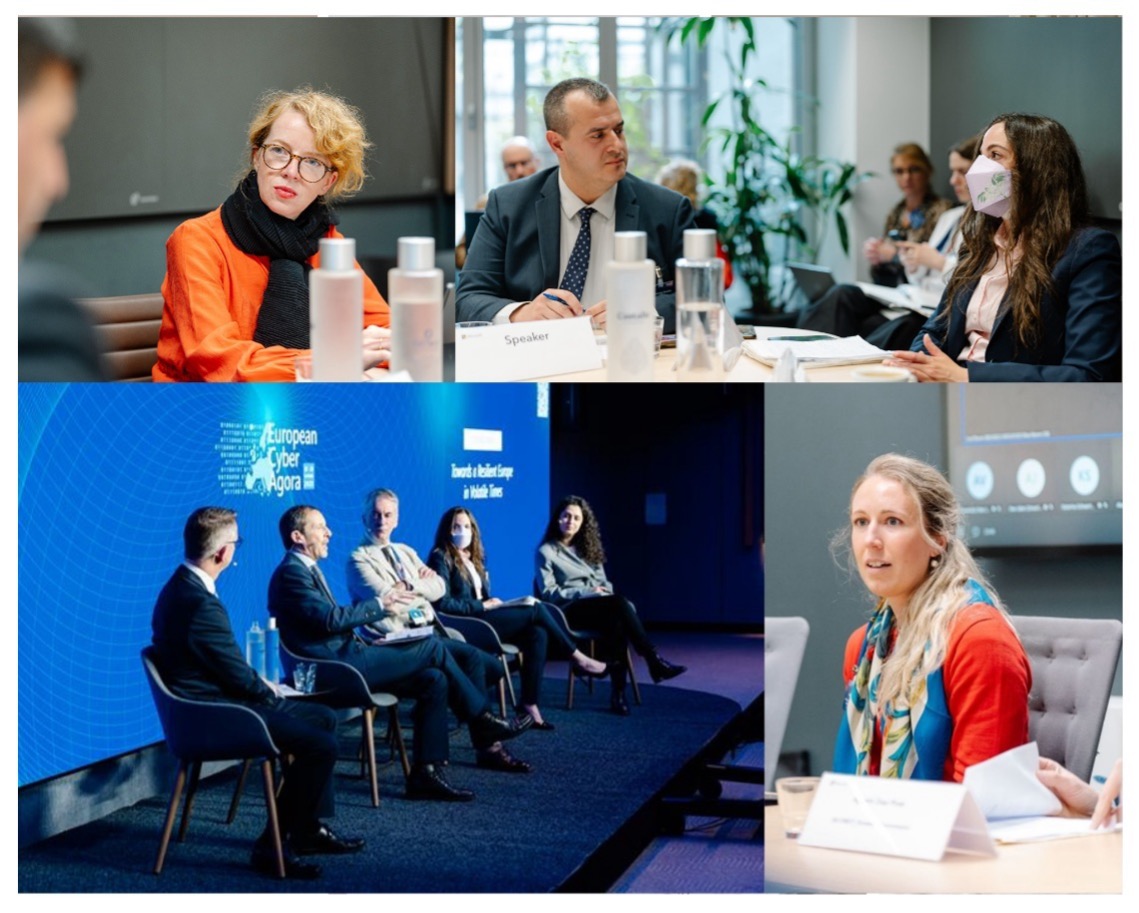
Fifth Annual European Cyber Agora on AI and Digital Defense with Microsoft and EU Cyber Direct
GMF, Microsoft, and EU Cyber Direct convened government officials, industry leaders, and technology policy shapers in Brussels for the European Cyber Agora. The event focused on AI and societal resilience, cyber accountability, and digital transformation for security and defense. GMF experts examined the cyber implications of disruptive technologies through sessions on “Quantum, Cybersecurity and Europe’s Strategic Autonomy” with Danish Tech Ambassador Anne Marie Engtoft Meldgaard, “Defending Europe's Subsea Cable Infrastructure” with European Commission Deputy Head of Unit for Future Connectivity Systems Agustin Díaz-Pinés, and “Skills for a Resilient Europe” with European Commission Head of Unit for Digital Education Georgi Dimitrov.
Second Transatlantic Technology Exchange on AI Innovation and Policy
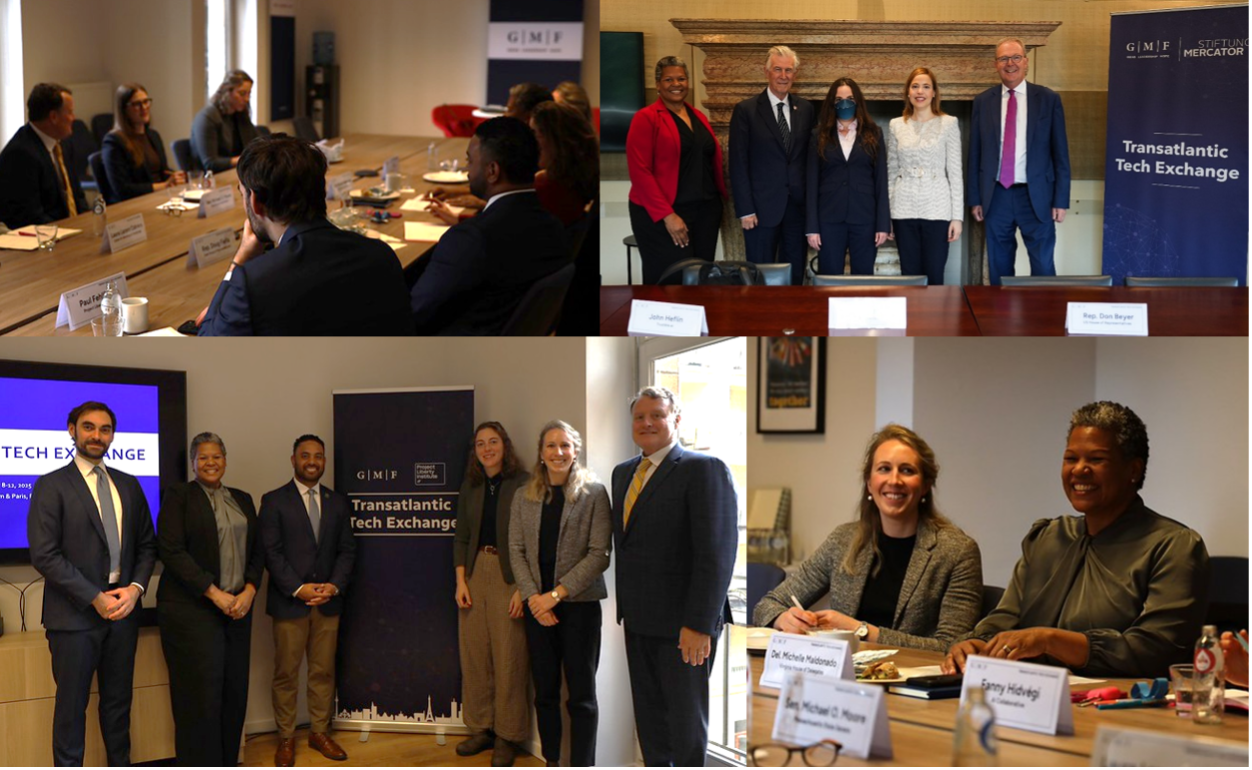
GMF Technology kicked off its second Transatlantic Tech Exchange (TTX) for legislators with a conversation in Washington on transatlantic AI that featured US Representative Don Beyer (D-Virginia), European Parliament Member Axel Voss, and Virginia State Senator Michelle Maldonado. In December, the first leg of the TTX study tour brought a bipartisan delegation of tech-focused state lawmakers from Massachusetts, Utah, and Virginia to Brussels and Paris to meet with European policymakers and innovators on public interest AI and data. Supported by Project Liberty and Stiftung Mercator, TTX will host a delegation of European parliamentarians in Washington, DC and Boston in 2026. Conversations will focus on the AI value chain.
Shaping the Public Debate
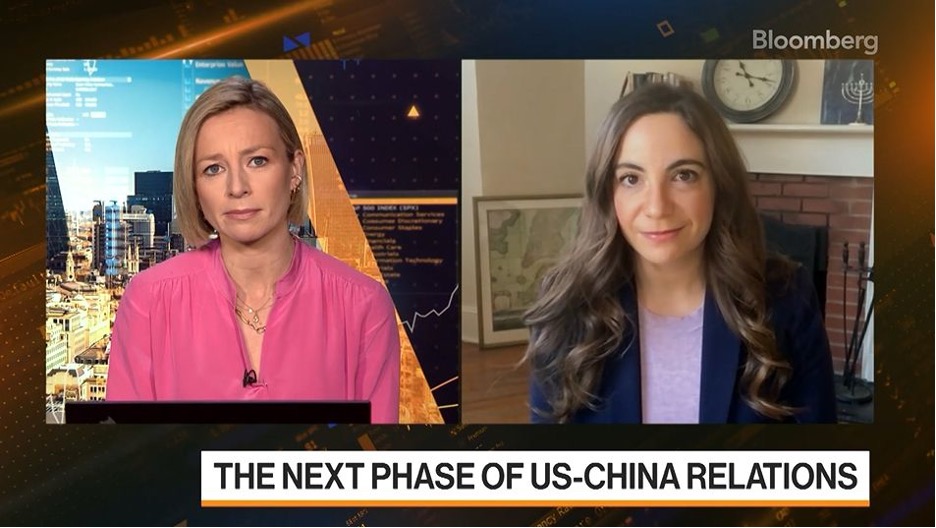
GMF Technology experts were quoted in and appeared on major news outlets across the United States, Europe, and the Indo-Pacific. They included The New York Times, Bloomberg, the BBC, Deutsche Welle, Nikkei Asia, and the Australian Broadcasting Corporation. Team members provided insights into issues at the forefront of technology and innovation debates. Topics ranged from China’s quantum ambitions to the standoff surrounding Dutch chipmaker Nexperia to TikTok’s future.
GMF Technology also analyzed key technology and foreign policy developments in quick-reaction pieces on the US National Security Strategy, the EU Digital Markets Act and Digital Services Act, the US AI Exports Program, military AI, NATO cybersecurity spending, AI adoption in the EU, European defense tech strategy, US industrial policy, and the nexus of space and emerging technologies.

Open to Debate: Can the United States Outpace China in AI Through Chip Controls? Gorman joined Emmy Award–winning journalist John Donvan and former US Congressman Will Hurd (R-Texas) at Johns Hopkins University for Open to Debate, a weekly program broadcast on National Public Radio. She argued that US semiconductor export controls are an important tool for the United States in its AI competition with China.
International Diplomatic Engagements
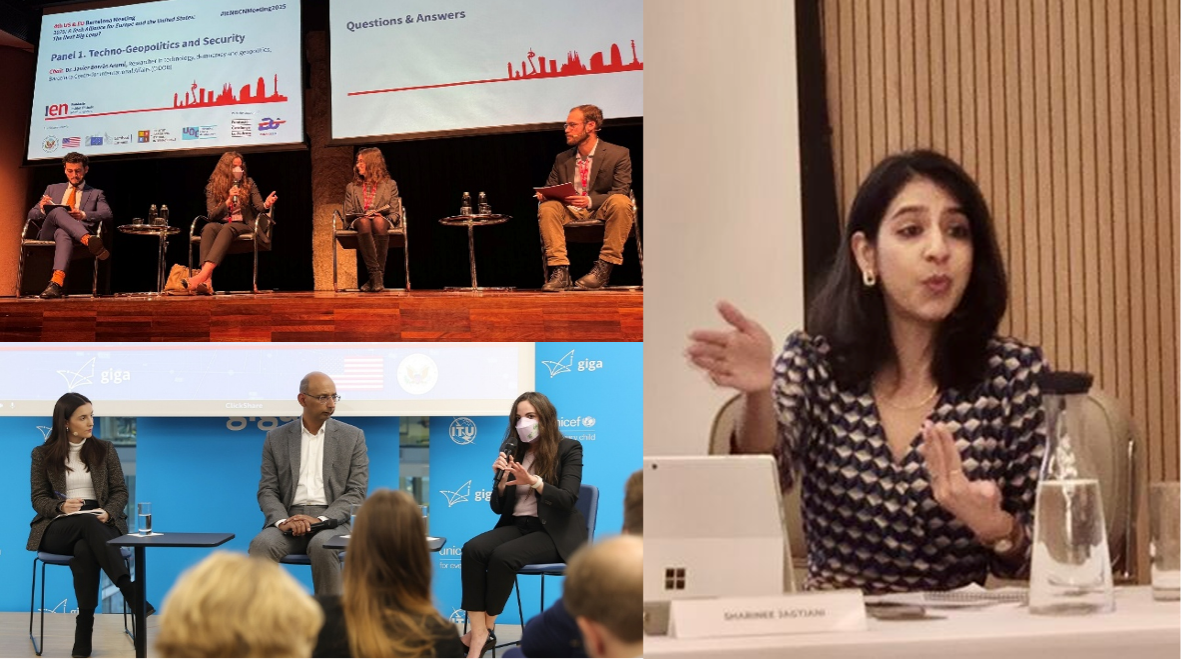
GMF Technology experts took center stage in key diplomatic engagements organized by the US government and international partners. The events included a session of the US & EU Barcelona Meeting, "A Tech Alliance? Europe and the United States' Next Big Leap", which was also the State Department’s first public diplomatic engagement on technology in Europe under the current administration. In Geneva, the US Mission to the United Nations featured GMF Technology in engagements on AI growth, innovation, and the US AI stack. In Berlin and Goa, India, GMF examined Europe-India technology cooperation on AI, research, and governance.