Strategic Foresight

Partners of the Strategic Foresight program benefit from GMF's unique geographical footprint, with offices in Washington, DC, Paris, Brussels, Berlin, London, Madrid, Warsaw, Belgrade, Bucharest, and Ankara, and a large global network of fellows, particularly in Asia, where GMF organizes regular trilateral dialogues.
By leveraging its global network of experts and 4,000+ alumni based around the world, GMF offers a unique perspective that combines local knowledge with a broad international outlook, providing corporate clients with three complementary tools for risk analysis and strategic planning:
- Early-Warning and Current Events Analysis:
- real-time monitoring of political, geopolitical, economic, and environmental developments
- rapid, informed analysis of disruptions affecting operations and strategies
- enhanced understanding of local, regional, and global business environments
- Forecasting and Scenario Development:
- proactive identification of emerging risks and long-term trends
- opportunity recognition in complex geopolitical landscapes
- scenario-planning tools to manage geopolitical risks and mitigate business impacts
- Country Risk Deep Dives:
- forward-looking, comprehensive analysis of country-specific risks
- integration of business, political, and security considerations into long-term strategy
- tailored insights to support decision-making in specific markets
GMF’s Strategic Foresight also offers privileged access to the internal debates within EU institutions and its member states, NATO, the United Kingdom, the US administration and Congress, China, and Indo-Pacific countries. It also provides multiscale knowledge (international, national, and regional) on a wide range of strategic topics, including:
European affairs: European regulation, European competitiveness (industry, energy, digital), EU enlargement, Franco-German relations, Eastern and Central Europe, relations with Russia, European defense, and EU-UK relations.
American politics: US domestic and foreign policy, US Congress, transatlantic relations, trends in US society, political culture, and trade, technology and industrial policy.
US-China competition: trade relations, technological rivalry, surge of Chinese high-tech exports, de-risking, regionalization and disruption of supply chains, and implications for the Indo-Pacific region, Europe, and the transatlantic relationship.
Asian Geopolitics: domestic and foreign affairs of China, India, and Japan, economic and strategic developments in Southeast Asia, developments in the South China Sea, Taiwan, strategic partnerships of the United States, France, and European partners in the region, and regional alliances.
Global governance: new geopolitics of alliances, trade issues, the role and influence of emerging pivotal powers (Brazil, Mexico, South Africa, Indonesia, India, Turkey, Saudi Arabia...), the influence of China, Russia, and the major emerging powers within multilateral bodies, and reform of international organizations.
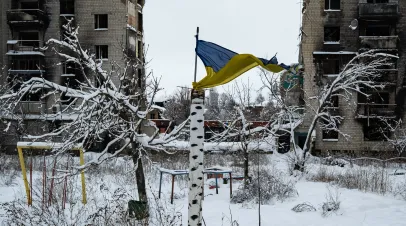
Lessons learned from the Russia-Ukraine war and conflict in the Middle East: war dynamics and regional and international ramifications, economic, strategic, energy, and trade implications, scenarios for ending the war, and the future of NATO and European security.
Cross-cutting geopolitical issues: new technologies and technological disruptions, global connectivity, environmental, health, energy, and food security issues, and scarcity of natural resources.
Featured Work


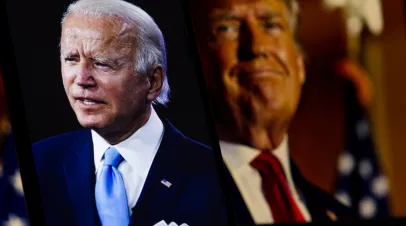

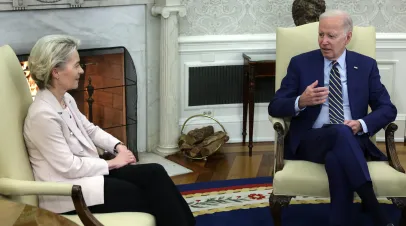
America Votes 2024: The Transatlantic Impact
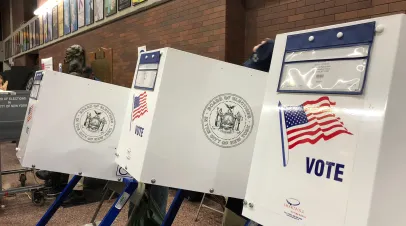
The 2024 US presidential election is set to significantly impact the transatlantic partnership, while the campaign is increasingly vulnerable to misinformation and false narratives guided by hostile countries. GMF experts analyze the impact of the 2024 US election on transatlantic policy debates and offer insights into evolving threats to US democracy.
EU Elections Series
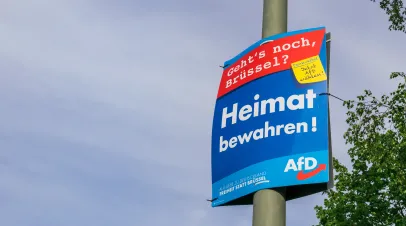
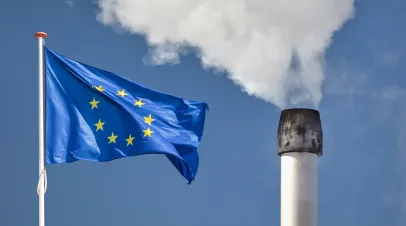
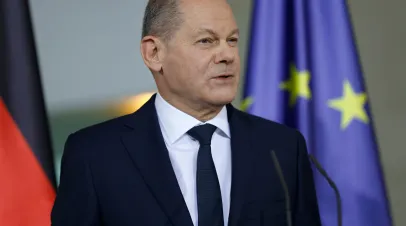
The European Parliament elections in 2024 will shape the EU's political direction over the next five years and, therefore, constitute a defining moment. In this series, GMF experts discuss the impact the elections will have on EU policy in key areas, consider what can—and should—be done before the elections, and outline potential post-election scenarios.